
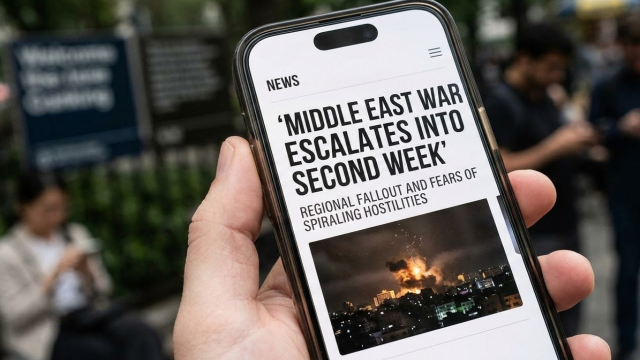
PARIS/BEIRUT/DUBAI, Mar 7, (V7N) – The war involving Israel, the United States, and Iran entered its second week on Saturday, spreading across multiple fronts and drawing in regional powers, as explosions, air strikes, and diplomatic warnings underscored the growing danger of a wider conflict.
Air raid sirens and explosions rattled Jerusalem, while Israeli jets launched fresh strikes on Tehran and Isfahan. Hezbollah positions in Lebanon were hit, Dubai’s airport briefly shut down, and Saudi Arabia intercepted missiles and drones. The Arab League announced an emergency meeting, as Iran vowed defiance and targeted oil tankers and separatist groups. The United States approved emergency arms sales to Israel, while the United Nations warned that hostilities could spiral further.
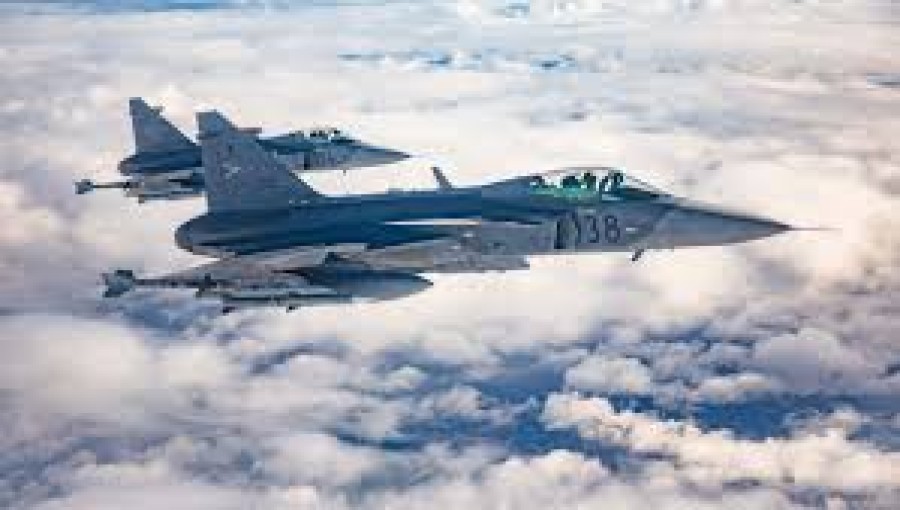
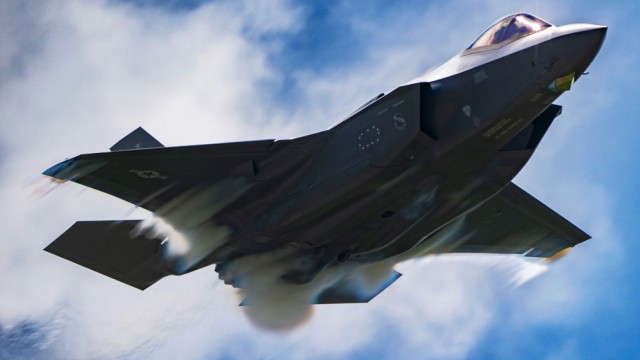
Israel intensified its campaign against Iran with a new wave of air raids involving 80 fighter jets. Targets included an academy of Iran’s Revolutionary Guards, described by Israeli officials as an “emergency asset.” At least eight people were killed in Isfahan province, according to local authorities. The strikes followed an overnight blitz, marking one of the heaviest bombardments since the conflict began after the killing of Iran’s Supreme Leader Ayatollah Ali Khamenei.
In Jerusalem, AFP journalists reported at least three explosions as sirens blared across the city. Over the past 24 hours, six air raid alerts were issued nationwide, reflecting the intensity of Iranian missile attacks. Israel’s military said air defences were actively intercepting incoming projectiles, but the psychological impact on civilians has been severe, with shelters filling and daily life disrupted.
The Lebanese theatre saw fierce escalation. Israel struck Hezbollah command centres, rocket launchers, and weapons depots in southern Lebanon and the Beqaa Valley. Hezbollah confirmed clashes in Nabi Sheet, where Israeli helicopters allegedly infiltrated from Syria. Lebanese authorities reported at least 16 killed and 35 wounded in Israeli strikes. The UN’s special coordinator for Lebanon, Jeanine Hennis-Plasschaert, urged both sides to enter talks, warning that “as bad as things are today, they are set to get even worse.”
Iran’s President Masoud Pezeshkian declared that his country would never surrender to Israel and the United States, saying: “The enemies must take their wish for the surrender of the Iranian people to their graves.” He apologised to neighbouring states for collateral damage, pledging no further attacks unless provoked. Meanwhile, Iran’s Revolutionary Guards claimed responsibility for targeting an oil tanker named Prima in the Strait of Hormuz, accusing it of ignoring warnings. The Guards also struck separatist groups in Iraq’s Kurdistan region and launched drone attacks on US bases in Kuwait and the UAE.
The war’s ripple effects were felt across the Gulf. Explosions were heard in Dubai and Bahrain’s capital Manama, where sirens urged residents to seek shelter. Dubai International Airport, the world’s busiest for international traffic, suspended operations before partially resuming. Saudi Arabia intercepted repeated missile and drone attacks, including strikes aimed at an air base hosting US personnel and a major oil field. Defence Minister Prince Khalid bin Salman warned Iran against “miscalculation.”
The United States reinforced its alliance with Israel by approving the emergency sale of 12,000 bomb casings. The State Department said the move would “strengthen homeland defence and deter regional threats.” Washington’s decision underscores its deepening involvement, even as critics warn of escalating risks. US forces in the Gulf have already been drawn into defensive operations, escorting ships through the Strait of Hormuz and intercepting Iranian drones.
Diplomatic efforts are struggling to keep pace with the battlefield. The Arab League announced an emergency meeting via videoconference on Sunday, requested by Kuwait, Saudi Arabia, Qatar, Oman, Jordan, and Egypt. The bloc will discuss Iranian attacks on Arab territories and possible collective responses. Analysts say the meeting reflects growing alarm among Gulf states, which fear being dragged deeper into the conflict despite Iran’s assurances of restraint.
The war erupted after the killing of Ayatollah Khamenei in US-Israeli strikes on Iran, a move Tehran vowed to avenge. Hezbollah’s missile attacks on Israel brought Lebanon into the conflict, while Iran’s retaliatory strikes spread across the Gulf. The situation recalls past regional wars but is unprecedented in scale, involving simultaneous fronts in Israel, Iran, Lebanon, Saudi Arabia, the UAE, and Bahrain. The UN has warned that without urgent diplomacy, the conflict could destabilize the Middle East for years.
As the second week unfolds, the war shows no sign of abating. Israel continues its offensive against Iran and Hezbollah, while Tehran escalates with drone and missile attacks. Civilian casualties are mounting, airports and oil facilities are under threat, and regional economies are bracing for shocks. With the Arab League preparing emergency talks and the UN urging negotiations, the coming days may determine whether the conflict expands into a full-scale regional war or finds a fragile path toward de-escalation.
END/RH




Comment: