


Rajshahi, Dec 16 (V7N) – The Bangladesh government has officially declared 4,911 villages across 25 upazilas in the Rajshahi region as water-stressed areas for the next ten years, according to a gazette issued by the National Water Resources Council. The declaration aims to tackle the severe depletion of groundwater in the Barendra region, which includes parts of Rajshahi, Naogaon, and Chapainawabganj districts.
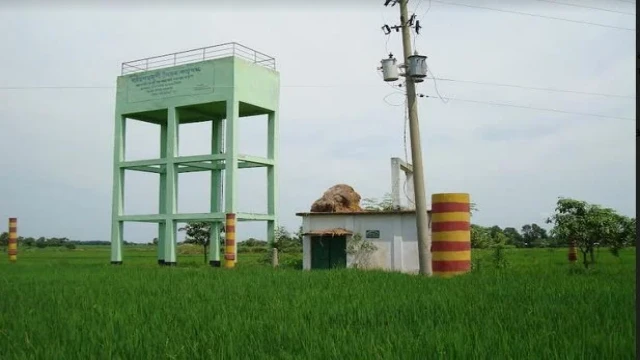
The gazette, recently received by the Barendra Multipurpose Development Authority (BMDA), prohibits the installation of new deep tube wells and the extraction of groundwater for purposes other than drinking water. Existing tube wells cannot be used for irrigation or industrial purposes, and no new water-intensive industries can be established in the affected areas. Modifications to rivers, canals, ponds, or other water bodies are also prohibited, and public water resources must remain accessible to local communities. Violations of these regulations are considered criminal offenses.
The water crisis has intensified over the past decades due to excessive groundwater extraction. Studies show that the average groundwater level in the Barendra region fell from 26 feet below ground in 1985–1990 to 50 feet in 2010 and 60 feet in 2021. In some areas, the water table has dropped to 113 feet below ground. Areas categorized as extremely high-risk include numerous unions across Godagari, Tanore, Bagha, and Chapainawabganj Sadar, among others. High and medium-risk zones have also been identified across several upazilas in Rajshahi, Naogaon, and Chapainawabganj.
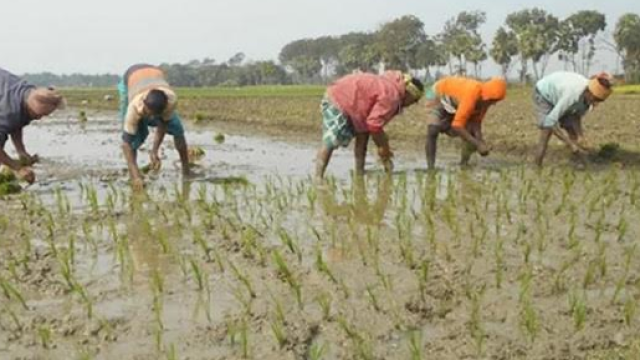
The declaration has created uncertainty for farmers and businesses in the region. BMDA manages nearly 18,000 deep tube wells to supply irrigation water to local farmers. Questions remain about whether these wells can continue operating under the new restrictions, leading to concern among farmers who rely on groundwater for crops. Experts suggest shifting to rain-fed or surface water-based agriculture and increasing the use of water-efficient crops to mitigate the crisis.
Executive Engineer of BMDA’s irrigation division Syed Zillul Bari noted that while the gazette restricts deep groundwater use for agriculture, practical implementation is challenging, and the government will need to make high-level decisions on how to balance water conservation with agricultural needs. BMDA Executive Director Tariqul Alam said the authority is currently collecting data on well numbers, land area, and crop production in the affected zones to inform upcoming decisions.
Local farmers have expressed concern about the potential impact on crop production. Moniruzzaman Monir, a farmer from Chaitanyapur in Godagari, who has been cultivating land since 2006, emphasized that halting irrigation entirely is not feasible and that alternative solutions, including surface water storage and rainwater harvesting, must be prioritized.
Rajshahi Chamber of Commerce and Industry President Masudur Rahman Rinku warned that restrictions on industrial water use could further impede economic growth in the already underdeveloped region. Geologist and mining expert Professor Chowdhury Sarwar Jahan of Rajshahi University stressed the importance of implementing surface water usage and rainwater conservation, including channeling water from the Padma River and maintaining public ponds and canals for agricultural use. He also recommended promoting crops that require minimal irrigation and can grow on rainwater alone.
The gazette emphasizes strict enforcement of these regulations to prevent further degradation of groundwater resources, protect public water access, and promote sustainable water use in the Barendra region.















Comment: