Rajshahi, Oct 26 (V7N) – Betel leaf cultivation has become a major driver of the rural economy in Mohanpur upazila of Rajshahi, generating more than Tk 600 crore in trade during the 2025–26 fiscal year.
Known locally as the “golden leaf,” Mohanpur’s sweet betel leaf received Geographical Indication (GI) recognition on August 31, 2023. Its distinctive taste, aroma and quality have helped build demand across Bangladesh, supporting farmers, traders, labourers and transport workers.
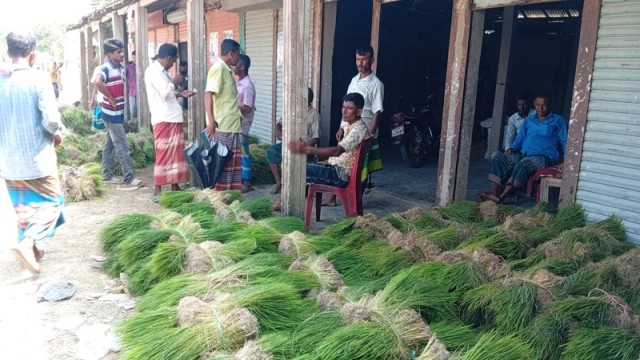
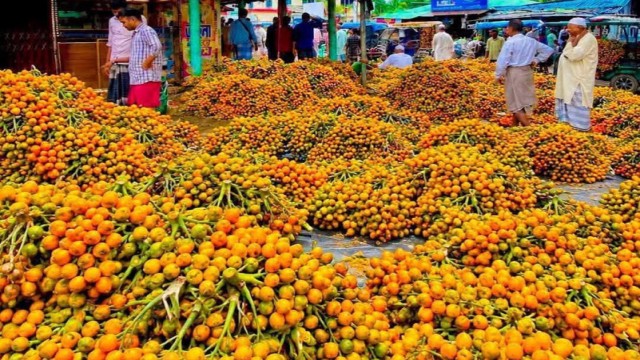
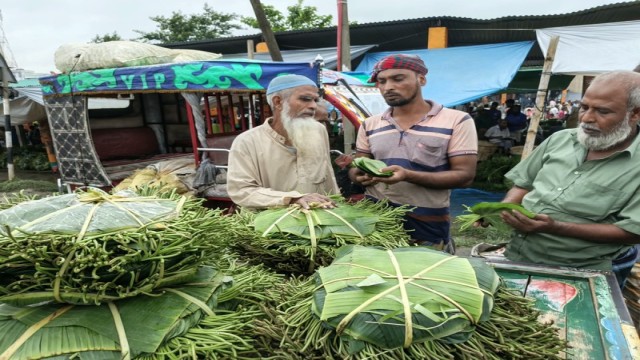
At Ekdiltala market on Sunday, farmers arrived with baskets and sacks of freshly harvested leaves as wholesalers bought, sorted and bundled them for shipment to Dhaka and other parts of the country.
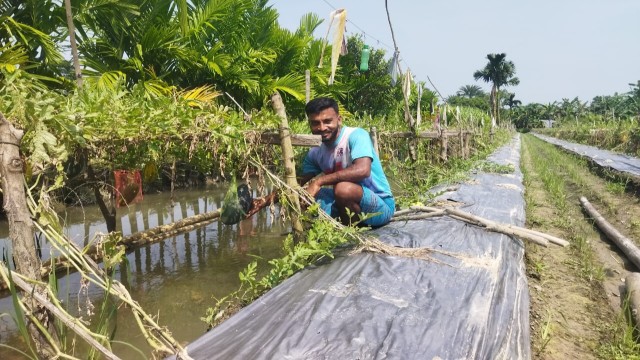
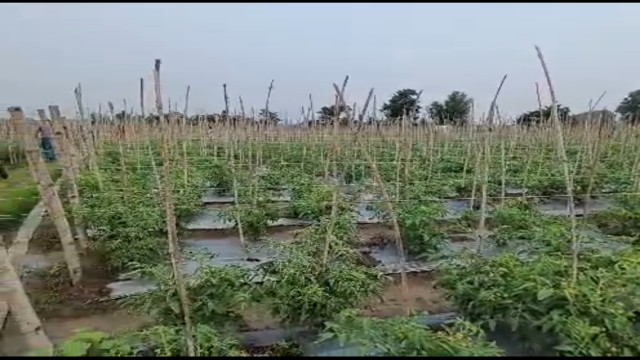
According to the upazila agriculture office, betel leaf is cultivated on about 1,370 hectares of land across Mohanpur, with approximately 14,700 betel leaf gardens. Major cultivation areas include Bakshimail, Mougachhi, Dhuroil, Ghasigram, Jahanabad and Rayghati unions, as well as Kesharhat municipality.
The trade supports a broad local supply chain, including workers and suppliers of bamboo, straw and other materials used to build and maintain betel leaf gardens.
Farmers estimate that establishing a garden on one bigha of land requires an initial investment of Tk 4 lakh to Tk 5 lakh. With good production and proper care, annual sales can reach Tk 8 lakh to Tk 10 lakh, leaving an estimated net profit of Tk 4 lakh to Tk 5 lakh. Actual returns vary depending on yields, disease, labour costs and market prices.
Roich Uddin, a farmer from Saipara village who has cultivated betel leaf for around 25 years, said he had earned a good income from two bighas of land.
“Betel leaf is like a golden leaf to us. We can harvest it and sell it at the market whenever we need cash,” he said, adding that regular care was essential for good yields.
Farmers said prices vary according to size and quality. A bundle of small leaves currently sells for Tk 20 to Tk 30, medium-sized leaves for Tk 60 to Tk 70, and large leaves for Tk 80 to Tk 90. Prices fluctuate with supply, quality and market conditions.
Wholesalers collect betel leaves from markets in Mougachhi and other parts of the upazila before sending them to buyers elsewhere in the country.
Wholesaler Aminul Islam said prices had been favourable this season and that he was shipping supplies directly to traders in Dhaka. Continued strong prices, he said, would encourage farmers.
However, cultivation remains vulnerable to heavy rainfall, waterlogging, intense sunlight and sudden weather changes. Root rot and other diseases can reduce yields, while rising costs for bamboo, straw, fertiliser, agricultural inputs and labour have increased production expenses.
Abdul Hamid, a farmer from Chandpur village, said betel leaf cultivation had helped him become financially self-reliant, but weather-related damage and diseases remained significant risks. He called for regular agricultural advice and accessible disease-control support.
Mohanpur Upazila Agriculture Officer Md Kamrul Islam said farmers’ interest in cultivation was growing because of its income potential. He said agricultural officials regularly advised farmers on cultivation practices and disease management.
He confirmed that betel leaf trading in the upazila exceeded Tk 600 crore in the 2025–26 fiscal year.
Upazila Nirbahi Officer Fahima Binte Akhtar said Mohanpur accounts for about 29 per cent of Rajshahi’s betel leaf production. She said betel leaf was closely connected to the area’s economy and culture and that a proposal had been submitted to establish a betel leaf research institute in Mohanpur.
END/MRA/SMA/