Ukhiya, Nov 20 (V7N) – Rohingya refugees in camps across Ukhiya and Teknaf have welcomed the International Court of Justice (ICJ) ruling holding Myanmar responsible for genocide against the Rohingya community, expressing hope that the landmark decision will lead to justice, restoration of their rights and safe repatriation to their homeland.
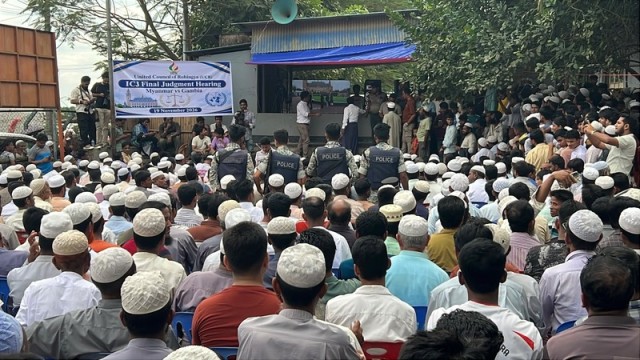
After nearly nine years of waiting, suffering and uncertainty, the ruling has sparked emotional reactions across the refugee camps in Cox’s Bazar. From Thursday afternoon, Rohingya refugees gathered around televisions and large screens in different camps to follow the verdict in the genocide case filed by The Gambia against Myanmar.
As news of the court’s decision spread, many expressed joy and relief, with some offering prayers of gratitude and others shedding tears of happiness.
The refugees hope the ruling will go beyond legal recognition and lead to the prosecution of those responsible, compensation for victims, restoration of their lost rights and the creation of conditions for a safe return to Myanmar.
Against this backdrop, Khalilur Rahman, president of the 81st session of the United Nations General Assembly and Bangladesh's foreign minister, is scheduled to visit Rohingya refugee camps in Ukhiya on Friday morning. He is expected to attend an exchange meeting with members of the Rohingya community.
The special gathering is scheduled to take place at 7:30am at the football field of Rohingya Camp No. 4 in Ukhiya on November 20. Members of a government delegation are also expected to accompany him.
Sources said the visit aims to provide an opportunity for direct discussions with Rohingya refugees about their current conditions, problems and expectations. Issues concerning their rights, security, humanitarian assistance and safe repatriation to Myanmar are expected to feature prominently in the discussions.
The ICJ, the principal judicial organ of the United Nations, began delivering its judgment in the case at 10am local time on Thursday, November 19, at the Peace Palace in The Hague, the Netherlands. Court President Judge Yuji Iwasawa read the judgment.
The 15-judge court ruled by a 9-6 majority that Myanmar was responsible for genocide against the Rohingya population. The verdict came nearly seven years after The Gambia filed the case in 2019.
As the news reached different camps in Ukhiya, celebrations and emotional scenes were reported. Residents of Jamtoli, Hakimpara, Camp 15, Camp 16 and Camp 2W, among others, had been following developments since the morning.
Some watched the proceedings with family members at home, while others gathered at educational institutions and designated locations. Arrangements were made to follow the judgment on large screens, televisions and mobile phones. Both elderly refugees and young people showed keen interest in the proceedings.
At Rohingya Camp 15 in Jamtoli, a large-screen viewing arrangement drew men and women of different ages from around 2:30pm. As key parts of the judgment were announced, many expressed joy and emotion, describing the decision as international recognition of the suffering they had endured for years.
Among those waiting for the verdict were 60-year-old Syed Qasim and Ahmad Ali of Jamtoli camp. They viewed the proceedings as an important opportunity to seek justice for years of deprivation and persecution. Having spent much of their lives away from their homeland, they hope the ruling will ensure accountability for the crimes committed against the Rohingya and help prevent future generations from experiencing similar atrocities.
At Hakimpara High School in Camp 15, 18-year-old Mohammad Rashid was also waiting to hear the verdict. He said he had been waiting since noon with eight members of his family, hoping that the court would deliver justice for the long-standing injustices suffered by the Rohingya.
Another young resident of the camp, Ayat Ullah, said the community was delighted to see a judgment in the genocide case after nearly nine years. He said many people in the camps became emotional, with some shedding tears of joy after the announcement.
Ehsan Ullah, 18, and Ans, 18, from Camp 15 were also among those waiting for the ruling. Other refugees following the proceedings included 32-year-old Abul Bashar from Camp 16 and 28-year-old Mohammad Ismail from Camp 2W.
Their common expectation is that the international legal process will help restore Rohingya rights and create an opportunity for them to return safely to their homeland.
Nazir Hossain, a resident of Block A-2 in Jamtoli camp, also attended the large-screen viewing arrangement from afternoon until evening. He described the judgment as an important international recognition of the persecution suffered by the Rohingya.
Mohammad Rafiq, president of the United Council of Rohingya (UCR), said the ruling had fulfilled a long-standing expectation of the community.
"We have been waiting for this day for a long time. The judgment confirms the genocide committed against the Rohingya by Myanmar. We call on all communities to help implement the ruling and ensure swift legal action against those responsible for killings, rape and persecution," he said.
Abu Sayeed, another resident of the camp, said the community had waited for justice for years and that the judgment must now be implemented.
"Those responsible for the crimes must be held accountable. At the same time, arrangements must be made for our safe return to our homeland," he said.
Rohingya leader Syed Ullah expressed gratitude to all those involved in the judicial process, describing the ruling as an important step towards justice. He called on the international community to continue supporting efforts to establish Rohingya rights and ensure accountability.
Nur Mohammad, head majhi of Camp 2W, said refugees had long been waiting for justice and offered prayers of gratitude after hearing the verdict. He expressed hope that the process would help establish their rights and pave the way for a safe return to Myanmar.
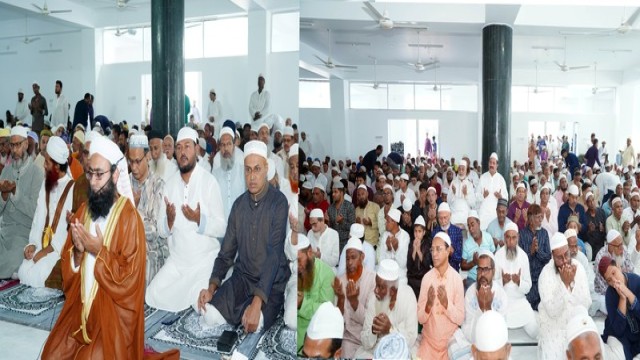
Special prayers were also held in different blocks of refugee camps in Ukhiya and Teknaf. Junaid, a young resident of Balukhali camp, said refugees from several camps had gathered to pray for justice, safe repatriation and the opportunity to return to their homeland.
What the ICJ Said
At the beginning of the judgment, the court referred to evidence that members of Myanmar's security forces had killed thousands of people from the country's minority Muslim Rohingya community and subjected Rohingya women and children to widespread sexual violence and abuse.
Evidence presented to the court included accounts of the killing of around 10,000 Rohingya during the so-called clearance operations in 2017.
Judge Yuji Iwasawa said the operations involved the killing of Rohingya civilians, widespread sexual violence and extreme violence against children. Rohingya attempting to flee to Bangladesh to save their lives were also attacked, the court noted.
The court said that, when considered together, the evidence provided a reasonable basis to conclude that Myanmar's security forces acted with the intent to destroy, in whole or in part, the Rohingya population. It also observed that the conditions created during the 2017 military operations facilitated the violence.
Background to the Genocide Allegations
On August 25, 2017, the Arakan Rohingya Salvation Army (ARSA), an armed group, attacked 30 police posts and an army base in Myanmar's Rakhine State.
Myanmar's military subsequently launched a major security operation in Rohingya-populated areas. Faced with killings, rape, arson and persecution, more than 730,000 Rohingya fled to Bangladesh, with most taking shelter in refugee camps in Ukhiya and Teknaf in Cox's Bazar.
On September 11, 2017, the then UN High Commissioner for Human Rights described Myanmar's military campaign as a "textbook example of ethnic cleansing."
On September 19 that year, Myanmar's then leader Aung San Suu Kyi pledged to hold those responsible for human rights violations accountable.
On December 12, 2017, the international medical and humanitarian organisation Doctors Without Borders (MSF) released findings from a survey conducted in Rohingya refugee camps in Bangladesh. According to its most conservative estimate, at least 6,700 Rohingya were killed between August 25 and September 24, including at least 730 children under the age of five.
On January 10, 2018, Myanmar's military admitted that 10 Rohingya detainees had been killed in Inn Din village in Rakhine State. Seven soldiers were sentenced over the incident but were released early in May 2019.
The Gambia's Case and Seven Years of Legal Proceedings
On November 11, 2019, The Gambia filed a case against Myanmar at the ICJ, accusing the country of violating the 1948 Genocide Convention through its military operations and persecution of the Rohingya in Rakhine State. The case was brought with the support of the Organisation of Islamic Cooperation (OIC).
The Gambia asked the court to determine Myanmar's responsibility and order measures to prevent further acts of genocide.
On January 23, 2020, the ICJ issued provisional measures directing Myanmar to take all steps within its power to prevent genocidal acts against the Rohingya. The court also ordered the preservation of evidence related to the allegations.
On July 22, 2022, the court ruled that it had jurisdiction to hear the case and that The Gambia's application was admissible.
Subsequently, 11 countries, including Canada, Denmark, France, Germany, the Netherlands, the United Kingdom, the Maldives, Slovenia, the Democratic Republic of the Congo, Belgium and Ireland, announced their intention to intervene in specific legal aspects of the case.
The main hearings took place from January 12 to 29, 2026. Following the hearings, the court began its deliberations. On November 3, it announced that the judgment would be delivered on November 19.
Implementation of the Ruling and Hopes for Repatriation
The ICJ directed Myanmar to fulfil its obligations under the Genocide Convention. These include investigating individuals where there are reasonable grounds to suspect involvement in genocide and, where appropriate, prosecuting and punishing those responsible.
The court also called for necessary legislation and measures to prevent similar crimes from happening again.
It further stated that Myanmar must provide adequate, effective and prompt reparation to affected Rohingya. Such measures include restitution of property or compensation, physical and psychological rehabilitation, and safe, voluntary and dignified repatriation.
The details of the amount and method of compensation are to be determined through subsequent legal proceedings.
The ICJ's judgments are final, binding on the parties and not subject to appeal. However, the court has no police force of its own and cannot directly arrest individuals or enforce criminal punishment. Failure to comply with the ruling may be raised before the UN Security Council, making the role of the international community crucial to its implementation.
For more than 1.2 million Rohingya sheltering in Bangladesh, the ruling represents more than a legal decision. It is closely tied to their hopes for justice, security and a return to their homeland.
After years in refugee camps, they continue to face challenges involving education, employment, healthcare and security. Ongoing conflict in Myanmar, uncertainty over citizenship, restrictions on freedom of movement and the lack of security remain major obstacles to repatriation.
The refugees insist that their citizenship and fundamental rights must be guaranteed in Myanmar before they can return. They also want assurances that they will not face further killings, persecution or displacement.
Without guarantees of security, rights and dignity, they say, repatriation cannot be sustainable.
Meanwhile, Khalilur Rahman's scheduled visit to the camps has raised fresh expectations among the refugees. According to sources, the visit is intended to provide an opportunity to hear directly from community members about their present conditions and concerns. It will be his first visit to the Rohingya refugee camps since assuming the presidency of the 81st session of the UN General Assembly.
Nearly nine years after the beginning of their wait for justice, the ICJ ruling has brought renewed hope to Rohingya refugees in Ukhiya and Teknaf. Amid celebrations, emotion and gratitude, their central demands remain clear: accountability for past crimes, restoration of their rights and guarantees of a safe return to their homeland.
They are now looking to the international community to ensure that the court's decision is translated into meaningful action and contributes to resolving the Rohingya crisis.
END/MSI/SMA/