


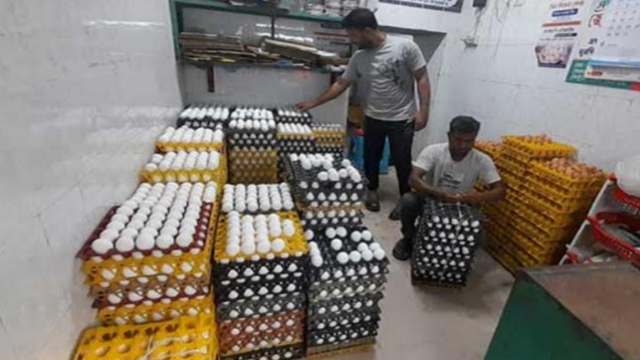
RAJSHAHI, Mar 18, (V7N) — Bangladesh’s poultry industry, valued at Tk 50,000 crore, is facing mounting losses as small and medium farmers struggle against falling egg prices, rising feed costs, and alleged market manipulation by large corporate players.
Farmers say they are losing Tk 3 per egg, with production costs averaging Tk 9.5 while wholesale prices have dropped to Tk 6–6.5. “In the last five months, due to continuous losses, I have already sold 4,000 egg‑producing chickens as meat,” said Mohammad Asaduzzaman, a farmer from Rajshahi city.
Rajshahi, particularly Paba upazila, is one of the country’s largest egg‑producing regions, with more than 2,500 farms. But Rajshahi Poultry Association President Enamul Haque said farm numbers have halved in the past 18 months. “If this trend continues, small farms will gradually disappear from the sector,” he warned.
Farmers blame rising feed costs — corn now sells at Tk 32 per kg, up from Tk 25–27, while soybean has jumped to Tk 62–70 from Tk 49–52 — and accuse large producers of deliberately flooding the market to push smaller competitors out. “Big players own hatcheries and feed mills, so they can survive low prices. But for us, it is unsustainable,” said Atiqur Rahman of Paba.
Ziarul Islam, a farmer from Godagari, reported losses of Tk 1 lakh in February alone. “White eggs that sold at Tk 8.10 in October now fetch only Tk 6. Wholesale brown eggs have dropped by Tk 2–3,” he said.
Rajshahi Chamber of Commerce and Industry President Masudur Rahman Rinku said corporate institutions are dominating egg production and breeding, leaving small entrepreneurs unable to compete. He urged government intervention, stressing the need for policy support and market monitoring to protect marginal farmers.
Livestock Department data shows Rajshahi produces 668.3 million eggs annually against a demand of 303.1 million, creating oversupply and driving down prices. Farmers warn that without immediate action, small and medium farms will collapse, concentrating the industry in the hands of a few corporations and threatening food security.
END/RA/RH/






















Comment: