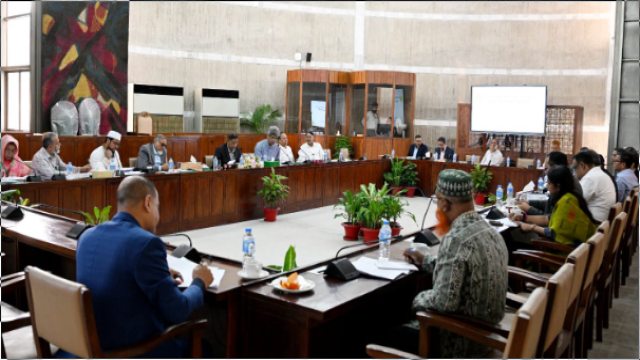
Sangsad Bhaban, Nov 12, (V7N) – Bangladesh has significant potential to earn US$5 billion annually from leather exports by 2030 through improved environmental compliance, upgraded effluent treatment facilities and expansion into international markets, Industries Minister Khandakar Abdul Muktadir told Parliament on Thursday.
"There is considerable potential to achieve annual export earnings of US$5 billion from the leather industry by 2030," he said in reply to a starred question from treasury bench lawmaker Mohammed Enamul Hoque (Chattogram-12).
The minister said the global leather market was currently worth around US$500 billion. Although nearly 20 percent of the European market requires Leather Working Group (LWG) certification, the remaining 80 percent of the global market, including Africa and South America, does not have similar mandatory requirements. "Alongside ensuring international compliance, Bangladesh has opportunities to strengthen its position in the global market by expanding exports to these markets," he said.
He said Italprogetti had completed a technical assessment for upgrading and rectifying the existing Central Effluent Treatment Plant (CETP). The government plans to urgently upgrade the CETP's treatment capacity to 25,000 cubic metres per day and subsequently expand it to 40,000 and 50,000 cubic metres in phases, depending on demand, he said.
To reduce pressure on the central treatment plant and ensure environmental compliance, the government has already permitted seven tanneries in the industrial estate to install their own Effluent Treatment Plants (ETPs). The seven tanneries are Pioneer Simona Tannery (formerly Bay Tannery), Apex Tannery, Sadar Tannery, Bengal Tannery, Samina Tannery, Anjuman Tannery and Dhaka Hide Tannery. Of them, Pioneer Simona Tannery and Sadar Tannery have installed their own ETPs and started operations, while Apex Tannery has begun ETP construction, he said.
The minister said the government had also instructed tanneries allocated more than 50,000 square feet of land to take initiatives to install their own ETPs. He said the authorities were regularly monitoring necessary measures to help tanneries obtain LWG certification in line with High Court directives. These measures include manual desludging, installation of sedimentation tanks and separation of general waste and liquid waste drainage lines.
Muktadir said under the LWG Protocol (Version 7.2.2 Rev.1), tanneries must independently achieve 82.5 percent of the total assessment score through compliance with various indicators, including environmental management, chemical management, traceability, occupational health and safety, and legal requirements.
He added that the government was also working to formulate a practical roadmap in consultation with relevant stakeholders to increase production and exports of leather and leather goods and non-leather footwear. The roadmap will focus on product diversification, attracting investment and enhancing the sector's competitiveness in international markets.
Implementation of these initiatives will enhance the international acceptance of Bangladesh's leather industry and strengthen its export capacity, helping achieve the target of US$5 billion in annual export earnings by 2030, the minister said.
END/AJ/RH/