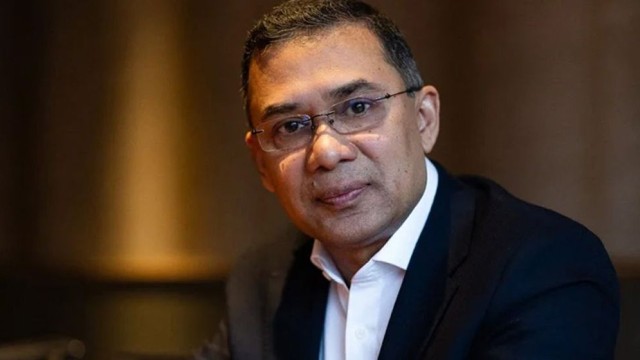
Dhaka, Dec 24 (V7N)- The long wait is finally over. BNP Acting Chairman Tarique Rahman is returning to his homeland tomorrow after nearly 17 years in exile, a moment that party leaders and activists are describing as a historic homecoming marked by sacrifice, endurance, and political resilience.
To his supporters, this is not just a physical return to Bangladesh—it is a return to his soil, his roots, and his mother. BNP leaders say Tarique Rahman is coming back after overcoming years of personal suffering, family grief, and political persecution, ready to lead the party from the front lines.
Tarique Rahman left Bangladesh in 2008 for advanced medical treatment in London after suffering severe physical deterioration, which his party attributes to prolonged torture during remand. His last meeting with his mother, former Prime Minister Khaleda Zia, in Bangladesh took place on September 11, 2008, when she rushed to Bangabandhu Sheikh Mujib Medical University following his release from a special prison.
Politics Shaped by Turbulent Times
Born into a family at the heart of Bangladesh’s political history, Tarique Rahman’s life unfolded alongside major national events. At the age of six, during the Liberation War of 1971, he and his younger brother were imprisoned with their mother while their father, Ziaur Rahman, fought on the battlefield. Even when Ziaur Rahman later became President, Tarique remained a quiet observer—still a teenager—absorbing the realities of power and responsibility.
During the anti-Ershad movement, while Khaleda Zia led protests on the streets, Tarique Rahman, then a university student, immersed himself in political philosophy and global thought. Party leaders say he studied thinkers ranging from Socrates, Plato and Aristotle to Hobbes, Locke, Rousseau, Voltaire and Karl Marx, shaping his understanding of governance, democracy, and human rights. He also endured repeated periods of house arrest alongside his mother.
Rise Through the Ranks
Tarique Rahman formally entered politics in 1988 as a primary member of the Gabtoli Upazila BNP in Bogura. He actively participated in the 1991 general election campaign and gradually focused on grassroots engagement. Ahead of the 2001 election, he initiated intellectual discussions to identify and address local-level problems.
By 2002, he had begun assuming major organizational responsibilities within BNP. From 2005 onward, he extensively toured villages and rural areas, strengthening the party’s presence at the grassroots.
The political crisis of 2007 marked a turning point. Severely ill, he was released from remand on September 3, and within days was flown to London for treatment—a journey that would turn into a long exile.
In 2009, Tarique Rahman was appointed Senior Vice Chairman of BNP. Despite being away from the country, party leaders say he continued to shape BNP’s strategy, envisioning a developing Bangladesh while living in a developed one.
Role in Recent Political Transition
BNP leaders claim that Tarique Rahman played a key strategic role behind the scenes during the political upheaval of 2024, helping organize and energize party activists. They say he balanced support for the interim government with persistent calls for free, fair, and timely elections, emphasizing the necessity of a political government for long-term stability.
According to party insiders, he simultaneously monitored the movement against authoritarianism while advocating for state reforms, demonstrating what they describe as political foresight and restraint.
A New Chapter Begins
With his return, speculation, anxiety, and uncertainty have given way to excitement and renewed confidence among BNP supporters. Leaders and activists see his homecoming as the beginning of a new chapter in nationalist politics, one rooted in patriotism and democratic aspirations.
Now back on the soil of Bangladesh, Tarique Rahman faces what many describe as his most critical test yet. To his followers, this return is more than symbolic—it represents hope, renewal, and the promise of leadership at a decisive moment in the nation’s political journey.
END/SMA/AJ