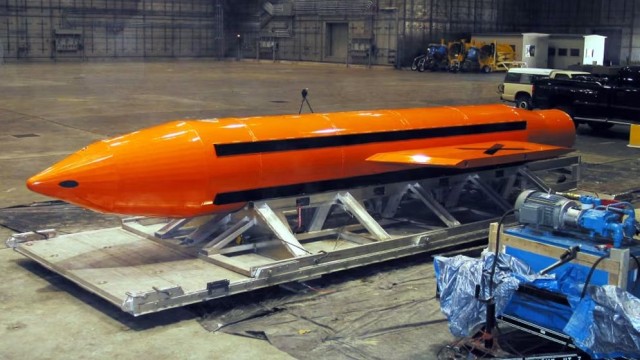
Washington, Oct 16 (V7N)- The White House and the Pentagon have reportedly prepared contingency plans for using the United States’ largest conventional bomb, the GBU-43/B Massive Ordnance Air Blast (MOAB), against Iranian military installations if President Donald Trump orders such an operation, according to US media reports.
CBS News and CNN reported on Thursday, October 15, citing sources familiar with the matter, that the Pentagon had developed military options to implement presidential directives and respond to different operational scenarios.
A Pentagon official told CBS News that the Department of Defense routinely prepares a range of military plans to carry out instructions from the president and the defence secretary and to support the success of operations under different circumstances.
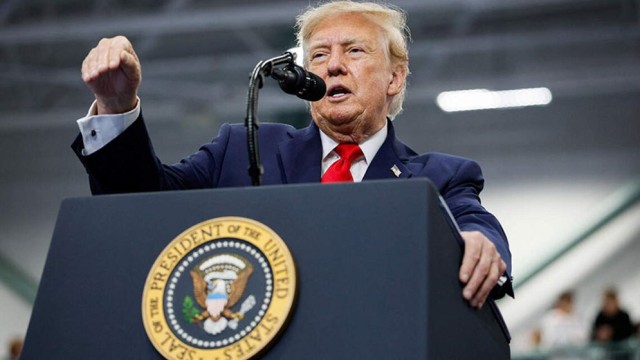
A White House spokesperson declined to comment on potential or existing sensitive military plans. The spokesperson said Trump was considering all options to ensure Iran never acquires nuclear weapons.
Trump previously said he had no plans to attack Iran before the US midterm elections and claimed that discussions with Tehran had been productive. However, he has also warned that military confrontation could intensify if the two sides fail to reach an agreement.
Addressing the United Nations General Assembly last month, Trump said a major decision might ultimately be required between reaching a deal with Iran and taking devastating military action against the Islamic Republic.
What is the ‘Mother of All Bombs’?
The GBU-43/B MOAB is one of the largest conventional bombs in the US arsenal. Weighing approximately 21,600 pounds, or 9.8 tonnes, it is designed to inflict extensive damage across a broad area, primarily against surface targets and exposed military positions.
The United States first used the bomb in combat in April 2017, during Trump's first presidential term, targeting an Islamic State tunnel complex in Afghanistan.
Questions Over Effectiveness Against Underground Facilities
The MOAB's effectiveness against Iran's heavily protected underground facilities remains uncertain. Military analysts have questioned whether the weapon could destroy deeply buried, rock-protected installations associated with Iran's nuclear programme, including facilities reportedly located around Pickaxe Mountain.
Unlike specialised bunker-busting weapons designed to penetrate hardened underground structures, the MOAB is primarily intended to produce extensive blast effects over a wide area. Its ability to neutralise deeply buried targets would therefore be limited and uncertain.
Strait of Hormuz Adds to Regional Tensions
The reported contingency planning comes amid heightened tensions over the Strait of Hormuz, a critical global oil shipping route. The United States has been seeking to keep maritime traffic moving through the waterway while enforcing restrictions on Iranian ports.
Threats and attacks affecting commercial shipping have contributed to concerns over energy supplies and volatility in global crude oil markets.
The reported inclusion of the MOAB in potential military options has added to concerns about a possible escalation between Washington and Tehran. However, the reports do not establish that Trump has authorised the use of the bomb or that a final decision has been made.
END/SMA/AJ