


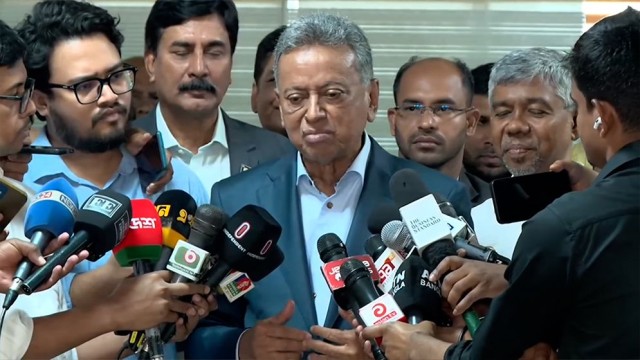
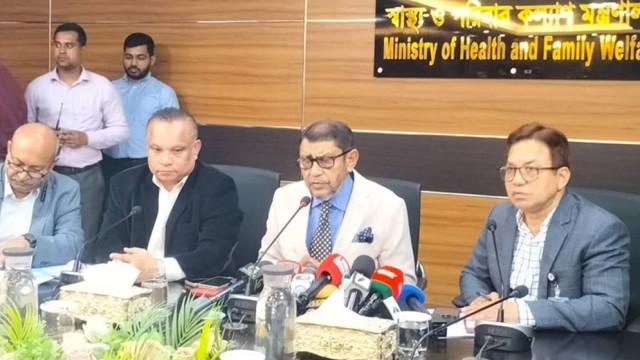
DHAKA, Apr 01 (V7N) — Finance Minister Amir Khasru Mahmud Chowdhury has acknowledged that the government is under significant financial strain as global oil prices continue to climb due to the ongoing conflict in the Middle East. Speaking to reporters on Wednesday morning following a high-level meeting with the Chairman and officials of the National Board of Revenue (NBR), the Minister detailed the administration's strategy to navigate these overlapping economic crises.
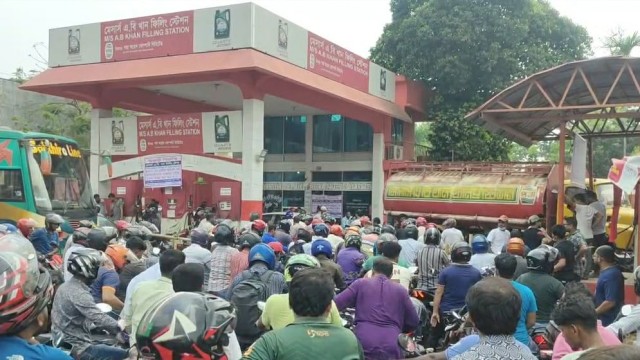
The Finance Minister emphasized that while the global market remains volatile, the government is "forced" to purchase fuel at higher rates to maintain domestic stability, even as it actively seeks alternative supply chains.
Inherited Fragility and New Crises
Minister Chowdhury outlined the three-pronged challenge currently facing the national treasury:
-
The "Fragile" Legacy: The Minister stated that the current administration inherited a severely weakened economy from the previous regime, characterized by high debt and depleted reserves.
-
Middle East Shock: The 32nd day of the U.S.-Iran conflict has pushed international crude prices to record levels, complicating the government's import bill.
-
Manifesto Commitments: Despite these pressures, the government remains committed to fulfilling the ambitious socio-economic promises made in its election manifesto.
Shift to an "Investment-Based" Economy
A key highlight of the Minister’s briefing was a strategic pivot in national fiscal policy.
"The government wants to move away from a debt-based economy to address the current crisis and transition toward an investment-based economy," Chowdhury declared.
To facilitate this, the NBR has been directed to streamline tax processes and create a more "investor-friendly" environment. The goal is to reduce reliance on foreign loans and domestic borrowing by stimulating local and foreign direct investment (FDI).
Budget 2026-27: Focus on the Marginalized
With the national budget for the upcoming fiscal year currently under preparation, the Finance Minister assured that the needs of vulnerable groups remain at the forefront.
-
Inclusive Planning: The upcoming budget is being designed with specific allocations and protections for women, children, and marginalized communities.
-
Business Stability: The Minister emphasized that ensuring a stable and predictable environment for businessmen is a priority to foster growth.
-
Inflation Control: Despite the fuel price surge, the Ministry of Finance is working with the NBR to find tax-based relief measures to prevent a spike in the cost of essential goods.
Tax Administration Reforms
During the meeting at the NBR building, the Finance Minister reportedly discussed digitizing the tax collection system to increase transparency and reduce harassment. By widening the tax net rather than increasing the burden on existing taxpayers, the government hopes to generate the revenue needed to bridge the deficit caused by rising energy costs.
END/SMA/AJ








Comment: