


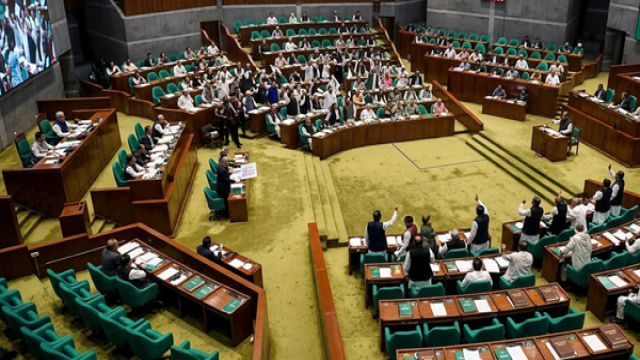
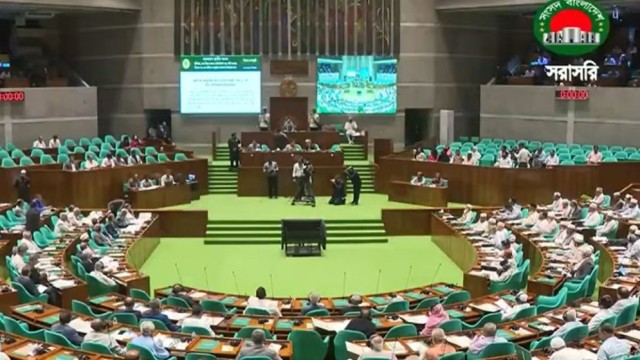
SANGSAD BHABAN, March 29 (V7N) — Parliament on Sunday witnessed a heated debate before fixing March 31 for a two‑hour discussion on the July National Charter (Constitution Reform) Implementation Order, 2025, following an adjournment motion placed by Opposition Leader Dr. Shafiqur Rahman.
Dr. Rahman, also the Ameer of Bangladesh Jamaat‑e‑Islami, submitted the notice under Section 62 of the Rules of Procedure, urging adjournment of House business to summon the first session of the Constitution Reform Council. He argued that since 70 percent of voters supported the Charter in the February 12 referendum held alongside the 13th parliamentary election, MPs are legally obliged to take dual oaths — as members of both Parliament and the Council. He criticized BNP‑led alliance MPs for refusing to take the Council oath, noting that only 77 Jamaat‑led MPs had complied.
The opposition leader stressed that Article 10 of the Charter requires the Council’s first session within 30 days of election results, but no session has yet been summoned. “It is never desirable to create such a deadlock by ignoring the expectations of the nation,” he said, urging the Speaker to allow discussion.
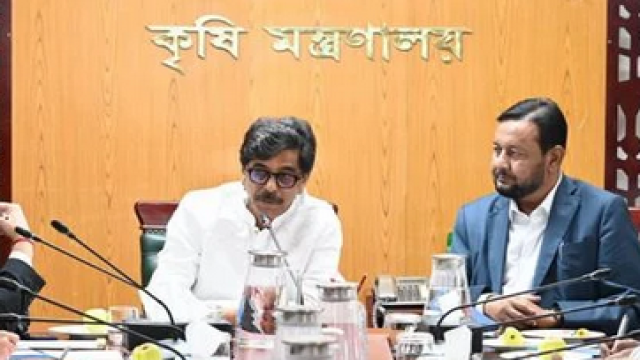
Law Minister Md. Asaduzzaman described the motion as “logical and timely,” supporting debate from both sides. He requested the Deputy Speaker to fix a time and suggested MPs be provided with four relevant reference books during the discussion. “The entire nation is in a state of confusion regarding the July National Charter. We want it implemented,” he said.
Deputy Speaker Barrister Kayser Kamal, who was chairing the House, then fixed March 31 for the discussion as the last agenda of the day.
However, Home Minister Salahuddin Ahmed raised a point of order, questioning the procedural validity of the adjournment motion. He argued that constitutional reform requires legislative action, not adjournment under Rule 62, citing Rule 63 which bars debate on matters needing legislation. He suggested instead using Rule 68, which allows a two‑hour discussion, and proposed forming an all‑party Constitutional Reform Committee to gather expert and stakeholder opinions before submitting recommendations to Parliament.
Ahmed clarified he was not opposing the proposal itself but emphasized adherence to parliamentary procedure. He warned against deciding constitutional matters through a simple yes‑or‑no vote, calling instead for broad national consensus. “We want a constitutional amendment that reflects the aspirations of the people, including the spirit of the July uprising, and can stand the test of time,” he said.
The debate grew tense as opposition MPs protested, prompting the Speaker to urge order. At one point, the Home Minister sought the Speaker’s protection to continue uninterrupted, warning against a return to past disorder.
Opposition Leader Dr. Rahman later asked whether the Speaker had reopened the issue after already issuing a ruling. The Deputy Speaker reiterated that his decision had been pronounced and urged both sides to take their seats.
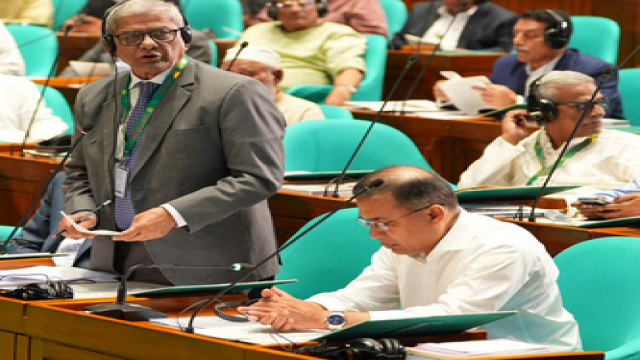
Adding to the debate, BNP Standing Committee member Hannan Masud remarked that “Gen Z doesn’t want the 1972 Constitution,” highlighting generational demands for reform aligned with the July Charter.
The session underscored deep divisions over the Charter’s implementation, with opposition pressing for immediate Council action and ministers stressing procedural correctness and consensus.
END/AJ/RH/


















Comment: