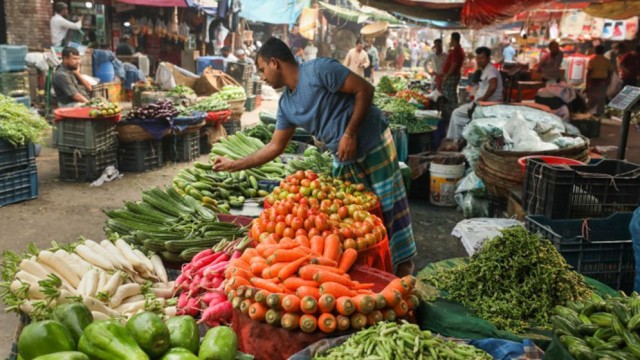
Dhaka, Aug 14 (V7N)- Despite a slight decline in wholesale egg prices, retail prices remain high in the capital, with red eggs selling for up to Tk 150 per dozen. Supply shortages have also pushed up the prices of fish, vegetables and poultry, increasing the pressure on consumers.
The situation was observed during visits to several markets in Dhaka on Friday (August 14).
Traders said the supply of eggs to small shops has fallen sharply. Where around 4,000 eggs previously arrived at some shops, they are now receiving roughly half that amount.
Broiler chicken prices have also remained high. Although the price has fallen from Tk 200 per kg last week to around Tk 190 on Friday, golden, hybrid and layer chicken prices remain unchanged. Golden chicken is selling for Tk 320-340 per kg, hybrid chicken for Tk 290-300 and layer chicken for around Tk 350.
Fish prices have also increased amid supply concerns. Traders said prices of several large freshwater fish have risen by Tk 50-100 per kg over the past week.
Pangasius is selling for around Tk 230 per kg and tilapia for Tk 260. Depending on quality, shrimp is priced at Tk 800-900 per kg, pabda at Tk 350-400, rui at Tk 300-500 and tangra at around Tk 700.
Bhetki is selling for Tk 400-550 per kg, mrigel Tk 250-300, bain Tk 600-800, local koi Tk 700-800, farmed koi Tk 300, poya Tk 260 and shol around Tk 700. Farmed shing is being sold for Tk 300-450 depending on size. Some varieties, including rupchanda, shol and river fish, are also selling for more than Tk 1,000 per kg.
Vegetable prices have also remained high. Most vegetables are still selling for around Tk 80 per kg, while prices of some items have crossed Tk 100. Tomatoes, carrots, green chillies and coriander leaves have become particularly expensive, adding to consumers' difficulties.
Traders attributed fluctuations in vegetable prices to weather conditions, transportation costs and variations in supply between markets. They said perishable vegetables also carry a high risk of loss if they are not sold quickly, forcing traders to adjust prices according to daily market conditions.
Consumers, however, said stronger market monitoring is needed to prevent excessive price increases between wholesale and retail markets.
Although official data show that inflation has eased, consumers say they are yet to feel any significant relief while shopping for essentials. According to recently released Bangladesh Bureau of Statistics (BBS) data, overall inflation fell slightly to 8.32 percent in July, while food inflation declined to 7.16 percent.
Traders and consumers also pointed to the impact of heavy rains and flooding in several districts last month. The resulting disruptions to supply chains, along with higher fuel, electricity and gas costs, have increased transportation and production expenses, keeping pressure on prices in Dhaka's markets.
END/SMA/AJ