New York, Nov 29 (V7N)- Online shopping in the United States reached a new record on Black Friday, despite fewer consumers visiting physical stores than last year. The rise in fuel and other consumer goods prices amid the Iran war has also put pressure on household budgets, influencing shopping patterns.
Preliminary figures released on Saturday (November 28) showed that retail sales increased both online and in stores, although the growth in online purchases was more pronounced.
According to Mastercard SpendingPulse, retail sales in the United States, excluding gasoline and automobile purchases, rose 5.8 per cent compared with Black Friday last year. The calculation was based on transaction data covering various payment methods, including cash.
Adobe Analytics, which tracks e-commerce transactions, reported that online sales in the United States reached $13.1 billion on Black Friday. The figure exceeded the company's forecast and represented an 11 per cent increase from the same period last year.
The growth in sales was not driven by higher product prices alone. Rising fuel costs and prices of some consumer goods amid the Iran war have also affected household spending. Meanwhile, Salesforce data showed that the number of Black Friday orders increased by 5 per cent year on year.
Online shopping also set a global record. According to Salesforce, worldwide online sales on Friday reached $82.7 billion, up 5 per cent from last year. Of the total, $19.1 billion came from the US market.
However, Adobe and Salesforce reported different figures for online sales because of differences in their data collection methods. Salesforce analysed global shopping data from more than 1.5 billion consumers, while Adobe based its calculations on more than one trillion visits to US retailers' websites.
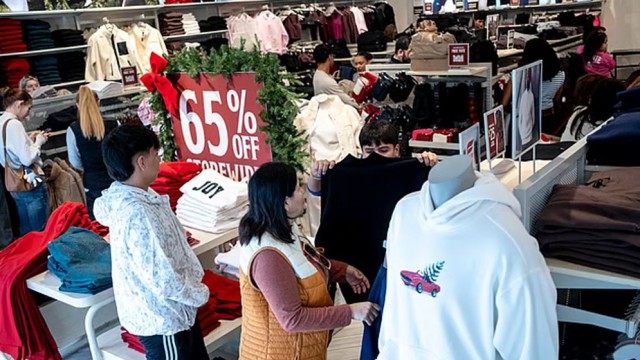
Despite the growing popularity of online shopping, most Black Friday purchases in the United States are still made in physical stores. However, this year's customer turnout was lower than last year.
RetailNext, a company that analyses customer traffic and retail attendance, reported that visits to stores on Black Friday fell 2.9 per cent compared with 2025.
The trend of shopping in physical stores on Black Friday has declined in recent years, partly because of the growing popularity of online shopping. Adverse weather conditions in various parts of the country may also have contributed to the drop in store visits.
Rising costs of everyday necessities are another factor affecting consumer decisions. Higher spending on fuel, groceries and housing has put pressure on household budgets, prompting many families to reconsider where they shop and what they purchase.
Joe Shastin, global manager of advanced analytics at RetailNext, said consumers were reorganising their shopping plans as household budgets came under increasing pressure.
Another analytics firm, Sensormatic Solutions, reported a similar decline in store attendance. According to the company, shopper visits on Black Friday fell 4.2 per cent compared with last year. However, attendance was 250 per cent higher than on the previous Friday.
Despite fewer shoppers visiting physical stores, total spending on in-store purchases increased. Mastercard SpendingPulse reported that such spending rose 3.8 per cent on Black Friday, marking the strongest growth in this category since 2022.
Michel Meyer, chief economist at the Mastercard Economics Institute, said that inflation could account for around half of the forecast increase in retail sales during this year's holiday shopping season.
END/SMA/AJ