


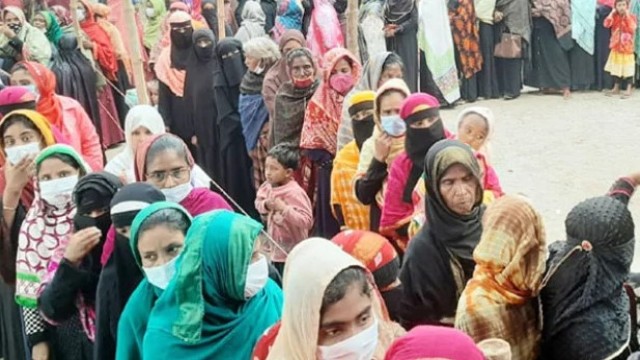
Sylhet, Feb 7 (V7N) — As Bangladesh moves closer to the 13th National Parliamentary Election, political calculations across the Sylhet division are undergoing a visible shift, with female voters emerging as the most strategically important segment of the electorate.
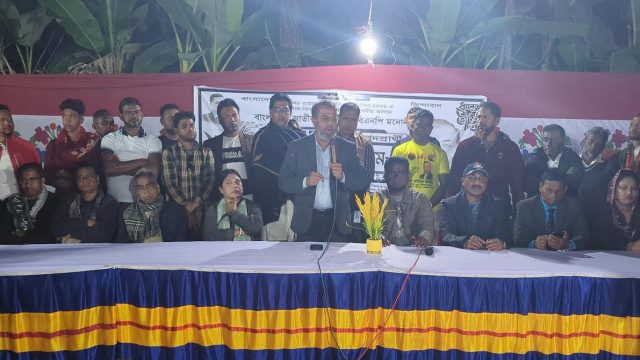
Campaign activity across all six constituencies in Sylhet indicates a clear pattern. Candidates are prioritizing outreach to women voters, deploying female campaign representatives for door-to-door engagement in residential areas and neighborhoods. Political insiders say the objective is clear: maximizing women’s turnout on election day, which many now view as the decisive factor in determining results.
Political analysts believe this heightened focus on female voters is driven largely by the current electoral context. With the Awami League and its allied parties not participating in the election, analysts anticipate a relatively higher presence of women voters compared to men. This shift, they argue, could significantly influence voting patterns and final outcomes, particularly in closely contested constituencies.
According to data from the Sylhet District Election Office, the division has a total of 2,916,579 registered voters. Of these, 1,417,610 are women, 1,498,953 are men, and 16 are registered under the third gender category. Women account for 48.5 percent of the electorate, a near-equal share that gives them considerable leverage in shaping electoral results.
Constituency-wise voter data further highlights this influence. Sylhet-1 has the highest number of female voters in the division, making it a focal point for intensive campaigning. Sylhet-6 follows closely, while Sylhet-2 has the lowest number of female voters. The remaining constituencies—Sylhet-4, Sylhet-5, and Sylhet-3—fall in between, creating varying levels of electoral competitiveness.
In Sylhet-1, the electorate totals 680,943 voters, including 327,747 women. Sylhet-2 has 368,900 voters, with women numbering 180,240. Sylhet-3 counts 204,278 women among its 415,966 voters. In Sylhet-4, female voters stand at 245,801 out of 512,933. Sylhet-5 has 207,390 women voters from a total of 428,746, while Sylhet-6 records 252,154 women voters among 509,091 registered voters.
Analysts note that beyond numerical strength, women voters are increasingly seen as more consistent participants on polling day, particularly in urban and semi-urban areas. This perception has reinforced campaign strategies that emphasize direct engagement, household-level messaging, and women-led outreach.
As election day approaches, observers say the key question is no longer whether women voters will influence the outcome in Sylhet, but how decisively they will do so. In a race shaped by turnout rather than sheer party dominance, female voters may well determine the final political map of the region.
END/AKR/SMA/







Comment: