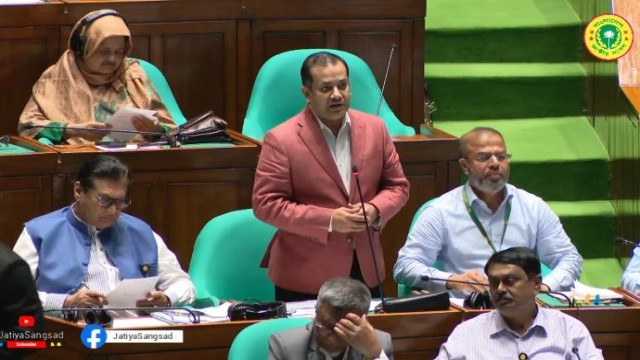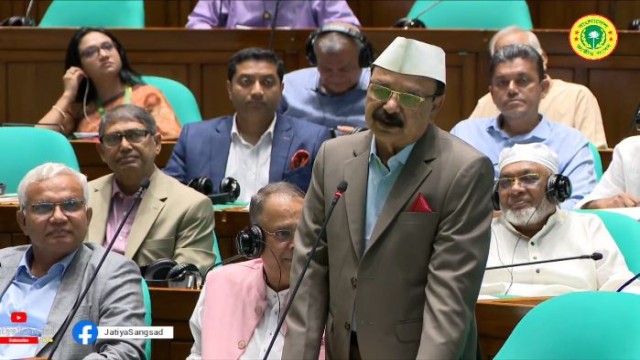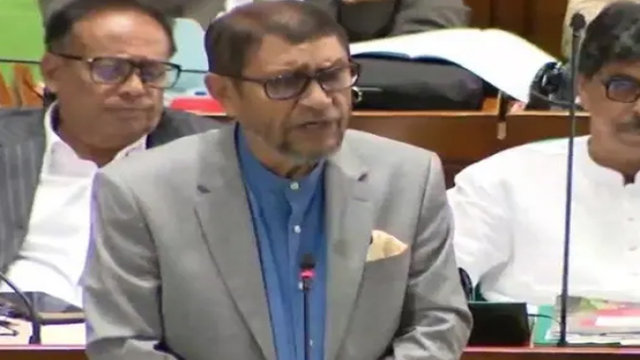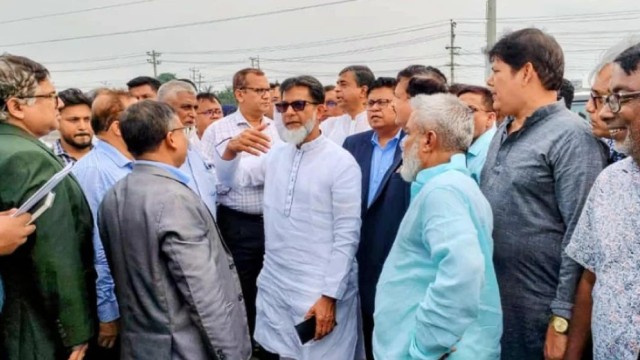
SANGSAD BHABAN, June 28 (v7n): Jatiya Sangsad (JS) Whip and Khulna-3 lawmaker Rakibul Islam Bakul today characterized the proposed national budget for the fiscal year 2026-27 as a bold layout of Prime Minister Tarique Rahman's structural vision for building a new Bangladesh.
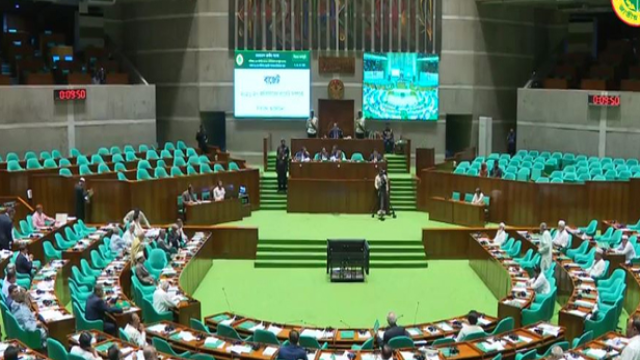
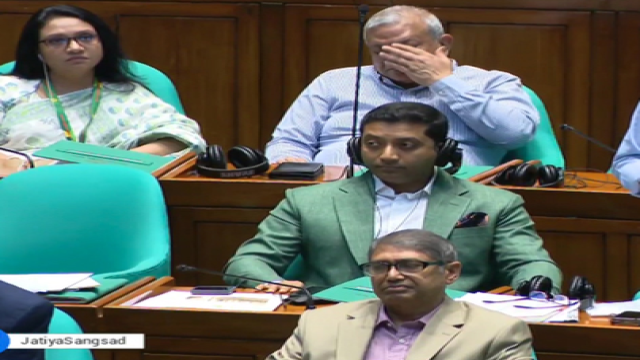
Taking part in the general parliamentary discussion on the proposed budget during a session presided over by Speaker Hafiz Uddin Ahmad, Bir Bikram, the Whip stated that the financial blueprint presents a clear roadmap designed to fortify the national economy and uplift the living standards of ordinary citizens.
Acknowledging the complex fiscal reality, Bakul described the proposed budget as "challenging," noting that it has naturally generated both appreciation and criticism across the floor. While some quarters have labeled the fiscal targets ambitious and expressed reservations regarding realistic implementation, he voiced strong optimism that proper administrative planning and robust political will would guarantee successful execution.
The Whip highly commended the government's early track record, pointing out that the administration has actively begun executing its core electoral pledges within a very short period of assuming office. He noted that the newly launched Family Card programme has successfully revitalized rural economic circles, while targeted micro-initiatives have started helping marginalized women attain self-reliance. Furthermore, he emphasized that specialized rural interventions, including the Farmers' Card program and extensive canal excavation drives, have generated fresh optimism among agricultural communities.
Turning attention to the critical developmental needs of his own constituency, Khulna-3, the Whip pointed out a major economic challenge, noting that several historic state-owned industrial hubs—including the Khulna Newsprint Mill, various local Jute Mills, and the Hardboard Mill situated across the Khalishpur, Daulatpur, and Khan Jahan Ali industrial belts—have remained completely shut down for a prolonged period.
To address this localized stagnation, he strongly urged the government to either systematically reopen these defunct mills or rapidly transform the lands into modern economic zones. Such an intervention, he emphasized, is vital to generate direct employment opportunities for approximately 20,000 to 25,000 currently unemployed industrial workers in the region.
Bakul concluded his budget speech by demanding increased state allocations for the healthcare and education sectors in Khulna-3. He highlighted a severe institutional gap, revealing that despite hosting a population of nearly one million people, the constituency still lacks a full-fledged general hospital. To remedy these regional disparities, he requested the government to fast-track the establishment of Khulna Medical University, set up a specialized agricultural university along with a women's cadet college, and disburse necessary development funds to upgrade the Khulna Divisional Stadium.
end/aj/rh/