


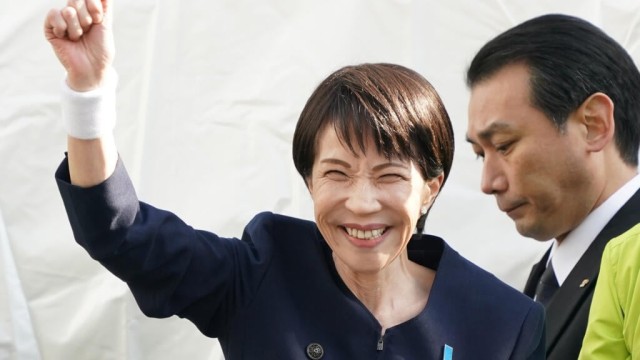
Tokyo, Feb 5, (V7N) — Japan goes to the polls on Sunday in snap elections widely expected to deliver a decisive victory for Prime Minister Sanae Takaichi and her conservative bloc, following a strong start to her tenure as the country’s first woman leader.
Opinion polls indicate that Takaichi’s Liberal Democratic Party (LDP) is on track to comfortably regain a parliamentary majority, potentially securing a two-thirds supermajority with its coalition partner, the Japan Innovation Party (JIP). Such a result would mark a dramatic turnaround for the LDP after a series of electoral setbacks that had left it weakened in both houses of parliament.
Takaichi, 64, an arch-conservative and self-professed admirer of former British prime minister Margaret Thatcher, assumed office in October, becoming Japan’s fifth prime minister in five years. Her energetic style and clear messaging have resonated with voters, particularly younger Japanese, turning her into a social media favorite and an unlikely fashion icon.
“It’s not just because she’s a woman,” said 17-year-old high school student Makoto Hara. “It’s because she talks about building a society where people can have hope for the future.”
Her straightforward rhetoric, including a tough stance on immigration, has also blunted the rise of the populist “Japanese First” Sanseito party, analysts say. Cabinet approval ratings have hovered around 70 percent, far higher than those of recent administrations, despite slipping slightly in recent weeks.
Surveys ahead of Sunday’s lower house vote suggest the LDP will easily surpass the 233 seats needed for a majority, with the ruling bloc possibly winning more than 300 of the 465 seats available. Meanwhile, the newly formed Centrist Reform Alliance, led by the opposition Constitutional Democratic Party (CDP), is forecast to suffer heavy losses.
However, questions remain over how a strengthened Takaichi government would shape Japan’s regional and economic policies.
Relations with China have been strained since Takaichi took office. A frequent visitor in the past to Tokyo’s Yasukuni shrine — a sensitive symbol in East Asia — she alarmed Beijing by suggesting Japan could intervene militarily if China attempted to seize self-ruled Taiwan by force. The remarks came shortly after she warmly welcomed US President Donald Trump to Japan, further angering Beijing.
China responded by summoning Japan’s ambassador, issuing travel warnings, conducting joint military drills with Russia near Japan, and returning Japan’s remaining pandas — long viewed as symbols of diplomatic goodwill.
Despite the tensions, some analysts believe a strong electoral mandate could stabilize ties. “Beijing recognises strength,” said Yee Kuang Heng, an international security expert at the University of Tokyo, suggesting China may decide it has no choice but to deal pragmatically with a more secure Takaichi.
Markets have also been unsettled by Takaichi’s economic agenda. Her $135-billion stimulus package, plans to exempt food from consumption tax, and comments welcoming a weaker yen have pushed long-term Japanese bond yields to record highs and added volatility to the currency.
Japan already carries the heaviest debt burden among major economies, with public debt expected to exceed 230 percent of GDP this fiscal year. Still, some economists downplay fears of fiscal recklessness.
“In the event that the government did attempt to play fast and loose with public finances, bond markets would put it in check,” said Abhijit Surya of Capital Economics.
As voters head to the ballot box, Japan appears set to grant Takaichi a powerful mandate — one that could redefine the country’s domestic politics, economic direction and regional role in the months ahead.q
END/WD/RH























Comment: