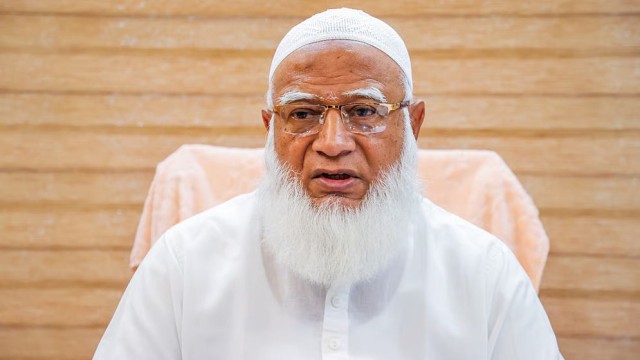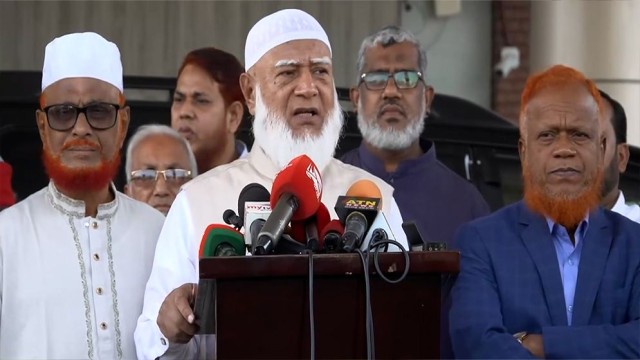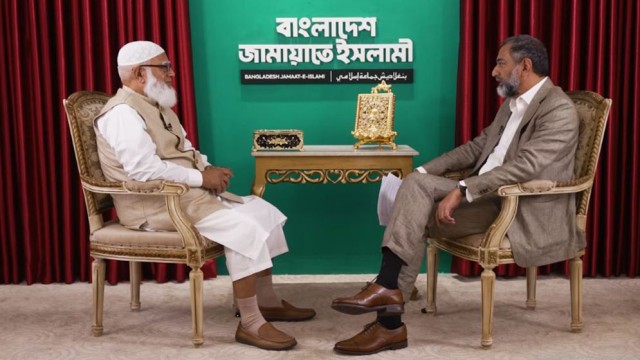
Dhaka, Jan 29 (V7N) — Jamaat-e-Islami Ameer Dr. Shafiqur Rahman has said that no woman will be able to become the head of Jamaat-e-Islami, citing religious and organizational beliefs. He made the remarks in a recent interview with Qatar-based news outlet Al Jazeera.
The interview was conducted by Al Jazeera journalist Srinivasan Jain, who asked Dr. Shafiqur Rahman about Jamaat’s position on women’s participation in leadership and electoral politics ahead of the 13th national parliamentary elections.
When asked how many women candidates Jamaat-e-Islami would field in the upcoming election, Dr. Shafiqur Rahman replied, “Not even one.” He added that other political parties had also not given significant representation to women, saying this reflected the political culture of Bangladesh.
“We are preparing for the future. It will not happen in a day,” he said, while claiming that the party does not disrespect women.
In response to a follow-up question on why Jamaat did not nominate even a single woman candidate, he reiterated that the party was preparing gradually and maintained that its stance was not intended to undermine women.
The Al Jazeera journalist then asked whether a woman could ever become the head of Jamaat-e-Islami. Dr. Shafiqur Rahman responded in the negative, saying it was “not possible.”
“Allah has created men and women differently. Men cannot give birth or breastfeed children. This is a gift from Allah, and we cannot change what Allah has created,” he said.
When the journalist pointed out that Bangladesh has had female prime ministers for the past three decades, Dr. Shafiqur Rahman said Jamaat does not disrespect them and has no objection to their leadership. However, he maintained that women face limitations in fulfilling certain responsibilities.
Asked why women who can manage families and raise children cannot lead Jamaat, he said that there are responsibilities they “cannot fulfill”, adding that such limitations are widely understood.
In response to further questioning, he reiterated his position, stating that physical and biological differences make certain leadership roles unsuitable for women, and claimed that many developed countries also do not consider women qualified for such positions, calling it a “reality of the world.”
The comments have drawn attention amid ongoing debates in Bangladesh over women’s political participation and leadership, especially in the context of the upcoming national elections.
END/SMA/AJ