
WASHINGTON, Feb 26, (V7N) - The United States has arrested a former Air Force fighter pilot accused of illegally training Chinese military personnel, even as Washington and Beijing seek to stabilize their long-fractious relationship ahead of President Donald Trump’s upcoming visit.
The Justice Department announced Wednesday that Gerald Brown, 65, was arrested in Indiana after returning from China, where he had been since December 2023. Brown is accused of conspiring with foreign nationals to provide combat aircraft training to Chinese Air Force pilots without authorization.
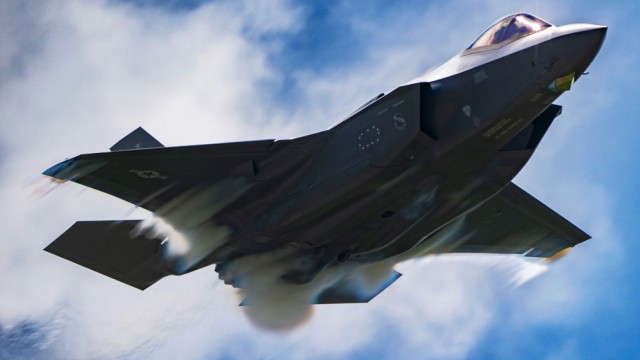
Brown had a 24-year career in the US Air Force, commanding sensitive nuclear weapons units, leading combat missions, and serving as a fighter pilot instructor. After retiring in 1996, he worked as a cargo pilot and later as a defense contractor training pilots on the A-10 and F-35 fighter jets.
Investigators say Brown began negotiating a contract in August 2023 with Stephen Su Bin, a Chinese national previously imprisoned in the US for espionage. Brown allegedly traveled to China in December to begin training work.
Roman Rozhavsky of the FBI’s Counterintelligence Division warned: “The Chinese government continues to exploit the expertise of current and former US armed forces to modernize its military capabilities. This arrest serves as a warning that we will hold accountable anyone who collaborates with adversaries.”
Despite the arrest, Secretary of State Marco Rubio said Wednesday that Washington and Beijing had reached “strategic stability.” Speaking in Saint Kitts and Nevis, Rubio noted both sides concluded that an all-out trade war would be “deeply damaging.”
Rubio, long a China hawk, said the US would continue diversifying supply chains away from Beijing’s dominance and press China to join a three-way nuclear deal with the US and Russia.
A senior US official met with Russian and Chinese counterparts in Geneva this week after the expiration of New START, the last treaty limiting US and Russian nuclear warheads. Washington insists China must be part of future arms control frameworks, though Beijing has resisted.
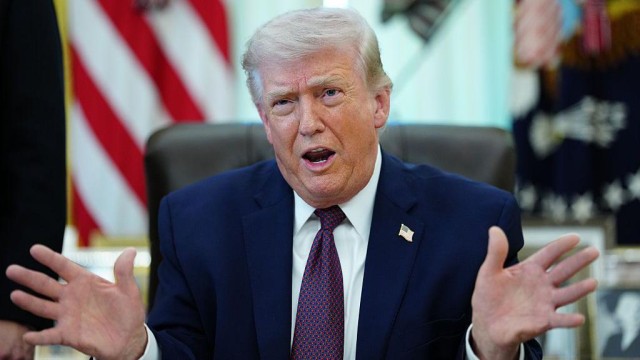
President Donald Trump is scheduled to visit China March 31–April 2, his first trip there in his second term. Rubio is expected to accompany him.
China sanctioned Rubio in 2020 over his advocacy for Uyghur and Hong Kong rights, underscoring the fraught relationship.
Brown’s arrest highlights US fears that China is leveraging Western expertise to accelerate military modernization. Analysts say such cases underscore vulnerabilities in defense contracting and the risks posed by retired personnel seeking lucrative overseas roles.
The arrest comes amid wider tensions: Washington accuses Beijing of unfair trade practices, cyber espionage, and military expansion in the South China Sea. Yet both sides are seeking to avoid escalation, with Trump framing his visit as a chance to reset ties.
The Geneva nuclear talks, Brown’s arrest, and Trump’s upcoming trip all feed into a broader narrative of cautious engagement. Analysts warn that while “strategic stability” may hold, flashpoints from espionage to arms control could quickly reignite confrontation.
As Brown faces prosecution, Washington balances deterrence with diplomacy. The arrest signals zero tolerance for collaboration with adversaries, while Rubio’s remarks suggest a pragmatic recognition that US–China rivalry must be managed, not allowed to spiral into open conflict.
END/WD/RH/










Comment: