
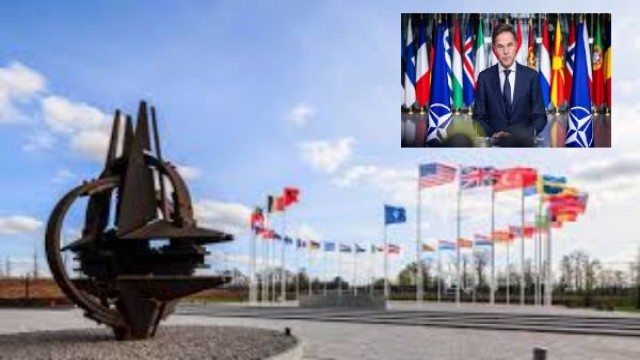
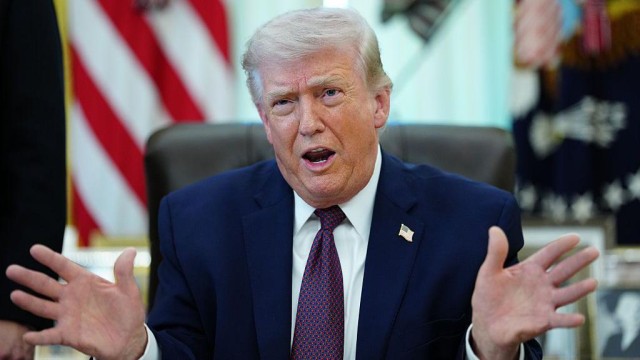
WASHINGTON, April 8 (V7N) – NATO Secretary-General Mark Rutte will meet with US President Donald Trump in Washington on Wednesday, following the US-Iran ceasefire agreement. The talks come amid growing friction within the transatlantic alliance, as President Trump has openly criticized NATO for its lack of support in his confrontational stance against Iran.
Rutte to Meet Trump: NATO’s chief is set to hold crucial discussions with President Trump, who has expressed frustration with NATO members for not backing his hardline approach toward Iran. Trump had previously branded NATO allies "cowards" for limiting US forces' access to bases and refusing to lead efforts to open the Strait of Hormuz, a vital oil shipping route.
NATO's Crisis: The alliance has faced ongoing turmoil since Trump returned to power, including his controversial threats to seize Greenland from Denmark and undermine Ukraine in its war against Russia. Trump’s actions, including calling NATO “obsolete” in 2017, have raised doubts about the future of the organization.
Rutte’s Role as Mediator: Known as a "Trump whisperer," Rutte has played a key role in calming tensions between Trump and NATO allies. His ability to flatter the US president has helped maintain diplomatic relations. In his upcoming talks, Rutte will seek to reassure Trump on NATO’s commitment to defense spending, following last year’s agreement to increase defense budgets at the NATO summit in The Hague.
Iran Ceasefire: The US and Iran agreed to a two-week ceasefire just before Trump's deadline to strike Iran expired. As part of the deal, Tehran has agreed to temporarily reopen the Strait of Hormuz, a critical chokepoint for global oil trade that Iran had closed in retaliation for US-Israeli airstrikes since February 28.
Trump’s Language on Iran: President Trump faced criticism for his harsh rhetoric, warning that “a whole civilization will die tonight” if Iran failed to meet his demands. Australian Prime Minister Anthony Albanese condemned Trump's language as inappropriate, though he welcomed the ceasefire agreement as a positive step toward de-escalation.
Lebanon and Hezbollah: Meanwhile, the Israeli military has completed the deployment of ground troops along the Lebanese border in its ongoing battle with Hezbollah, an Iran-backed militant group. The situation remains volatile, with Israel urging all vessels off the coast of southern Lebanon to head north, as it prepares for further operations in the region.
Strain on Global Oil Markets: The conflict has caused a sharp rise in global oil prices, particularly after Iran’s closure of the Strait of Hormuz. Despite the ceasefire, regional stability remains fragile, with Gulf states like Bahrain warning that this temporary restraint cannot be expected to hold indefinitely.
The upcoming talks between Rutte and Trump will be pivotal in shaping NATO's future role in the ongoing Iran crisis. While the ceasefire offers a temporary reprieve, broader diplomatic efforts will be needed to address the deeper tensions between the US, Iran, and NATO allies. With global oil markets still reeling from the conflict, the international community will be watching closely for any further developments in the region.
END/WD/RH/










Comment: