
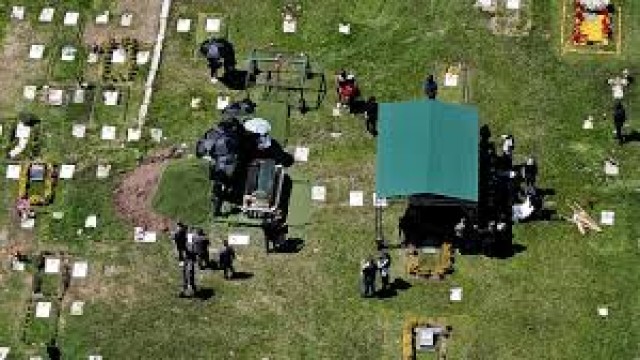
ZAPOPAN, Mexico, March 3, (V7N) - The notorious drug lord Nemesio Oseguera, known as "El Mencho," was laid to rest on Monday in a simple, unadorned grave in a ceremony attended by security forces and surrounded by floral tributes. Oseguera, the leader of the Jalisco New Generation Cartel (CJNG) and one of the most wanted drug traffickers in the world, was killed in a raid by Mexican special forces in February.
Despite his notorious reputation and the fact that the US government had offered a $15 million bounty for his capture, Oseguera's burial was starkly different from the opulent funerals often associated with infamous figures in Mexico's drug trade. His final resting place is a modest plot located near a military post in Zapopan, a suburb of Guadalajara, only a few kilometers from a stadium slated to host World Cup matches later this year.
Security Surrounds Funeral Procession Oseguera's body had been under strict guard by Mexican security forces since his death to prevent rival drug cartels from desecrating the remains. The body was handed over to his family by federal prosecutors on Saturday, after which they transported it from Mexico City to the burial site in Guadalajara.
The funeral procession on Monday was marked by tight security, with military vehicles, police motorcycles, and National Guard forces accompanying the hearse carrying Oseguera's remains. Dozens of security officers surrounded the funeral home and the cemetery, interrogating anyone attempting to approach the procession.
While the event was heavily guarded, it was also marked by an unusual amount of flowers sent by anonymous individuals. Floral tributes came in large quantities, with five trucks required to transport them to the cemetery. Some of the floral arrangements, including angel wings made of red roses and a rooster-shaped design, were clearly symbolic of Oseguera's life and interests, including his love of cockfighting.
Traditional Music and 'Narcocorrido' Tribute The funeral ceremony itself included an hourlong service at a chapel within the cemetery, where a band played narcocorridos, traditional Mexican songs that glorify the lives of drug lords. As Oseguera’s coffin was lowered into the grave, mourners followed the procession while listening to a song with the poignant lyrics: “Now that I'm dead, I’m going to go away, no more than a handful of dirt."
The funeral service was attended by a small group of mourners, likely family members, although many of the floral tributes came from anonymous senders. The somber scene contrasted sharply with the violence that followed Oseguera’s death, as cartel gunmen retaliated across Mexico, targeting security forces and businesses, leading to widespread chaos in 20 states. At least 70 people were killed in the violent backlash that followed.
A Violent Legacy Oseguera’s death and subsequent funeral reflect the power and influence he wielded as the head of the CJNG, one of Mexico’s most formidable and violent drug cartels. Under his leadership, the cartel became known for its extreme violence and its expansion across Mexico and beyond, trafficking not only drugs but also extorting businesses and threatening government officials.
His passing, however, has only fueled further unrest, as rival cartels seek to claim control of his operations. Despite his death, the violence associated with Oseguera's cartel and its legacy of terror continues to affect the region.
END/WD/RH/




















Comment: