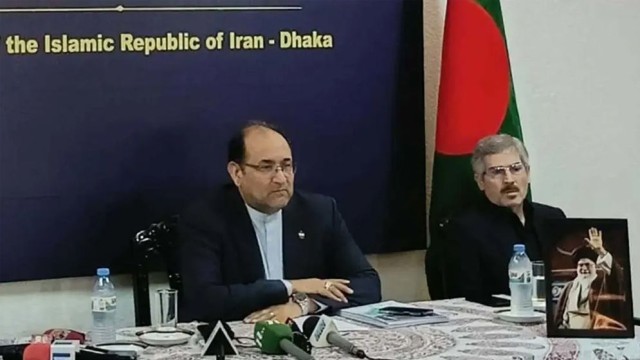
DHAKA, Apr 01 (V7N) — In a significant diplomatic breakthrough, the Iranian Security Council has authorized six Bangladeshi merchant ships stranded in the Persian Gulf to pass through the Strait of Hormuz. The announcement was made by Iranian Ambassador Jalil Rahimi Jahanabadi during a press conference at the Iranian Embassy in Dhaka on Wednesday afternoon.
While the move signals a cooperative effort between Dhaka and Tehran to repatriate the vessels and their crews, the Ambassador used the platform to express "regret" over Bangladesh’s official stance on the ongoing month-long conflict between Iran and the U.S.-led coalition.
Repatriation and Diplomatic Friction
Ambassador Jahanabadi confirmed that the Bangladeshi Foreign Minister had formally requested assistance from his Iranian counterpart to facilitate the safe return of the stranded citizens.
-
The "Brotherhood" Appeal: The Ambassador noted that while Tehran will not send an official letter of dissatisfaction, Iran expects "one brother to stand by another" in times of crisis.
-
Critique of Dhaka: He urged Bangladesh to more forcefully condemn the "war situation," stating that Tehran felt the current Bangladeshi statements did not adequately address the gravity of the "aggression."
War Against the "Muslim Ummah"
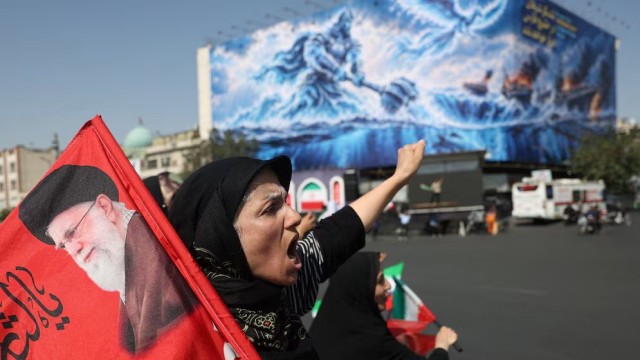
The Ambassador framed the conflict not merely as a bilateral war against Iran, but as a broader assault on Islam and the Muslim world.
-
Targeting Civilians: Jahanabadi accused the U.S. and Israel of war crimes, questioning the logic of attacking schools, colleges, and mosques. "Was it a military base? Were children a threat to America?" he asked, labeling the strikes as a blatant violation of the human rights the West frequently champions.
-
Retaliatory Strikes: He claimed that Iran has successfully "destroyed 14 American bases" across the Middle East. He warned neighboring Arab nations that allowing U.S. bases on their soil makes them complicit in the deaths of Iranian women and children.
"Trump is Looking for a Way Out"
Providing Tehran’s perspective on the strategic landscape after 32 days of combat, the Ambassador claimed the U.S. campaign has failed its primary objectives.
-
Regime Change: He asserted that despite President Donald Trump’s multiple declarations of victory, the U.S. has failed to change the Iranian regime or dismantle its core technology.
-
Instability: "America now has a president who does not understand himself or the Middle East," Jahanabadi remarked, adding that Trump is now desperately seeking an exit strategy from a war sparked by "Israeli instigation."
-
Nuclear Threats: Addressing recent threats of nuclear escalation, the Ambassador remained defiant, stating, "Iran is not afraid."
UN "A Tool for the Powerful"
The Ambassador concluded by dismissing the efficacy of international bodies, including the United Nations. He argued that the current structure of the UN Security Council is fundamentally flawed, as evidenced by its inability to pass resolutions against Israel.
"We have learned from experience that we should not look to the United Nations in times of danger," he said, reiterating that Iran would continue to maintain its "control and dominance" over the Strait of Hormuz to safeguard its interests.
END/SMA/AJ