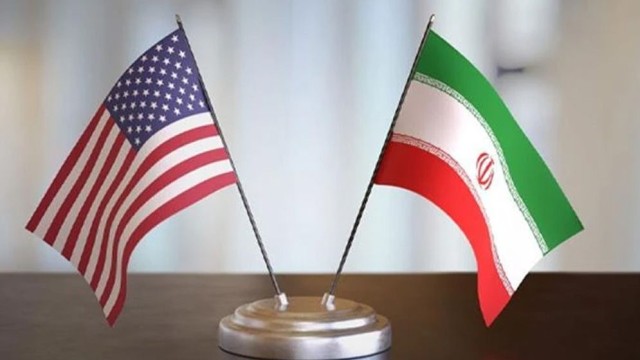
Washington, Jun 15 (V7N) - In a major geopolitical breakthrough, the United States and Iran have reached a preliminary agreement aimed at ending their months-long military conflict in the Middle East, lifting the US naval blockade on Iranian ports, and reopening the vital Strait of Hormuz. Following the announcement, global oil prices began a sharp decline on the international market.
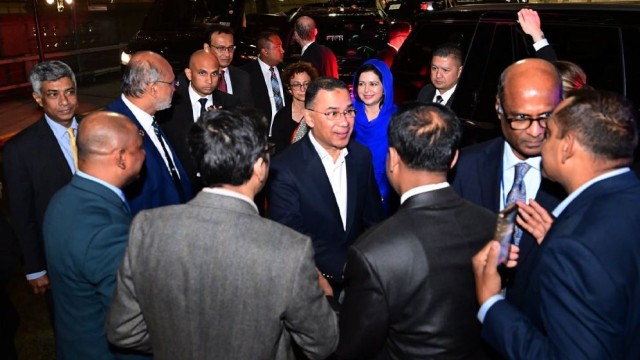
Early on Monday (June 15), US President Donald Trump announced via his social media platform, Truth Social, that the deal with the Islamic Republic of Iran was "complete." Shortly before Trump's post, Pakistani Prime Minister Shehbaz Sharif, who played a central role as a mediator in the intense negotiations, officially announced that both sides had successfully reached an understanding.
The preliminary Memorandum of Understanding (MoU) is scheduled to be formally signed in Switzerland next Friday, June 19. While the comprehensive terms of the document remain confidential, the initial framework sets the stage for a dramatic de-escalation.
Prime Minister Shehbaz Sharif stated that under the agreed framework, military operations on all active fronts, including the ongoing conflict in Lebanon, will come to an immediate and permanent halt. Confirming the cessation of hostilities, the Secretariat of Iran's Supreme National Security Council announced that all Iranian military operations would stop permanently starting Monday night.
President Trump further noted in his Truth Social post that the Strait of Hormuz—one of the world's most critical transit choke points for global energy supplies—will officially reopen to international shipping next Friday. Simultaneously, Trump ordered the immediate removal of the US naval blockade that had restricted access to Iranian ports.
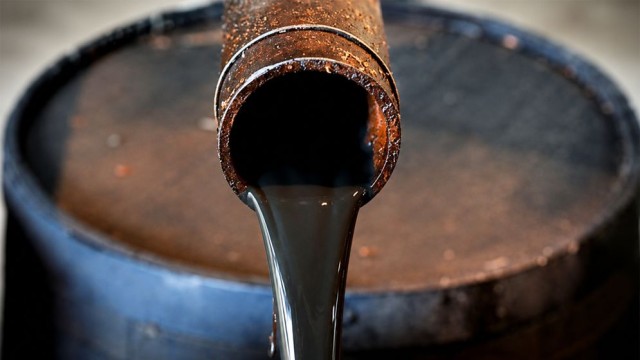
The diplomatic breakthrough triggered an immediate reaction in global energy markets. Brent crude prices tumbled by approximately 4 percent, while West Texas Intermediate (WTI) crude futures dropped by over 4.6 percent. Concurrently, major Asian stock markets recorded positive gains in early Monday trading following the de-escalation news.
According to Iranian Deputy Foreign Minister Kazem Gharibabadi, a more comprehensive, permanent pact will be negotiated during an upcoming 60-day ceasefire period. Those subsequent discussions are expected to outline permanent sanctions relief and address the highly contentious future of Iran's nuclear program.
Diplomatic sources had previously indicated that managing Iran's stockpile of highly enriched uranium and defining the parameters of its nuclear capabilities would remain the most complex hurdle in the upcoming weeks of negotiation.
The conflict initially erupted on February 28 following a series of US and Israeli airstrikes targeting Iran, triggering a war that has claimed thousands of lives across Iran and Lebanon over the last three and a half months. In retaliation, Tehran had effectively militarized and closed off the Strait of Hormuz, causing global energy prices to skyrocket. The United States responded by imposing a strict naval blockade on Iranian ports.
The resulting surge in domestic fuel prices had generated intense political pressure on the Trump administration ahead of the upcoming US midterm elections. Meanwhile, a hardline faction within Trump's own Republican Party continues to demand the absolute dismantlement of Iran's nuclear infrastructure.
Prominent Republican Senator Lindsey Graham welcomed the preliminary ceasefire framework but emphasized that Congress would maintain strict oversight regarding the nuclear aspect of the talks, asserting that any final agreement concerning Iran’s nuclear program must be submitted to the US Congress for a formal review and vote.
The announcement also brought to light deep tactical differences between Washington and Tel Aviv over the military campaign in Lebanon. While Israeli Prime Minister Benjamin Netanyahu has consistently advocated for continuing military operations against Hezbollah positions in Lebanon, Iran made a comprehensive ceasefire on the Lebanese front a non-negotiable precondition for the deal.
In a recent interview with US media, Trump described Netanyahu as a "very tough guy," while simultaneously asserting that Israel should remain grateful to his administration for neutralizing the immediate threat of a nuclear-armed Iran.
The sustainability of the peace process, the eventual lifting of international sanctions, and the final resolution of Iran's nuclear program will now depend heavily on the high-stakes technical negotiations scheduled to take place over the next two months.
E$ND/SMA/AJ