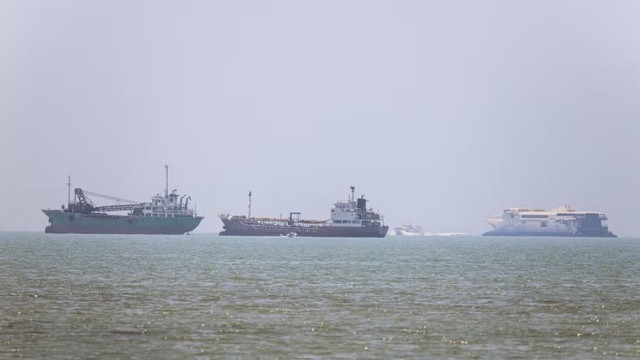
Tehran, Jun 21 (V7N) – Iran has announced the complete closure of the strategically important Strait of Hormuz, blaming the decision on Israel's continued military operations in Lebanon and alleging violations of a recently signed ceasefire agreement by both Israel and the United States.
According to reports by BBC News on Saturday (June 20), Iran's military declared that all maritime traffic through the Strait of Hormuz has been suspended until further notice. The country's Revolutionary Guard Corps (IRGC) Navy warned that all vessels have been prohibited from entering the waterway, cautioning that any ship approaching the strait would do so at its own risk.
"Do not approach Hormuz, otherwise your safety will be at risk," the IRGC Navy said in a warning issued to international shipping.
In a statement, Iran's Khatam al-Anbiya Central Headquarters accused the United States of violating its commitments under the first article of a memorandum of understanding signed to end the recent conflict. The military command also alleged that Israel has continued military operations in southern Lebanon in breach of the ceasefire agreement.
Tehran said the closure of the Strait of Hormuz is a direct response to what it described as repeated violations of the agreement. Iranian authorities argued that one of the key provisions of the 14-point accord was the immediate and permanent cessation of military operations across all fronts, including Lebanon.
The Strait of Hormuz is one of the world's most critical energy transit routes, carrying nearly one-fifth of global oil supplies before the recent regional conflict. Following U.S. and Israeli military strikes against Iran earlier this year, Tehran had already tightened its control over the strategic waterway, contributing to higher international oil prices.
Earlier this week, optimism had emerged after the United States and Iran signed a memorandum of understanding aimed at ending hostilities. Discussions reportedly included the reopening of the Strait of Hormuz, raising hopes for stability in global energy markets and contributing to a slight decline in oil prices.
However, Iran now maintains that Israel's continued military activities in Lebanon have undermined the agreement, prompting the latest move to halt all shipping through the strait.
Analysts warn that prolonged disruption in the Strait of Hormuz could once again trigger volatility in global energy markets, disrupt international oil supplies, and place renewed pressure on economies heavily dependent on imported energy.
END/SMA/AJ