LA GUAIRA, Venezuela, June 26, (v7n) – The death toll from twin earthquakes that struck Venezuela on Wednesday night has soared to 589, with thousands more unaccounted for as international rescue teams and sniffer dogs arrive to help find survivors.
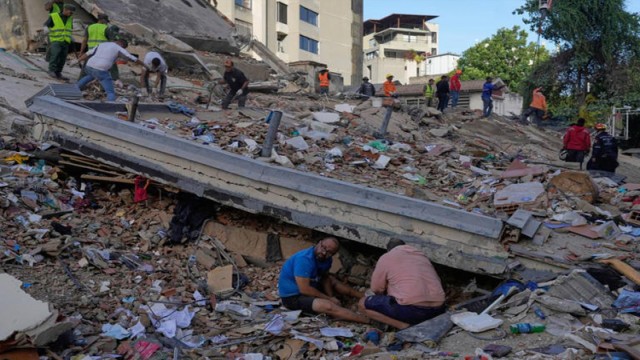
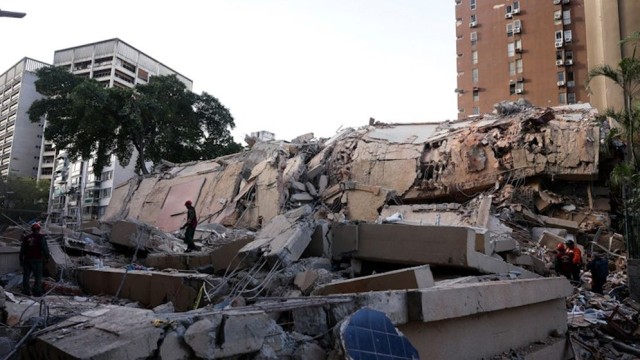
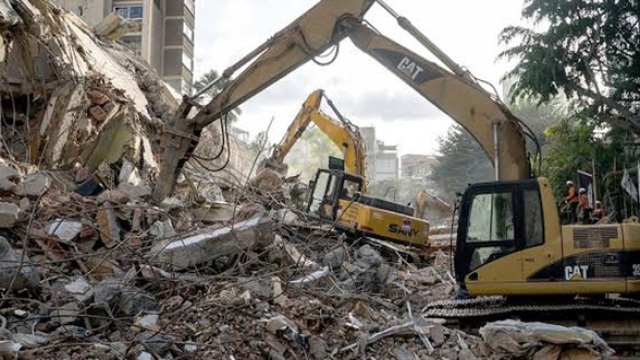
Rescuers are using heavy machinery—and their bare hands—in a race against time to claw out people trapped under rubble in the worst-hit earthquake zone, north of the capital Caracas. At one flattened building, AFP witnessed workers using sledgehammers to break debris and calling for "absolute silence" to detect cries from survivors.
The two earthquakes, measured at magnitudes 7.2 and 7.5, hit northern Venezuela within less than a minute of each other on Wednesday night, toppling hundreds of buildings. Pro-US interim President Delcy Rodriguez confirmed the death toll now stands at 589, with nearly 3,000 injured. Social media has been flooded with requests for information on the missing, with an online portal listing almost 50,000 people that loved ones are trying to locate.
National Assembly President Jorge Rodriguez said Thursday that more than 200 people were confirmed trapped alive. Rescue efforts have been slow, with desperate calls for more heavy machinery as families stand helpless, unable to pull out loved ones they could hear alive in the rubble. "It is a lot of rock, and with bare hands it is impossible," said Amparo del Giudice, scrabbling through rubble in search of her son.
**International aid arrives** – Rescue teams from Spain, El Salvador, Switzerland, Colombia, and Mexico are already on the ground, and a senior US military official has also landed in Caracas to oversee Washington's relief efforts. The United States is deploying two warships, transport planes, and helicopters, mobilizing $150 million in aid, and has suspended economic sanctions on Venezuela for four months to allow rescue operations to proceed. The UN humanitarian agency OCHA said search and rescue teams from at least 17 countries are being mobilized.
Oil-rich Venezuela is facing its worst natural disaster in more than a century, compounded by over a decade of economic collapse that has hollowed out hospitals and public services and driven millions to leave the country. The nation remains in a fragile transition six months after the US ousted leader Nicolas Maduro.
The UN and other aid agencies warned: "Even before the earthquakes, millions of people across Venezuela were facing food insecurity, collapsing health services, protection risks, and limited access to basic services. The international community must not allow this emergency to deepen into a larger human tragedy."
**Casualties and looting** – The dead include nine Portuguese nationals, four Spaniards, two Brazilians, two Chinese nationals, and one Italian-Venezuelan. Fifty-six Portuguese and 120 Spaniards are missing or unaccounted for, according to their respective governments.
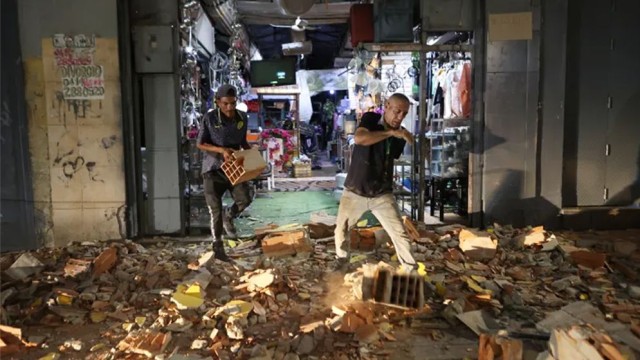
Satellite photographs of La Guaira—the worst-hit area north of Caracas—show one crumpled residential complex after another. AFP reporters witnessed residents looting a local supermarket on Thursday. Local resident Argenis Mendez lamented the lack of help, saying, "The authorities are useless... the military should be here with all the heavy machinery they have."
Venezuelan opposition leader and Nobel Peace laureate Maria Corina Machado called for the release of "all political prisoners, both civilians and military personnel," saying they should reunite with loved ones as the country mourns.
Venezuela's northern coast sits on a boundary between the Caribbean and South American tectonic plates. Wednesday's 7.5-magnitude earthquake was the most powerful since October 29, 1900, when a 7.7-magnitude tremor struck offshore. The quake was felt in neighboring Colombia, where residents in Bogota evacuated buildings, and tremors were also reported in several cities in northern Brazil.
end/wd/rh/