


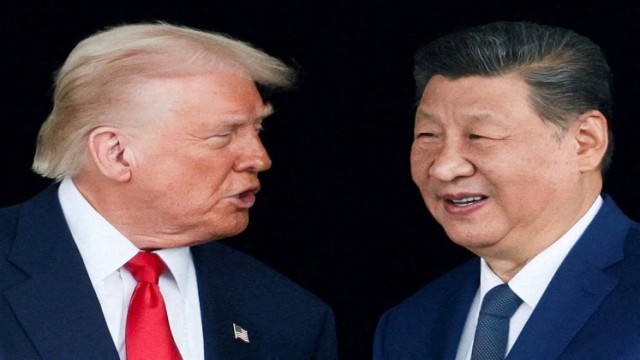
BEIJING, Feb 23, (V7N) — China urged the United States to cancel its unilateral tariffs after the US Supreme Court struck down many of the measures imposed by President Donald Trump. The court ruled on Friday, in a six-to-three decision, that Trump did not have the authority to impose tariffs under a 1977 law he had used to levy sudden trade taxes on individual countries.
In response, Trump announced a new global duty of 10 percent on imports, under a different legal authority, before raising it to 15 percent on Saturday. The new tariffs are set to take effect on Tuesday and will last for 150 days, with some exemptions for specific products.
China’s Ministry of Commerce stated on Monday, saying it was conducting a "comprehensive assessment" of the Supreme Court ruling’s impact. The ministry urged Washington to lift the tariffs, emphasizing that "there are no winners in a trade war," and that "protectionism leads nowhere."
The Chinese government also expressed concern about potential US plans to maintain increased tariffs through other measures, such as trade investigations. "China will continue to pay close attention to this and resolutely safeguard China’s interests," the foreign ministry said.
This development comes ahead of Trump’s planned visit to China in April, marking his first trip to the country in his second term. US Trade Representative Jamieson Greer has stated that the planned meeting between Trump and Chinese President Xi Jinping "is not to fight about trade," signaling that economic tensions may not dominate their discussions.
The Supreme Court ruling was seen as a significant political setback for Trump, especially given the judicial body’s general support for his policies since his return to office. The ruling effectively struck down his signature economic strategy, which had disrupted global trade patterns and strained relationships with key trading partners.
In light of the court’s decision, US trade officials have indicated that existing trade deals with China, the European Union, and other nations will remain in place, despite the ruling. However, US officials have also threatened to impose tariffs on the semiconductor industry, claiming that China’s trade practices were "unreasonable," though such measures have been delayed until June 2027.
China strongly opposed these potential tariffs, accusing the United States of "unreasonably suppressing Chinese industries" by abusing tariffs as a tool for economic pressure. The ongoing trade dispute between the two countries remains a crucial point of contention as they navigate their complex economic relationship.
END/WD/RH/

















Comment: