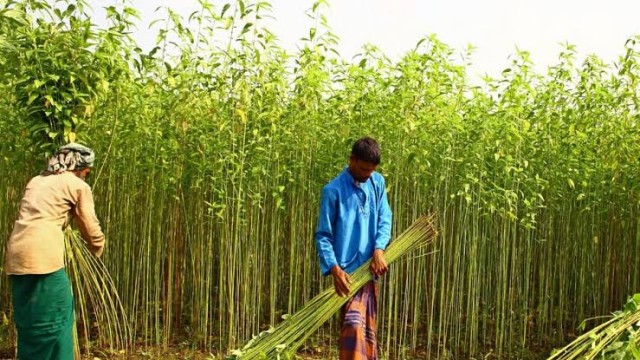
Rajshahi, July 26 (V7N) — Jute cultivation has gained fresh momentum in Rajshahi as farmers are encouraged by rising demand for environmentally friendly products, growing global interest in alternatives to plastic, and favourable market prices for the traditional cash crop known as the “golden fibre.”
According to the Department of Agricultural Extension (DAE) in Rajshahi, jute has been cultivated on 18,399 hectares of land across the district during the current season, exceeding the previous year’s cultivated area of 17,305 hectares by 1,094 hectares.
The agriculture department has set a production target of 49,333 metric tonnes of jute this year, which is 656 metric tonnes higher than last year’s target. Meanwhile, the Jute Department’s Rajshahi office estimates that total production could reach around 381,696 quintals this season, approximately 21,202 quintals higher than the previous year.
Farmers and traders are also optimistic due to strong market prices. A visit to the traditional Nowhata jute market on July 6 found that early varieties of jute were being sold at around Tk 4,500 to Tk 5,000 per maund.
Market observers said farmers who cultivated early varieties could benefit significantly if the current price trend continues throughout the season.
According to the agricultural calendar, jute seeds are generally sown during the Bengali months of Chaitra and Baishakh, while harvesting and retting activities usually take place during Shraban and Bhadra. Farmers said they are expected to begin harvesting early varieties on a large scale within the next two weeks.
Agriculture officials said weather conditions remained favourable throughout the cultivation period. Adequate rainfall, proper soil moisture, and improved quality seeds supplied to farmers helped ensure strong and healthy jute growth.
Farmer Robiul Islam of Paba Upazila said he cultivated early variety jute on four bighas of land this season and was satisfied with the crop condition. However, he stressed the need for sufficient water sources for retting, reducing labour shortages, and ensuring fair prices through proper market monitoring.
Similarly, farmer Saidur Rahman of Bagmara Upazila, who cultivated jute on five bighas, said the crop growth was excellent due to favourable weather conditions. He called for improved irrigation facilities and stronger government support in marketing.
Farmer Hridoy of Charghat Upazila said he cultivated jute on three bighas of land and expected better production than last year. Farmers across the district said maintaining stable market prices would be crucial for sustaining their interest in jute cultivation.
Rajshahi DAE Deputy Director Mohammad Nasir Uddin said the increase in cultivation was the result of improved seed quality, favourable weather, and growing interest among farmers.
“Jute is not only an agricultural product but also an important component of an environmentally friendly economy,” he said.
Agriculture experts said sustaining the current positive trend would require greater access to modern technology, regular training for farmers, increased supply of quality seeds, improved market management, and the development of more jute-based industries.
They believe that with proper support, the golden fibre could once again become a major driver of the rural economy in the Barind region.
END/MRA/SMA/