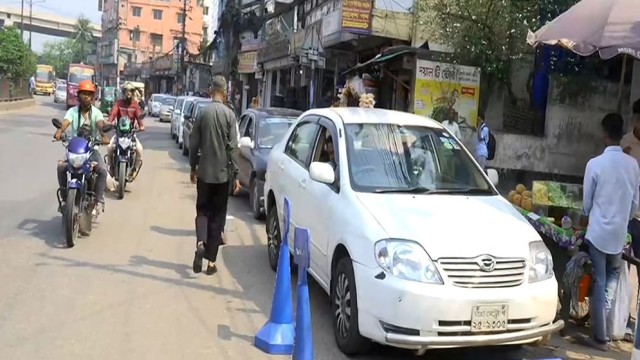
DHAKA, Apr 02 (V7N) — Despite government assurances of adequate stock, the fuel crisis in Dhaka intensified on Thursday as petrol pumps across the capital reported severe shortages. Motorists and private vehicle owners were met with closed gates at several stations, while those that remained open snaked with long queues of frustrated drivers, many of whom were turned away after hours of waiting.
The crisis has given rise to a thriving "open market" where fuel is being sold at significantly higher prices. Drivers have expressed growing anger, alleging that while filling stations claim to be dry, oil is readily available through unauthorized traders at inflated rates.
Current Situation at the Pumps
Reports from across the city indicate a stark disparity between official statements and the reality on the ground:
-
Selective Sales: Many pumps are rationing supply, providing only limited quantities per vehicle or requiring specific documentation.
-
Fuel Card Mandate: In a move to curb "panic buying" and hoarding, several pump authorities have begun strictly enforcing the use of government-issued fuel cards or QR-coded "fuel passes." Drivers without these valid documents are being denied service entirely.
-
Hoarding Allegations: Consumer rights activists and drivers alike have called for stricter supervision, pointing to a suspected "artificial crisis" created by syndicates to drive up prices.
Government Response and Enforcement
The Ministry of Power, Energy, and Mineral Resources maintains that the country has sufficient reserves to last through the month. To combat illegal practices:
-
Nationwide Raids: Between March 3 and April 1, authorities conducted over 4,800 operations, recovering approximately 3.7 lakh litres of illegally hoarded fuel.
-
Fines and Legal Action: On Thursday alone, mobile courts in Dhaka's Agargaon fined multiple businesses for hoarding octane and diesel.
-
Monitoring: The Bangladesh Petroleum Corporation (BPC) has mandated that all pumps publicly display their daily stock and supply charts to ensure transparency and allow the public to verify allocations.
The Global Context
Energy experts attribute the underlying supply strain to the ongoing Middle East conflict, which has disrupted traditional shipping routes and significantly increased import costs. While the government has so far avoided a direct price hike for petrol and octane, it recently increased the prices of LPG and CNG by 29% to manage the widening energy crunch.
For now, the combination of logistical bottlenecks, panic buying, and syndicate activity continues to leave Dhaka’s transport sector in a state of high uncertainty.
END/SMA/AJ