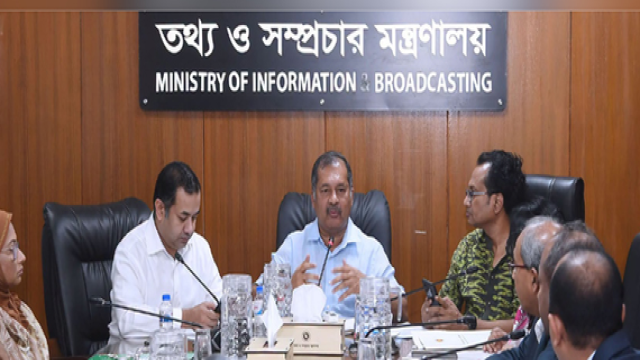
DHAKA, July 14 (v7n): Information and Broadcasting Minister Zahir Uddin Swapon has compared state information management to "oxygen," warning that delivering flawless, data-driven facts while stamping out malicious rumors during natural disasters represents an absolute "acid test" for the government. The statement was delivered during a national virtual conference linking central ministry directors with field-level District Information Officers (DIOs) deployed across the country.
Addressing the shifting landscape of media consumption, Minister Swapon stressed that modern crisis management can no longer rely purely on traditional print and broadcast frameworks. He emphasized that just as life becomes endangered when air is polluted, misinformation can bring severe disruption to society, requiring a swift transition beyond traditional communication methods.
To combat this, field officers received strict directives to swiftly migrate communication operations onto mainstream social networks and digital platforms where rumors typically germinate. The Minister set a specific operational benchmark, tasking departmental networks with actively identifying, debunking, and reporting at least 20 targeted pieces of false information or public rumors daily to enhance national public awareness.
To ensure seamless coordination, the Director General of the Mass Communication Department was ordered to immediately assemble a specialized emergency response unit. This team will comprise information officers from seven flood-affected districts to provide round-the-clock connectivity between central headquarters and field operations.
The Minister connected directly with field officers stationed across those seven severely hit and landslide-threatened zones: Chattogram, Cox's Bazar, Rangamati, Khagrachhari, Bandarban, Habiganj, and Moulvibazar. He reviewed field-level activities and emphasized that the visibility of the ministry relies entirely on digital and media reassurance.
To ensure uncompromised precision, the ministry has mandated that all incoming field logs abandon vague estimates in favor of hard statistics. Daily reports must feature cross-verified data detailing the exact number of flooded villages, stranded populations, medical tallies—including snakebite incidents—and relief delivery distribution metrics. These figures will be systematically cross-checked against independent matching sheets from the Ministry of Disaster Management and Relief.
Furthermore, State Minister for Information Yasser Khan Choudhury and Prime Minister's Information Adviser Dr. Zahed Ur Rahman have been officially assigned to lead public outreach. Under their supervision, the ministry will operate a newly established, coordinated control room that will hold regular daily press briefings on the disaster situation and ongoing relief operations.
Field officials participating virtually from remote sectors reported that local offices are maintaining continuous loudspeaker announcements to safely evacuate high-risk hillside populations to storm shelters. They confirmed that teams are working tirelessly on the ground despite challenging infrastructure conditions to execute these critical public safety campaigns.
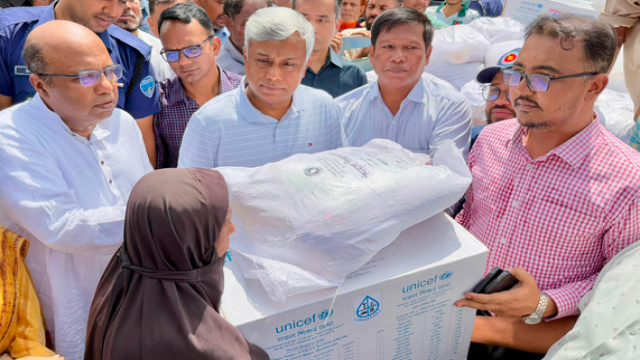
As initial floodwaters show signs of receding, field campaigns are actively shifting priorities toward public health awareness. Local teams are now focusing on the prevention of waterborne diseases, raising community awareness about snakebites, and monitoring relief distribution points to strictly prevent any local irregularities or corruption.
end/aj/rh