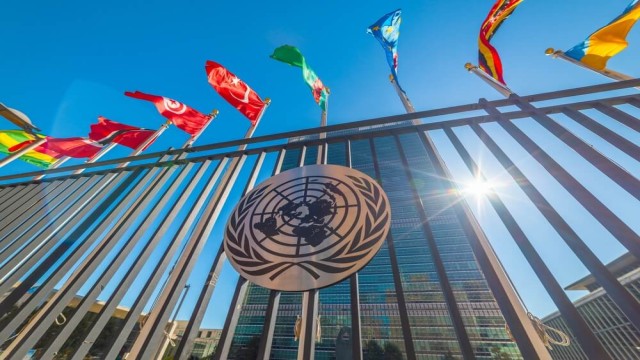
New York, Oct 01 (V7N) – For six days in September, the United Nations General Assembly became the world’s principal diplomatic stage as presidents, prime ministers and senior representatives from across the globe gathered in New York to address a world marked by wars, humanitarian crises, climate shocks, widening inequality and rapid technological change.
The General Debate of the 81st session was held from Sept 22 to 28 under the theme, “Restoring Trust, Managing Transformation: A United Nations that Delivers for All.” According to the Office of the President of the General Assembly, 194 delegations took the floor during the debate, including 113 heads of state and government.
The debate produced no single consensus on how the international system should respond to the multiple crises facing the world. But across regions, leaders repeatedly returned to several interconnected questions: how to end wars, protect civilians, address climate change, reform global institutions, reduce economic inequality and ensure that artificial intelligence serves societies rather than deepening existing divides.
At the centre of those discussions was a warning from UN Secretary-General António Guterres that the world is entering an increasingly fragmented era in which power is shifting among states, private corporations and rapidly developing technologies.
Opening the General Debate on Sept 22, Guterres said global fault lines were widening, geopolitical divisions were deepening, inequality was intensifying and trust was eroding. He described climate change as a daily reality and artificial intelligence as a technology advancing at a pace that has outstripped many existing systems of governance.
He argued that the world is moving towards a multipolar order but warned that multipolarity could either lead to greater fragmentation or develop into a more interconnected system based on international law, shared rules and cooperation.
“The defining challenge,” Guterres said in substance, is whether global power will be governed by law and cooperation or by force and coercion.
He identified four major tests that would shape the future: war and peace, inequality, climate change and artificial intelligence.
The Secretary-General called for stronger international action on conflicts in the Middle East, Ukraine, Sudan and Myanmar, as well as for humanitarian access and protection of civilians. He also renewed calls for reform of the UN Security Council, arguing that its current structure does not adequately reflect the geopolitical realities of the 21st century.
The issue of Palestine remained one of the most prominent subjects during the week. Guterres called for an end to fighting, the delivery of humanitarian assistance and adherence to international law, while warning that the conditions needed for a viable two-state solution were being eroded.
Asia at the centre of the debate
Asian leaders brought a distinctive set of concerns to the General Assembly, combining geopolitical security with climate vulnerability, development, economic inequality and the future of multilateral cooperation.
For many Asian countries, the UN remained not only a forum for diplomacy but also a platform through which developing and climate-vulnerable nations sought greater representation in global decision-making.
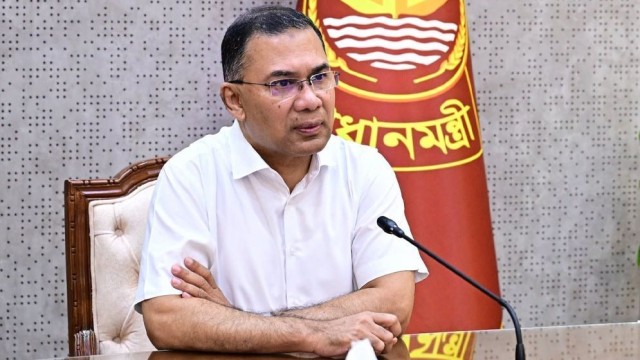
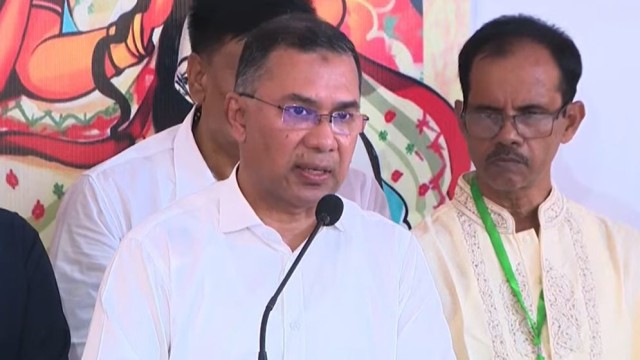
Among the most closely watched Asian addresses was that of Bangladesh Prime Minister Tarique Rahman, who spoke at the General Debate on Sept 24.
Rahman placed Bangladesh’s position within the broader debate over peace, multilateralism, development and the rights of developing countries.
He called for conflicts to be resolved through dialogue, diplomacy and cooperation rather than military confrontation, and said international relations should be based on equality, fairness, mutual respect and the dignity of states.
Bangladesh also reaffirmed its support for nuclear disarmament and arms control and expressed solidarity with the Palestinian people and their right to self-determination and an independent state.
A major part of Bangladesh’s address focused on the Rohingya crisis.
Rahman said Bangladesh had sheltered more than 1.2 million forcibly displaced Rohingyas from Myanmar for more than nine years and warned that the prolonged crisis was placing severe pressure on Bangladesh’s resources, environment, security and local communities.
He said the crisis originated in Myanmar and that a lasting solution therefore required the safe return of the displaced Rohingyas to their homeland. Bangladesh also urged the international community to maintain humanitarian assistance until repatriation becomes possible.
Climate change was another central element of Bangladesh’s message.
Rahman described Bangladesh as one of the countries most vulnerable to climate change despite its relatively small contribution to global carbon emissions. He called for stronger international action on climate justice, climate finance and adaptation support ahead of COP31.
He also outlined a number of domestic initiatives, including plans to plant 250 million trees over five years, expand clean and solar energy, excavate 20,000 kilometres of canals and advance water-management projects.
Bangladesh also used the General Assembly platform to highlight the challenges of development and technological inequality.
Rahman called for greater access to advanced technology, knowledge and research for developing countries and warned against allowing the existing digital divide to become an artificial-intelligence divide.
He urged international cooperation on technology transfer, skills development and affordable access to modern technologies.
For Bangladesh, the development agenda was closely connected to its expected graduation from the UN list of Least Developed Countries. Rahman called for continued support in financing, market access, technology transfer and capacity building to make the transition sustainable.
Nepal brings climate disaster to the UN floor
Nepal’s Prime Minister Balendra Shah brought the immediate human cost of climate-related disasters to the centre of the General Assembly debate.
Addressing the 81st session on Sept 24, Shah spoke against the backdrop of catastrophic floods in Nepal’s mountain communities.
He described the disaster as a warning for humanity and linked the destruction of homes, infrastructure and livelihoods to the broader global climate crisis.
Nepal’s message was particularly significant because the country contributes relatively little to global greenhouse-gas emissions while facing severe exposure to climate-induced disasters.
Shah called for climate justice and stronger international support for vulnerable countries, while also emphasizing Nepal’s contribution to global peace through UN peacekeeping. His address reflected a broader demand from climate-vulnerable countries that those bearing the greatest consequences of climate change should have greater access to international finance, technology and recovery support.
The Nepalese position also highlighted the relationship between climate change and development. Damage to mountain communities, roads, bridges, schools, hydropower facilities and livelihoods can erase years of development gains in a matter of days, making climate resilience increasingly inseparable from sustainable development.
From South Asia to the wider Asian agenda
The wider Asian debate reflected the region’s diversity and its exposure to several overlapping global challenges.
India’s External Affairs Minister S. Jaishankar, who represented India in the General Debate, placed emphasis on international peace and security, the concerns of the Global South, terrorism and reform of multilateral institutions. His address reflected India’s continuing call for a more representative global order and a stronger voice for developing countries.
Japan’s engagement during the high-level week also focused on issues including UN reform, Security Council reform, artificial intelligence and human security. The President of the General Assembly, Khalilur Rahman, discussed these subjects with Japanese Foreign Minister Motegi Toshimitsu shortly before the General Debate.
Across Asia, the concerns varied according to national circumstances, but several themes repeatedly intersected: the need to preserve peace, reform international institutions, protect vulnerable populations, respond to climate change, strengthen development financing and establish rules for emerging technologies.
The region’s developing economies also emphasized the importance of greater economic and technological access as global competition increasingly moves beyond traditional military and economic power.
Climate change moves from warning to immediate crisis
Climate change emerged as one of the strongest common threads of the General Debate.
For countries such as Bangladesh, Nepal and small island and low-lying states, climate change was presented not as a distant environmental problem but as an immediate threat to lives, livelihoods, infrastructure and national development.
The General Assembly also held a high-level plenary meeting on the existential threats posed by sea-level rise during the High-Level Week. The UN Secretary-General subsequently stressed that the international community could not allow countries and cultures to disappear beneath rising seas.
The issue also exposed a continuing divide between climate vulnerability and responsibility. Developing and vulnerable countries repeatedly argued that they require greater financial and technological support to adapt to climate impacts and protect development gains.
Wars, Palestine and the search for diplomacy
The conflicts in the Middle East, Ukraine, Sudan and Myanmar dominated much of the political atmosphere surrounding the General Debate.
Guterres repeatedly urged leaders to use the high-level gathering for de-escalation and diplomacy and stressed that international law and the UN Charter must remain the foundation of global relations.
The Palestinian question remained particularly prominent, with the Secretary-General warning that the two-state solution could disappear if current trends continued.
For many Asian and developing countries, the debate over war was also connected to the economic consequences of conflict, including energy insecurity, inflation, disrupted supply chains, displacement and pressure on national development budgets.
Bangladesh’s prime minister similarly argued that military spending and prolonged conflict can divert resources away from development and called for diplomacy and cooperation as alternatives to armed confrontation.
Artificial intelligence becomes a central UN issue
Artificial intelligence emerged as one of the most significant newer issues at UNGA 81.
At the close of the General Debate, President of the General Assembly Khalilur Rahman said 128 delegations had addressed AI during their statements—more than those that spoke about human rights or climate change.
Leaders recognized AI’s potential to improve public services, scientific research, development and access to knowledge, while also expressing concern about accountability, inequality, misinformation and the concentration of technological power.
Rahman said AI governance must remain human-centred and inclusive, particularly for developing countries that risk being excluded from access to data, computing capacity and technological decision-making.
Bangladesh’s prime minister made a similar point, warning that today’s digital divide must not become tomorrow’s AI divide. He called for technology transfer, skills development and affordable access to advanced technologies for developing countries.
The convergence of these positions suggests that AI is rapidly becoming part of the traditional UN agenda alongside peace, development and human rights.
A renewed debate over the UN itself
The central question of UNGA 81 was ultimately not only what the world should do about individual crises, but whether the international system has sufficient legitimacy and capacity to respond to them.
The theme chosen by the General Assembly presidency—“Restoring Trust, Managing Transformation: A United Nations that Delivers for All”—was repeatedly reflected in leaders’ speeches.
Khalilur Rahman, President of the 81st session, opened the General Debate by asking whether the UN still works for the people it was created to serve. He argued that trust must be earned through results, reform, inclusion and accountability.
At the close of the General Debate on Sept 28, he said 194 delegations had participated and that peace had been the most frequently recurring theme.
He also highlighted widespread concern over Gaza, the Rohingya crisis, Ukraine, Sudan and Myanmar; the slow progress toward the Sustainable Development Goals; climate vulnerability; human rights; AI governance; and reform of the UN Security Council.
He noted that African countries continue to demand permanent representation on the Security Council and said meaningful UN reform must address questions of representation and fairness.
The message from New York
The six-day debate did not resolve the conflicts or structural problems confronting the international system.
But the statements from world leaders revealed a broad recognition that the crises facing the world are interconnected.
Wars affect food and energy security. Climate disasters erase development gains. Inequality fuels instability. Technological advances create both opportunities and new risks. And the credibility of international institutions increasingly depends on whether diplomatic commitments translate into practical results.
For Asia, these challenges are particularly interconnected.
Bangladesh brought the Rohingya crisis, climate justice, migration, development, technology and peacekeeping to the global stage. Nepal highlighted the human cost of climate change and the vulnerability of mountain communities. India emphasized multilateral reform and the concerns of the Global South, while Japan continued to engage on UN reform, human security and emerging technologies.
The broader Asian message was therefore closely aligned with the central question of UNGA 81: how can a rapidly changing world preserve cooperation when trust among states is under pressure?
As the General Debate closed, the answer remained unfinished.
But the message from the General Assembly Hall was clear: diplomacy remains the principal mechanism through which competing interests can be brought into dialogue, while the effectiveness of the United Nations will increasingly be judged by its ability to turn that dialogue into action.
The 81st General Assembly’s High-Level Week has ended, but the session itself continues. The debates now move into the committees, negotiations and multilateral processes where the commitments made in New York will face their more difficult test—implementation.
END/SMA/AJ/