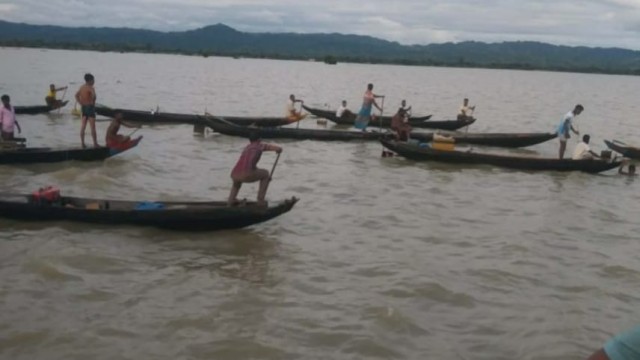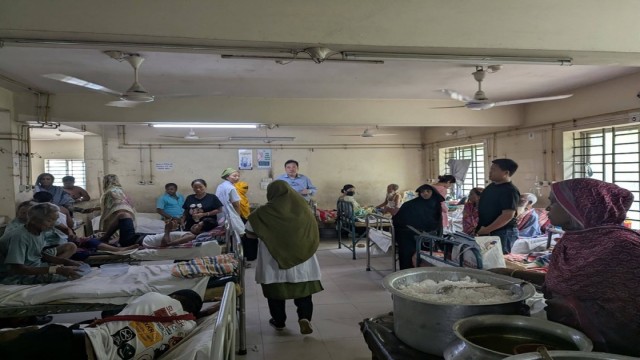
Rangamati, July 3 (V7N) – Known for its lush green hills, the vast Kaptai Lake and breathtaking natural beauty, Bangladesh's southeastern hill district of Rangamati also faces a harsh reality. Rugged terrain, scattered settlements and poor transportation networks make access to healthcare one of the region's greatest challenges. Thousands of residents, many of them from Indigenous communities living in remote areas, must travel for hours by winding mountain roads or waterways to reach medical facilities.
Video: Staff Crisis Strains Healthcare Services in Bangladesh's Rangamati
Despite severe shortages of healthcare personnel and medical equipment, the Rangamati District Health Department continues to provide essential medical services across the district. Doctors, nurses and other healthcare workers are maintaining services for hundreds of thousands of residents through dedicated efforts despite limited resources.
According to the Office of the Civil Surgeon, Rangamati has 311 approved physician positions, of which only 158 are currently filled, leaving 153 vacancies. Nearly half of all sanctioned posts have remained vacant for years, forcing a limited number of doctors to provide healthcare services across the district's 10 geographically challenging upazilas (sub-districts).
Data from the Civil Surgeon's Office show that one of the five approved physician positions at the office remains vacant. Rangamati General Hospital has only 23 physicians against 61 approved posts, leaving 38 vacancies. All nine approved physician positions at Rangamati Sadar Upazila Health Complex have been filled.
Staff shortages are particularly acute in remote upazilas. Longadu Upazila Health Complex has only nine physicians against 28 approved positions, leaving 19 vacancies. Baghaichhari has 13 physicians out of 29 sanctioned posts, Bilaichhari has 14 out of 28, Rajsthali has 17 out of 28, Naniarchar has 11 out of 25, Jurachhari has only seven physicians against 25 approved positions, leaving 18 vacancies, while Barkal has 10 physicians against 26 approved posts. In contrast, Kaptai has filled 15 of its 17 physician positions and Kaukhali has filled 22 of its 26 posts. All approved physician positions at the School Health Centre and the Chest Disease Hospital are currently occupied.
The shortage extends beyond physicians. Hospitals and healthcare facilities across the district also face shortages of nurses, medical technologists, pharmacists and support staff, affecting service delivery. Retaining healthcare professionals in remote hill areas remains a major challenge.
Despite these constraints, Rangamati General Hospital has made notable progress in expanding specialized healthcare services. During the current government's tenure, the hospital has begun performing regular complex surgical procedures and introduced ophthalmic surgery for the first time. Orthopaedic surgeons have also started conducting advanced procedures, including hip replacement surgery.
Hospital statistics show that in May this year, surgeons performed 98 major general surgeries, 48 major orthopaedic surgeries, 41 Caesarean sections and eight major gynaecological operations. Health officials say these achievements demonstrate the hospital's growing capacity despite limited staffing.
The hospital's performance has also been recognised nationally. In the Directorate General of Health Services' performance evaluation of public hospitals conducted last December, Rangamati General Hospital ranked 23rd nationwide for improvements in healthcare service delivery.
The hospital's Resident Medical Officer (RMO) said Rangamati General Hospital was originally established as a 50-bed facility and has since been administratively upgraded to a 250-bed hospital. However, it continues to operate with staffing allocated for only a 100-bed facility.
"Every day, we provide inpatient care to between 200 and 250 patients, while our outpatient department treats an average of 1,000 to 1,200 patients," the RMO said.
The RMO added that the hospital currently has specialist physicians in gynaecology, surgery, pathology, ophthalmology, radiology, paediatrics, dermatology and ear, nose and throat (ENT) services. Diagnostic services include ultrasonography, digital X-ray, electrocardiography (ECG), blood testing, Troponin-I, thyroid function tests (TSH, FT3 and FT4), as well as Pap smear screening for cervical cancer.
Hospital sources said the facility is equipped with a central oxygen supply system and a Pressure Swing Adsorption (PSA) oxygen plant. Medical waste is safely disposed of through a modern incineration system.
With support from the Rangamati Hill District Council, the hospital recently launched ophthalmic surgery services, enabling low-income and marginalized patients to receive specialised eye treatment at affordable costs. The gynaecology department now provides emergency Caesarean sections, hysterectomies, cyst removal procedures and surgery for ectopic pregnancies around the clock, seven days a week. The surgery department also performs regular general and orthopaedic operations.
Construction of six floors of the hospital's planned 11-storey building has been completed. Authorities plan to establish an Intensive Care Unit (ICU), Coronary Care Unit (CCU) and kidney dialysis unit in the new facility. However, the required staffing, beds, furniture and medical equipment have yet to be allocated.
Hospital authorities said that launching the ICU, CCU and dialysis services will require specialist physicians, trained nurses, ventilators, ICU monitors, defibrillators, high-flow oxygen systems, CPAP/BiPAP machines, syringe pumps and modern intensive care beds. Applications requesting these resources have already been submitted to the Ministry of Health.
Public health experts say that given the unique geographical challenges of Bangladesh's hill districts, infrastructure development alone is insufficient. Ensuring adequate numbers of physicians, nurses, medical technologists and essential medical equipment is equally important. They also recommend providing financial incentives, quality accommodation and a safe working environment to encourage healthcare professionals to serve in remote areas.
Rangamati's healthcare system reflects both significant challenges and considerable potential. Despite limited manpower and inadequate resources, healthcare workers continue to provide essential medical services to thousands of people every day. Health officials and experts believe that timely recruitment of healthcare personnel, improved allocation of modern medical equipment and sustained investment could transform Rangamati into a more effective and reliable healthcare hub for underserved communities across the Chittagong Hill Tracts.
END/AMR/SMA/