


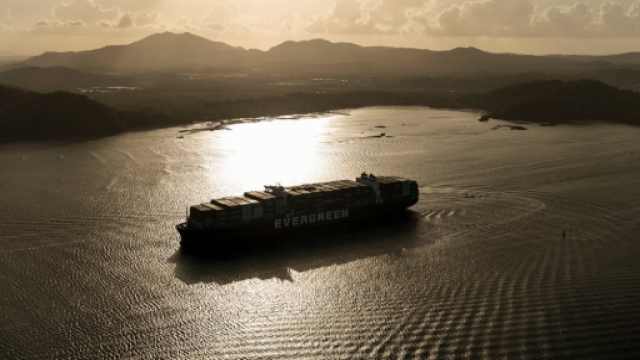
Mar 30, 2026 (V7N) – The ongoing Middle East war has caused a significant surge in maritime traffic through the Panama Canal, as ships seek alternative routes following the effective blockade of the Strait of Hormuz by Iran. The conflict, which began on February 28, has resulted in disruptions to one of the world’s most critical oil and gas transit routes, prompting vessels to seek the shorter, safer alternative offered by the Panama Canal.
According to Ilya Espino de Marotta, deputy administrator of the Panama Canal, the waterway has seen a sharp rise in traffic over the past two weeks. Initially, the canal was expecting around 34 daily passages for the year, but in recent weeks, this figure has jumped to between 38 and 40 daily transits. This increase is largely due to the disruption of the Strait of Hormuz, through which a fifth of the world’s oil and gas exports typically pass.
The Panama Canal plays a vital role in global maritime trade, handling about 5% of the world's maritime traffic. The primary users of the canal are the United States and China, with the route connecting the east coast of the US to Asian markets, particularly China, South Korea, and Japan.
Espino de Marotta emphasized that the canal provides a safe, efficient route for shipping, especially as global gas prices continue to rise, offering a cost-effective alternative to longer, more congested routes.
While the increase in daily passage is seen as a positive sign for the canal’s operations, Espino de Marotta cautioned that 40 daily boat transits are unsustainable due to the limited space and the logistical challenges of accommodating such high traffic levels. She noted that maintaining such a high number of transits could put considerable strain on the canal's infrastructure, which is already dealing with growing demand.
The Panama Canal is also expected to see a resurgence in the passage of ships carrying Liquefied Natural Gas (LNG), a sector that had been impacted by the Russian invasion of Ukraine. According to Espino de Marotta, LNG transits had dropped significantly during the war but are now starting to recover. Before the downturn caused by the Ukraine war, the canal was seeing over 500 LNG shipments per year. However, traffic in this sector is now showing signs of growth as global energy markets continue to shift.
END/WD/RH/














Comment: