
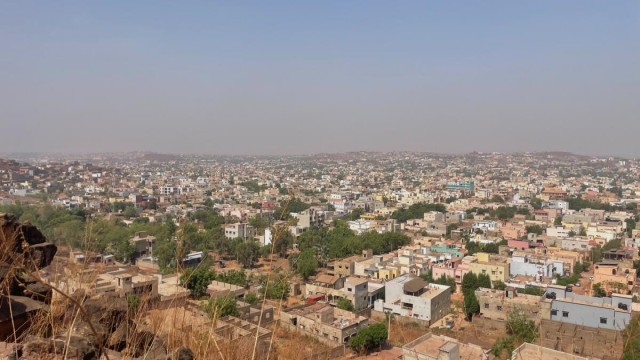
BAMAKO, April 30 (V7N) — Russia officially rejected a demand from Tuareg rebels to withdraw its forces from Mali today, as the West African nation reels from a coordinated wave of attacks that has left the ruling military junta's security strategy in shambles.
The Kremlin’s refusal to budge follows a weekend of unprecedented violence—the largest offensive in 15 years—launched by a newly revived alliance between the secular Azawad Liberation Front (FLA) and the Al-Qaeda-affiliated JNIM.
Russia’s "Africa Corps" Stands Firm
Despite the high-profile withdrawal of Russia’s Africa Corps (the successor to the Wagner Group) from the strategic northern stronghold of Kidal earlier this week, Moscow signaled it will not abandon its ally.
Official Stance: Kremlin spokesman Dmitry Peskov stated that Russian presence is a "necessity declared by the authorities" and pledged to continue fighting "extremism and terrorism."
The Kidal Blow: Rebel forces negotiated a deal that allowed encircled Russian and Malian troops to retreat from Kidal to Tessalit on Monday, marking a symbolic and tactical defeat for the junta.
Death of a Mastermind
Under heavy security, the capital of Bamako held a funeral today for Defense Minister Sadio Camara, who was killed on Saturday.
The Assassination: Camara died when a suicide car bomb, claimed by JNIM, struck his residence.
Significance: Camara was widely regarded as the architect of Mali’s pivot toward Moscow and away from Western partners like France. His death is a severe blow to the leadership of junta chief Assimi Goïta.
Rebels Predict Regime Collapse
In Paris, Mohamed Elmaouloud Ramadane, a spokesman for the FLA, told news agencies that the junta’s days are numbered.
“The regime will fall, sooner or later,” he warned, urging Moscow to leave before it is dragged down with the government.
The rebels now claim to be moving toward other key northern hubs, including Gao and Timbuktu, after seizing Kidal.
A Volatile New Reality
The joint offensive has exposed the fragility of the military junta’s control. Since seizing power in 2020 and 2021, the junta has relied heavily on Russian mercenaries to replace French and UN peacekeepers. However, the scale and coordination of these latest strikes—targeting the heart of Bamako and remote northern garrisons simultaneously—suggest that the current security arrangement is failing to contain the insurgency.
As of today, the Malian military remains on high alert, with search operations and reinforced intelligence measures continuing across the capital.
END/WD/RH/










Comment: