


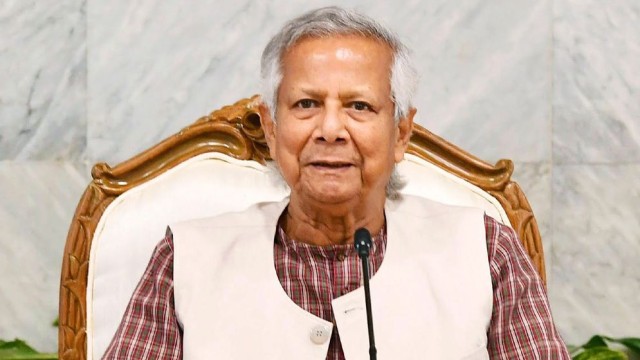
Dhaka, Feb 10 (V7N) – Chief Adviser Professor Muhammad Yunus on Tuesday urged citizens to participate actively in the 13th Jatiya Sangsad election and the referendum on the July National Charter, describing the upcoming vote as a decisive moment that will shape Bangladesh’s future.
Addressing the nation in a televised speech ahead of the February 12 polls, Professor Yunus said the day would be remembered as a turning point for democracy, governance and national direction.
“Some moments in a nation’s life determine its future course. The day after tomorrow is such a moment, when the people will elect a new government and simultaneously express their views on the future framework of the state,” he said.
The speech was broadcast simultaneously by Bangladesh Television and Bangladesh Betar.
At the beginning of his address, the Chief Adviser paid tribute to the martyrs of the Liberation War and the July mass uprising, noting that their sacrifices made the election and referendum possible. He said the country is now passing through a crucial democratic transition following years of struggle.
Professor Yunus noted that the formal election campaign has concluded and the responsibility now rests with voters. He expressed satisfaction that the election period has been largely peaceful compared to past experiences, attributing this to restraint shown by political parties, candidates and citizens.
“This environment did not emerge overnight. It reflects a shared sense of responsibility,” he said, thanking political parties, the Election Commission, civil society, media professionals, law-enforcement agencies and the administration for their roles.
At the same time, he expressed sorrow over isolated incidents of violence since the announcement of the election schedule, saying any loss of life in a democratic process is unacceptable.
Highlighting the scale of participation, the Chief Adviser said 51 political parties and more than 2,000 candidates, including independents, are contesting the polls—one of the broadest participations in Bangladesh’s electoral history.
He described the election as more than a routine democratic exercise, calling it the first national vote following a mass uprising and a constitutional expression of public aspirations.
“This election is about choosing representatives, but it is also about deciding which path Bangladesh will take,” he said, adding that the accompanying referendum will help clarify the direction of future reforms.
Professor Yunus called on candidates to place national interest above personal or party considerations and to respect democratic outcomes, regardless of results. He urged all stakeholders to work together after the polls to build an inclusive, accountable and democratic society.
Addressing young voters and women in particular, he noted that many had voting rights for years without meaningful opportunities to exercise them. He said their participation would mark a new chapter and encouraged them to vote without fear.
The Chief Adviser said the government has taken extensive measures to ensure a free, fair and peaceful election, including deploying law-enforcement personnel and using technology such as CCTV cameras, body-worn cameras and other monitoring tools.
He also noted steps to make the process more inclusive, including arrangements for expatriate Bangladeshis, officials on duty and eligible citizens in custody to vote through postal ballots.
Reiterating that voting is a constitutional right, Professor Yunus urged citizens to reject misinformation and to rely on official sources for accurate updates. He dismissed speculation about the interim government’s intentions, saying power would be transferred promptly to the elected government.
On the referendum, he said the July National Charter was developed through consultations with more than 30 political parties and reflects a broad national consensus. He described it as a roadmap for reforms and long-term stability, emphasizing that its success depends on public participation.
“Every vote will help shape the future state system, with an impact that will last for generations,” he said.
Concluding his address, Professor Yunus called on citizens to go to polling centres in a peaceful and confident manner and exercise their rights responsibly.
“The future of the country is in your hands,” he said, expressing hope that election day would mark the beginning of a new chapter for Bangladesh.
END/AIJ/RH/














Comment: