


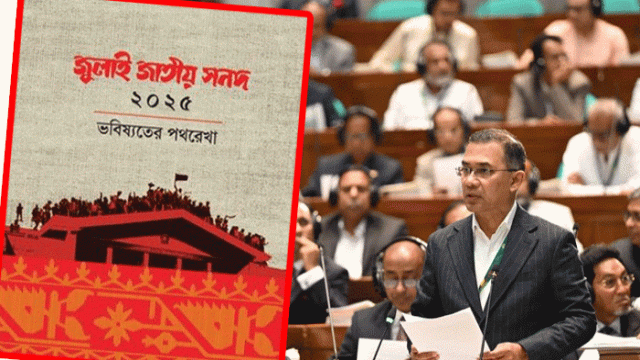
Dhaka, Mar 15 (V7N) — The “July National Charter,” one of the most widely debated outcomes of Bangladesh’s 2024 mass uprising, is facing fresh legal and political uncertainty just as the country’s 13th National Parliament begins its work, raising questions over whether the reform framework will become part of the state structure or remain stalled in legal complications.
The July National Charter has emerged as a central issue in Bangladesh’s current political discourse following the bloody mass uprising of August 5, 2024, led by students and ordinary citizens. The movement not only led to a change in government but also created strong public demand for structural reforms in the state.
In response to the political upheaval, the interim government formed several specialized committees to recommend reforms in key sectors of governance. To ensure broader political acceptance, a National Consensus Commission was later established, which held extensive dialogues with political parties and stakeholders.
The reform framework that emerged from these discussions became known as the July National Charter. The charter included proposals for balancing state power, ensuring judicial independence, and reforming the electoral system. Most major political parties initially expressed support for the document.
To determine public support, a national referendum was held alongside the 13th National Parliamentary election. According to political sources, the charter received overwhelming approval from voters, with around 70 percent supporting its implementation.
Political analysts say the referendum created a strong moral and political obligation for the newly elected government to incorporate the charter into the constitutional framework. The interim administration had planned that if the referendum succeeded, the newly formed parliament would formally integrate the charter into the Constitution through legal mechanisms.
However, the process encountered a new obstacle when the High Court issued a rule questioning the legality of both the “July National Charter Implementation Order” and the ordinance under which the referendum was conducted. The court asked the authorities to explain why these measures should not be declared unconstitutional.
According to the petitioner, the referendum held under the charter conflicts with several provisions of the Constitution, particularly those related to parliamentary authority, electoral procedures, and certain aspects of citizens’ rights.
The court’s intervention has reignited debate over the future of the reform process and raised fresh concerns about whether the July Charter can be implemented as planned.
Some legal experts argue that even if the charter enjoys strong public support through the referendum, implementing it could become complicated if it conflicts with the constitutional framework. They believe constitutional amendments should have been pursued directly through parliament.
Others, however, contend that the political context of the August 5 uprising was extraordinary. In such exceptional circumstances, they argue, decisions taken by the interim administration should be evaluated under the “doctrine of necessity,” which has historically been invoked in extraordinary political transitions.
Political observers suggest that the new government led by the Bangladesh Nationalist Party (BNP), which secured strong public support in the recent election, may attempt to carry out the constitutional reform process through parliament rather than relying solely on the interim government’s mechanisms. In that case, the ongoing court proceedings could provide the government with time to reassess its strategy.
At the same time, the issue has sparked controversy among political parties. While Jamaat-e-Islami and the National Citizens Party (NCP) have taken a firm stance in favor of fully implementing the charter, some lawyers affiliated with political parties that previously endorsed the charter are now challenging its legality in court.
Analysts believe the dispute over the July Charter will not remain confined to the courtroom but will also shape political dynamics in the coming weeks.
If the court ultimately declares the charter invalid, the government could cite legal constraints to step back from its implementation. Conversely, the newly elected parliament could also pass fresh legislation to grant the charter legal legitimacy.
Meanwhile, attention is now focused on both the judiciary and the parliament. The first session of the 13th National Parliament was held on March 12, but the July Charter was not discussed despite references to the historic mass uprising that reshaped the country’s political landscape.
Uncertainty therefore persists over whether the charter will form the foundation of a restructured state system in Bangladesh or remain entangled in legal challenges.
Adding to the political pressure, an alliance of 11 parties, including Jamaat-e-Islami, has warned of launching street protests if the government fails to take steps to implement the July Charter by March 15.
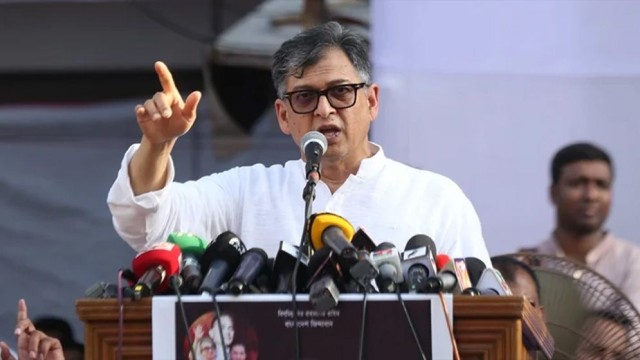
Speaking at a press briefing in Dhaka on March 14 following an emergency meeting of the alliance’s liaison committee, Jamaat-e-Islami Assistant Secretary General Hamidur Rahman Azad said the government must convene the reform council session within the stipulated timeframe.
According to Azad, the referendum held alongside the national election clearly reflected public support for the charter, with about 70 percent of voters backing it.
He accused the government of political inconsistency, claiming that parties which previously supported the charter during the election campaign were now retreating from their commitments.
Azad also expressed concern that the reform council session has not yet been convened, despite legal provisions requiring it to be held within 30 days. That deadline expires on March 15.
“If the government fails to convene the session within the deadline, it will have to take responsibility before the nation,” he said, adding that the parliamentary leader and the government would be held accountable.
He further warned that if the reform council meeting is not called by the deadline, the alliance will be compelled to launch a political movement.
Leaders of the 11-party alliance who attended the meeting also reiterated their demand for full implementation of the July National Charter rather than partial reforms.
They announced that a meeting with top leaders scheduled for March 28 will determine the future course of the movement and publicly outline the next political steps.
For now, Bangladesh’s political future regarding structural reforms appears to depend largely on two key developments: the High Court’s decision on the legality of the July Charter and the political stance the new parliament ultimately adopts.
END/SMA/AJ/

















Comment: