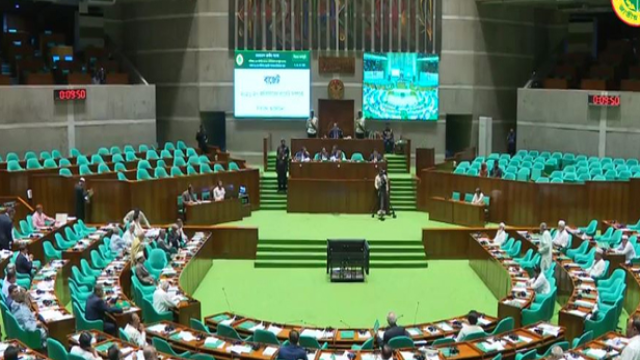
SANGSAD BHABAN, July 7,(v7n) – The Jatiya Sangsad today passed the Public Examinations (Offences) (Amendment) Bill, 2026, introducing stricter penalties for question paper leaks, digital manipulation, fake certificates, and other technology-driven offences to safeguard the integrity of Bangladesh's public examination system.
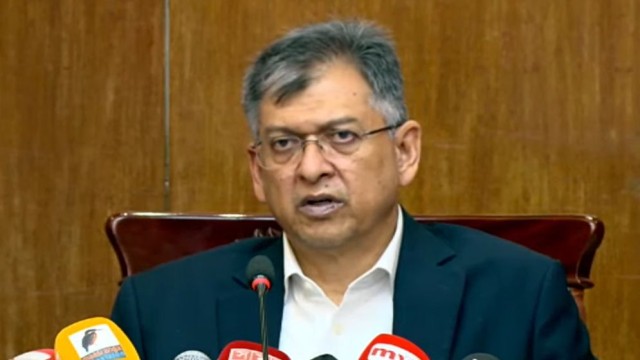
Education Minister Dr. A N M Ehsanul Hoque Milon moved the Bill, which was passed by voice vote.
The legislation amends the Public Examinations (Offences) Act, 1980, replacing outdated provisions to address cyber-enabled fraud and emerging malpractices. The existing law, enacted about 45 years ago, had become inadequate in the face of rapid digital expansion, according to the Bill's statement of objects and reasons.
Digital Manipulation (Section 5A): Defines and criminalizes unauthorized access, hacking, alteration, deletion, or suppression of examination databases, punishable by up to five years' imprisonment, a fine, or both.
Electronic Devices in Exam Halls (Section 3A): Prohibits entering or attempting to enter exam halls with banned electronic devices, with penalties of up to two years' imprisonment, a fine, or both.
Leaking Exam Materials (Section 8): Strengthens punishment for possessing, disclosing, or distributing question papers or answer scripts before exams, with penalties of up to five years' imprisonment, a fine, or both.
Unauthorized Exam Centres (Section 9A): Criminalizes the establishment or operation of illegal exam centres, with offenders facing up to five years' imprisonment, a fine, or both.
Evaluation Manipulation (Section 10A): Makes deliberate over-assessment or under-assessment of answer scripts punishable by up to two years' imprisonment, a fine, or both.
Institutional Accountability (Section 12A): Allows legal action against institutions and service providers that facilitate exam offences or fail to supervise employees, with responsible officers liable unless they prove due diligence.
Minors (Section 13A): Ensures children accused under the Act are processed in accordance with the Children Act, 2013.
Whistleblower Protection (Section 13B): Shields individuals who disclose exam-related offences in good faith from civil, criminal, or disciplinary action.
The Bill makes all offences cognisable, enabling arrests without prior court permission, and cases will be tried through summary procedures by Metropolitan Magistrates or Senior Judicial Magistrates. The government has also been empowered to frame rules for effective implementation.
The amendments aim to combat increasingly sophisticated examination fraud involving digital systems and organized networks, while ensuring greater transparency, credibility, and fairness in the public examination system.