


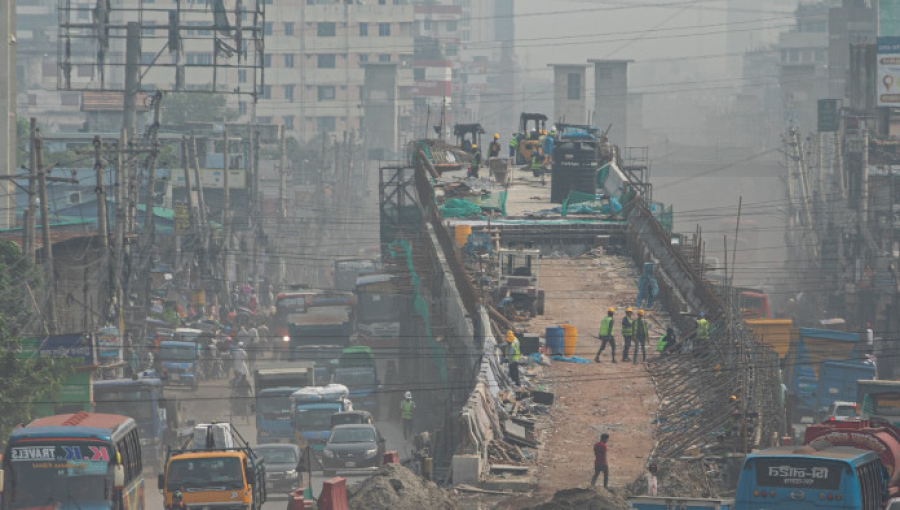
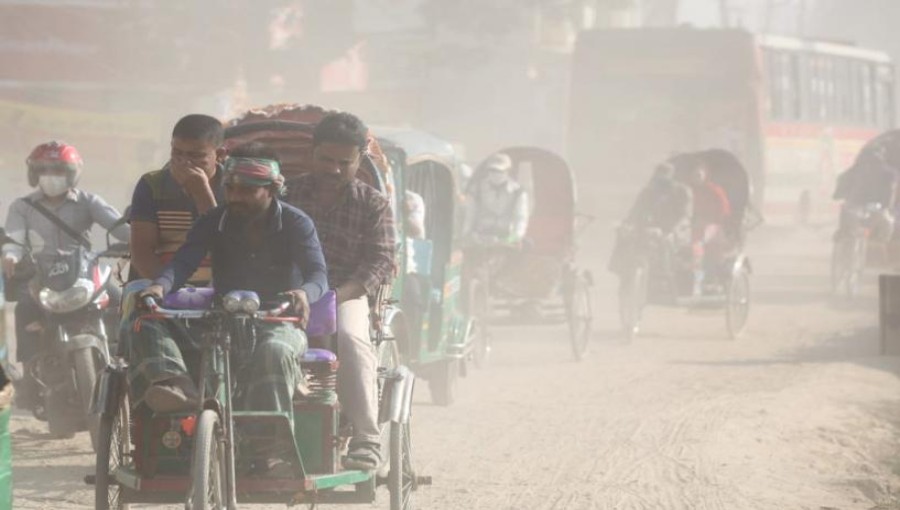
Dhaka, Mar 5 (V7N) - Dhaka, the bustling capital of Bangladesh, has once again found itself ranked among the most polluted cities in the world. On Thursday morning, at 10:30 am, the city’s Air Quality Index (AQI) reached a concerning 253, classifying the air as 'very unhealthy' and posing significant health risks to residents.
The Swiss-based IQAir, which provides real-time air quality data, reported that Dhaka ranked second globally, only behind Lahore, Pakistan, which had the highest AQI. Other cities such as Kolkata, India, and Kathmandu, Nepal, followed closely, with AQIs of 197 and 185, respectively. On the flip side, Batam and Medan in Indonesia enjoyed the world’s cleanest air, both recording an AQI of 0.
The AQI scale provides an alarming view of air pollution levels: an AQI of 101–150 is considered unhealthy for sensitive groups, while readings from 151 to 200 indicate unhealthy air quality for the general public. Anything above 201 is considered ‘very unhealthy,’ as seen in Dhaka's case, and values above 301 are deemed hazardous, causing severe health impacts.
For Bangladesh, the AQI is calculated by monitoring five critical pollutants: particulate matter (PM10 and PM2.5), nitrogen dioxide (NO2), carbon monoxide (CO), sulfur dioxide (SO2), and ozone.
Dhaka has long struggled with air pollution, particularly during the winter months when the air quality worsens. The monsoon season typically offers some relief. According to the World Health Organization (WHO), air pollution is responsible for approximately seven million deaths annually worldwide, with diseases such as stroke, heart disease, chronic obstructive pulmonary disease, lung cancer, and acute respiratory infections contributing to these deaths.
END/CLM/RH/



















Comment: