Rangamati, Nov 04 (V7N) – The Bangladesh Army’s 26 Engineer Construction Battalion (26 ECB) has been carrying out a range of development and welfare activities in remote areas of Rangamati, focusing on road connectivity, education, healthcare, religious institutions, sports facilities and environmental conservation.
Working through difficult terrain, adverse weather and natural obstacles, the engineering unit has been constructing infrastructure while also undertaking initiatives to improve the living standards of local communities.
Its activities have particularly focused on Rajsthali, Bilaichhari and surrounding remote areas, where border road construction and community support programmes have brought new opportunities and raised hopes among residents.
Under the 34 Engineer Construction Brigade of the Bangladesh Army, 26 ECB began infrastructure development in the region in 2016 with the establishment of the Rajsthali Project Camp. Construction of the Rajsthali-Dumdumia-Farua-Bilaichhari-Saichal-Barakhali-Thegamukh border road project formally began on July 3, 2019.
In the first phase, 76 kilometres of flexible pavement have been completed. Construction of another 28-kilometre section from Bogakhali to Korollachhari is underway under the second phase.
The third phase includes plans to construct a 26-kilometre road from Korollachhari to Yesamukh and a 22-kilometre road from Adayababa to Thalipara. The project also includes the construction of bridges, culverts, drainage systems and retaining walls at necessary locations.
According to people involved in the project, improved road connectivity will make travel easier for residents of remote communities while creating opportunities to transport agricultural produce to markets, access emergency medical services and expand local economic activities.
Beyond road construction, 26 ECB has also undertaken several community welfare initiatives. According to available information, three passenger shelters, four primary schools and nine water points have been established in remote areas.
To promote greenery and protect the environmental balance, the unit has also planted 70,680 fruit-bearing and forest tree saplings.
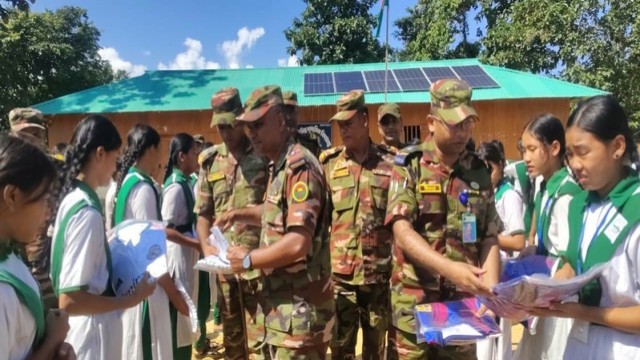
As part of its educational support, 26 ECB has distributed school uniforms and learning materials among students of Thumpara Government Primary School. It has also taken responsibility for the salaries and allowances of two teachers to help keep the school's academic activities running.
At Bogakhali Lower Secondary School, the unit has installed solar panels and provided four electric fans. It has also helped develop the school playground and distributed sports jerseys and equipment to encourage students to participate in sports.
A playground has also been constructed in Thumpara to provide children and teenagers with opportunities for regular sporting activities. Previously, local children had limited access to organised outdoor recreation because the area lacked a suitable playing field.
The unit has also provided humanitarian assistance to a cancer patient from Thumpara by arranging treatment at the Combined Military Hospital (CMH) in Dhaka and covering the medical expenses. According to sources concerned, the patient has since recovered and returned to normal life.
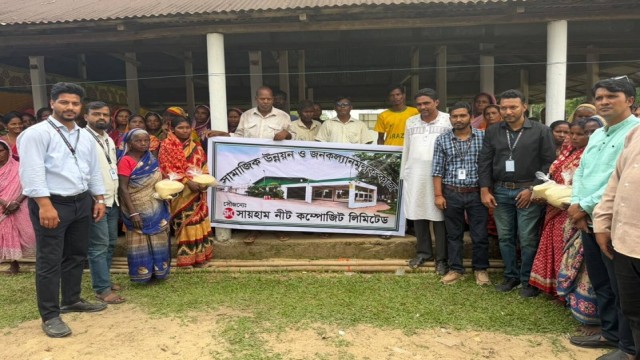
In another initiative, 26 ECB donated eight bundles of corrugated iron sheets on November 2 for the renovation and improvement of a Buddhist monastery in Gachhbagan Para, adjacent to the Saichal Project Camp in Bilaichhari upazila.
Local residents have viewed the assistance to the remote religious institution as an example of communal harmony and mutual cooperation.
The construction of border roads is also expected to improve market access for local farmers. Previously, poor communication facilities often forced farmers to sell bananas, turmeric, ginger and other agricultural produce at low prices in nearby markets.
Improved connectivity is creating opportunities to transport these products to markets in Rangamati, Rangunia and different parts of Chattogram.
A karbari from Thumpara said travelling to Rajsthali, Chandraghona and Chattogram had previously been extremely difficult for residents.
“Because of poor communication facilities, we faced various difficulties. The Army’s border road construction has created new opportunities for travel. We can now transport bananas, turmeric, ginger and other agricultural products grown in the hills to markets in Rangamati and Rangunia,” he said.
He added that 26 ECB had also been supporting education, healthcare, religious institutions and sports activities.
“The assistance provided for the treatment of a cancer patient and the renovation of the Buddhist monastery will remain memorable for local people,” he said.
Students of Bogakhali Lower Secondary School said the lack of electricity had previously made classroom learning difficult during hot weather. They also lacked a proper playground and sports equipment.
They said the solar power system, fans, playground, jerseys and sports equipment provided with the Army's assistance had improved the environment for both education and recreation.
Poor connectivity has long been one of the major obstacles to education, healthcare and economic development in remote parts of the Chittagong Hill Tracts.
Against this backdrop, 26 ECB's initiatives in road construction, education, medical assistance, access to drinking water, religious institutions, sports and environmental conservation are contributing to improvements in the lives of local communities.
Residents hope that continued development and welfare activities will further expand transport links, education, healthcare, agriculture and economic opportunities in the remote hill areas while strengthening mutual trust, communal harmony and cooperation between communities.
END/AMR/SMA/