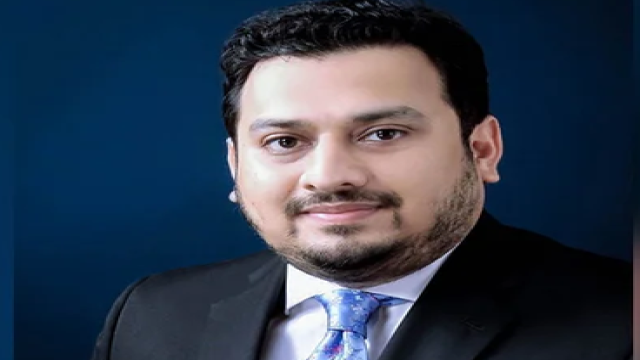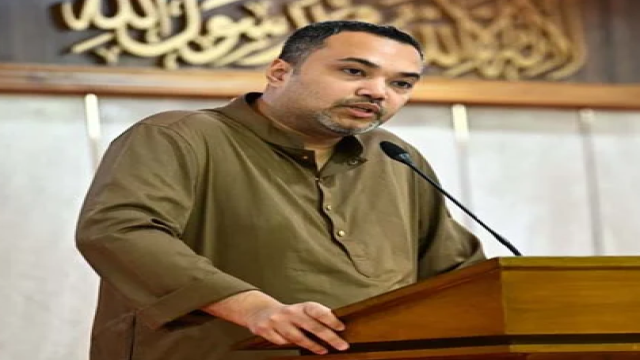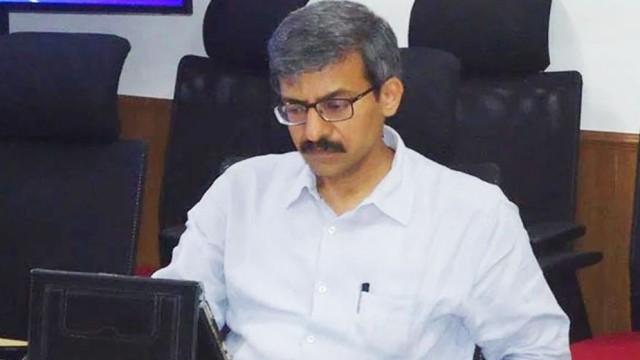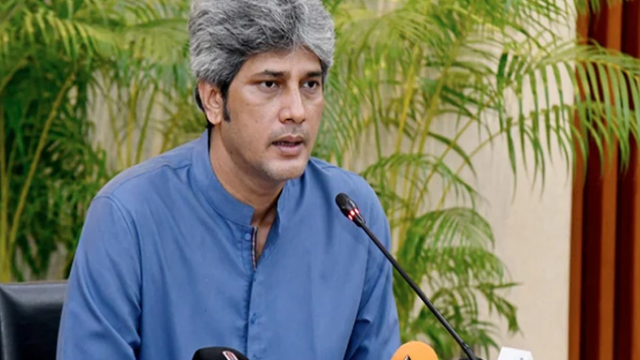
DHAKA, July 30, (v7n) – State Minister for Planning Md. Zonayed Abdur Rahim Saki today said the government's overarching goal is to build an investment-driven and productive economy capable of generating large-scale employment through structural reforms, improved project implementation, and enhanced public investment efficiency.
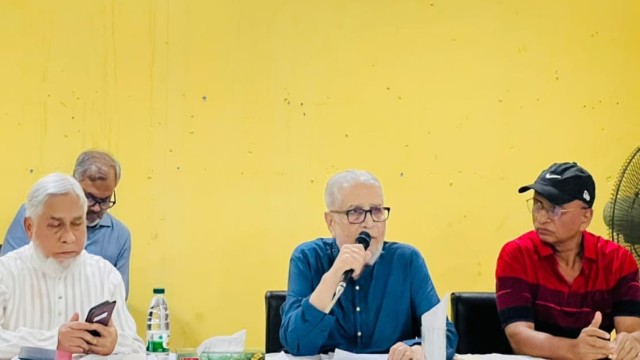
"Our commitment is to build an investment-driven and productive economy that will create employment. This vision is being reflected in the budget and various policy measures," he said while addressing a seminar titled "Labour Market Tightness and Aggregate Shocks: Evidence from Bangladesh's Largest Online Job Portal," organised by the Bangladesh Institute of Development Studies (BIDS).
Saki said the government is aligning all development programmes with its election manifesto and a five-year development and reform strategy expected to be unveiled before the government completes its first 180 days in office on August 17. He said the government is reviewing the Annual Development Programme (ADP) to ensure full alignment with the manifesto and strategy paper.
Referring to weaknesses in project planning, he said many projects were approved without proper coordination, leading to significant waste of public resources. "We are moving away from a piecemeal project approach towards a programme-based approach so that related projects are implemented together. There is no point in building a power plant without transmission lines, distribution networks, or skilled manpower," he said.
The state minister said the government is addressing structural inefficiencies alongside efforts to curb corruption. A committee has been formed to prepare a unified rate schedule for development projects, while an AI-based software system is being developed to verify project costs automatically, improving transparency in public spending.
He said the government is also integrating several digital initiatives to develop an interoperable national data system, modernising the Bangladesh Bureau of Statistics (BBS) by strengthening its technological capacity. "Our objective is to establish an integrated and interoperable data system and make most government data accessible to researchers, students, and institutions so that policy decisions are based on real-time evidence," he added, emphasising that the government has no intention of manipulating statistics.
Highlighting investment priorities, Saki identified ICT, electronics, light engineering, agro-processing, and semiconductors as new growth engines. He said resolving energy constraints remains a top priority through increased domestic gas exploration, expansion of renewable energy, and improved fuel reserves, with Bangladesh aiming to generate a huge portion of solar power with private sector participation.
He outlined measures to restore confidence in the financial sector, including preventing political interference in banks, supporting viable industries, improving monetary and fiscal policy coordination, and simplifying business procedures through time-bound approval systems and integrated single-window services.
The state minister said investment in education, healthcare, and housing would remain central to improving human capital and long-term productivity, while universal social protection programmes would be expanded in phases. He said digital dashboards are likely to be introduced before August 17 to monitor development projects in real time across ministries, and expressed hope that BIDS would play a stronger role in supporting evidence-based policymaking through expanded research.
end/aj/rh/