Dhaka, Sept 10 (V7N) – Prime Minister's Political Adviser and Chairman of the Parliamentary Standing Committee on the Planning Ministry Zahir Uddin Swapon today stressed the need for effective measures to prevent new tobacco products in order to protect the young generation, warning that the marketing and easy availability of e-cigarettes, heated tobacco products (HTPs) and nicotine pouches could create new health risks.
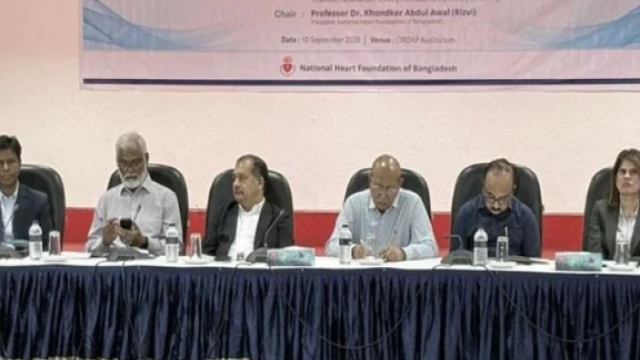
He made the emphasis at a programme organised by the National Heart Foundation of Bangladesh to unveil the findings of a study titled "Trends in the Use of E-cigarettes, Heated Tobacco Products and Nicotine Pouches among Bangladeshi Youth" at CIRDAP auditorium in the capital.
Urging all to work in a coordinated manner to ensure effective control of tobacco products, Swapon said the marketing and easy availability of new products alongside conventional tobacco products could encourage youth to take up these harmful habits.
The study, conducted by the National Heart Foundation of Bangladesh, collected data through an online survey from 524 young people aged 18 to 24 between March and July 2025. Among the respondents, 78.2 percent were male and 21.8 percent were female.
Key findings include:
-
5.5 percent of young people aged 18 to 24 are currently using new tobacco products
-
28.1 percent have used these products at least once in their lifetime
-
E-cigarettes are the most widely used (4.6 percent), followed by nicotine pouches (1.3 percent) and heated tobacco products (0.8 percent)
Lawmaker Dr Abu Mansur Sakhawat Hasan said the use of tobacco and nicotine products is highly harmful to public health and that their use among young people is increasing the risk of nicotine addiction. He emphasized that to protect young people, it is essential to reduce the use and availability of these products and ensure effective control over their advertising, promotion and sale.
Professor Dr Khandakar Abdul Awal Rizvi, President of the National Heart Foundation of Bangladesh, said advertising, promotion and sponsorship of such products must be strictly regulated and age verification must be ensured at the point of sale to protect young people from nicotine addiction.
The programme was presided over by Professor Dr Khandakar Abdul Awal Rizvi, while Textiles and Jute Ministry Secretary Sharf Uddin Ahmed Choudhury and CTFK Regional Director for South Asia Programmes Dr Maheen Malik also spoke at the event. Professor Dr Sohel Reza Chowdhury, Head of the Department of Epidemiology and Research at the National Heart Foundation Hospital and Research Institute, delivered the welcome address, while Dr Aruna Sarker, Coordinator of the Tobacco Control Programme, presented the study findings.
The findings come as the government considers amendments to the Tobacco Control Act, with the proposed amendments stalled in parliament since 2023. Public health experts have warned that the delay is allowing tobacco companies to aggressively market new and emerging products, particularly targeting youth through social media and attractive packaging. The government is also considering a ban on e-cigarettes and other new tobacco products.
end/aj/rh/