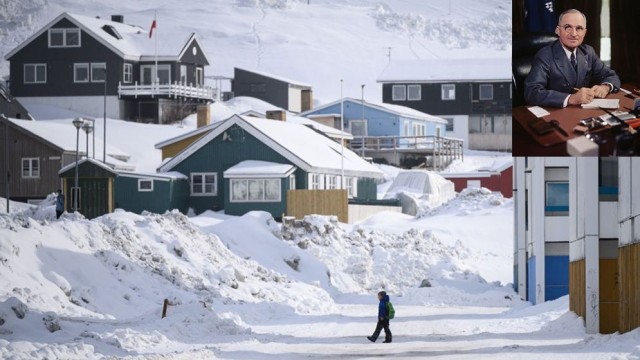
Dhaka, Jan 20 (V7N) — In 1946, then US President Harry S. Truman, the 33rd president of the United States, offered to buy Greenland from Denmark in exchange for $100 million worth of gold. The proposal was firmly rejected. At a time when the world was moving toward post–World War II decolonization, even discussing the purchase of territory was widely seen as politically unacceptable.
While the United States later explored options such as leasing parts of Greenland and establishing military bases, no American president before Donald Trump openly suggested the outright purchase of the entire territory of another sovereign country.
Trump’s repeated insistence on Greenland has sparked global debate and curiosity. Analysts say the reasons lie in geography, resources, and global power competition.
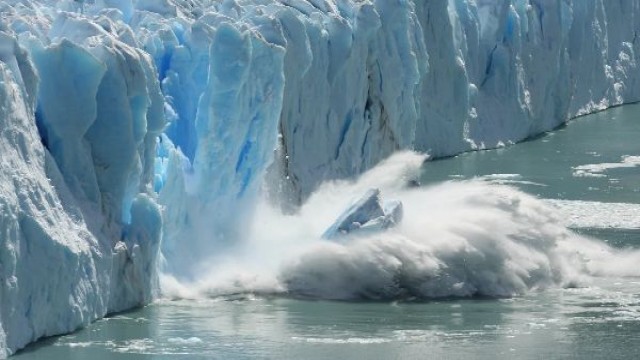
Greenland is the largest island in the world, covering an area roughly 15 times larger than Bangladesh. Although about 80 percent of the island is covered by ice and its population is small, Greenland possesses enormous strategic and economic value.
The island is rich in fisheries, contains some of the purest freshwater reserves in the world, and is home to rare biodiversity and unique natural landscapes. More importantly, Greenland holds vast reserves of rare earth minerals, which are critical for computers, smartphones, renewable energy technologies, and battery-powered electric vehicles. Deposits of uranium and zinc have also been identified.
With climate change gradually melting Arctic ice, access to these resources is becoming easier. At the same time, new Arctic shipping routes are opening, significantly shortening trade paths between Asia, Europe, and North America.
Strategically, Greenland’s location in the Arctic gives it immense military and geopolitical importance, particularly for missile defense, surveillance, and control of northern sea routes.
According to analysts, if the United States were to gain control over Greenland, it could significantly counter China’s dominance in industrial and rare earth minerals, an area where Beijing currently holds a commanding position.
However, critics argue that territorial acquisition in the modern era undermines international law and sovereignty, making Trump’s proposal controversial and diplomatically risky.
As global competition intensifies in the Arctic, Greenland has emerged not merely as an island of ice, but as a critical chess piece in 21st-century geopolitics.
END/AJ/SMA