


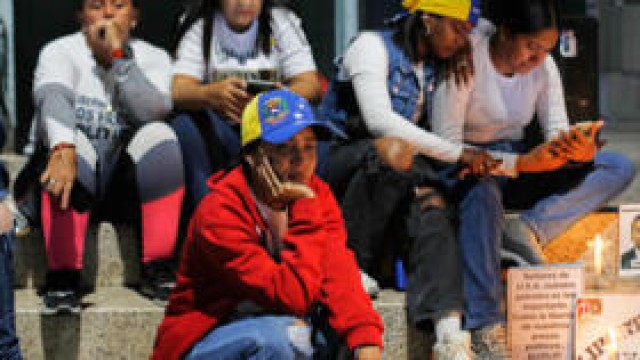
CARACAS, Feb 23, (V7N) — More than 200 Venezuelan political prisoners have begun a hunger strike to demand their release under a new amnesty law that excludes many of them. The hunger strike started on Friday night at the Rodeo I prison near Caracas, with inmates arguing that the amnesty law, which was approved by Venezuela’s congress on Thursday, does not cover cases involving the military—one of the primary groups detained at the facility.
Among those involved in the strike is Nahuel Agustin Gallo, an Argentine police officer accused of terrorism, which is another offense excluded from the law. As of Sunday, 214 prisoners—Venezuelans and foreigners alike—had joined the hunger strike, including relatives of some inmates like Shakira Ibarreto, whose father was arrested in 2024.
The amnesty law, backed by interim president Delcy Rodríguez, follows the dramatic events of January 3, when former President Nicolás Maduro was ousted and captured by US forces. The law has been heavily criticized for its carve-outs, particularly for offenses related to military action and terrorism, which have been used in the past to target political opponents. Notably, the law does not apply to those accused of promoting or facilitating armed actions against Venezuela's sovereignty, such as opposition figures like Maria Corina Machado, who remains in the United States.
On Sunday, a group of five prisoners from Rodeo I was released, and their departure was met with applause. A total of 23 prisoners were released that day, according to the NGO Foro Penal, which tracks political imprisonments in Venezuela.
The hunger strike continues as the prisoners demand a broader and fairer application of the amnesty law, which has already seen the release of hundreds of prisoners, but many remain excluded, particularly those involved in military-related offenses. The International Committee of the Red Cross (ICRC) also visited the prison for the first time on Sunday, a sign of potential improvements in the prison's access and conditions.
Maduro, who ruled Venezuela from 2013 until his capture in January 2026, is now in U.S. custody, awaiting trial for alleged drug trafficking. His government had previously been accused of silencing opposition and dissent under its harsh leftist rule.
END/WD/RH/


Comment: