SEOUL, July 23 (V7N) — Women leaders, policymakers, peace advocates and civil society representatives from conflict-affected regions around the world have called for stronger female participation in peacebuilding, arguing that lasting peace cannot be achieved without women's leadership and meaningful inclusion in decision-making.
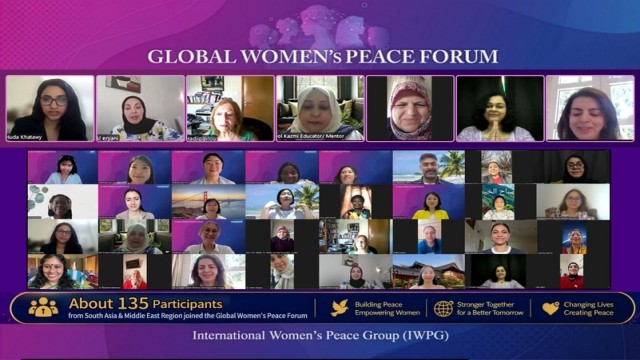
The appeal came during the Global Women's Peace Forum, hosted online by the International Women's Peace Group (IWPG) over two days beginning July 20. The event brought together 1,067 participants from the Asia-Pacific, Africa and Europe, the Americas, and South Asia and the Middle East to discuss regional security challenges, barriers to women's leadership, and practical strategies for achieving sustainable peace.
The forum served as a preparatory meeting for the 2026 International Women's Peace Conference, scheduled to be held in the Republic of Korea this September. Recommendations from the discussions will be consolidated into the Global Women's Peace Recommendations 2026, which will be presented at the conference.
Opening the forum, IWPG President Jeon Na-young emphasized that women living in conflict-affected communities possess firsthand knowledge of the challenges facing their societies.
"The solutions we seek cannot come only from outside. They must also emerge from the voices, experiences, and wisdom of local women themselves," she said.
Speakers from the Middle East, South Asia and Europe stressed that women remain underrepresented in peace negotiations despite evidence showing that their participation improves the durability of peace agreements.
Former Lebanese Minister of the Displaced Ghada Chreim Ata called for institutional reforms, including a minimum 30 percent quota for women in peace processes, saying that sustainable peace is impossible without women's participation.
Fawzia Koofi, President of the Board of Women for Afghanistan (WFA), urged governments to move beyond symbolic representation and ensure women play leadership roles in national security, economic policymaking and peace negotiations.
Participants from Yemen highlighted women's role in national reconciliation and post-conflict recovery. Lamia Al-Eryani, Head of the Yemen Peace School Organization, said rebuilding peace requires addressing the social, economic and psychological causes of conflict, while Al-Romissa Yaqoob, Director General of the Human Rights Department at Yemen's Ministry of Legal Affairs and Human Rights, called for stronger mechanisms to implement international agreements at the local level.
From Iraq, peace advocate Huda Alkhatawy identified social division, unemployment, misinformation and gender-based violence as key obstacles to peace, while Heba Haidar, Founder of the Global Shapers Aden Hub, said women should be recognised as leaders of community transformation rather than merely beneficiaries of aid.
Representatives from India, Jordan, Pakistan and Cyprus also shared experiences of promoting inclusive peacebuilding.
Vishakha Samir Mashankar of India highlighted her country's approach of combining security measures with inclusive development and community participation to counter violent extremism. Jordanian activist Amira Al Jamal called for greater inclusion of women with psychosocial disabilities in peacebuilding efforts, while Pakistani education mentor Batool Kazmi argued that gender inequality stems from deep-rooted structural barriers requiring institutional reform.
Maria Hajipavlou, Professor Emerita at the University of Cyprus, advocated integrating gender perspectives into peace negotiations through education, human security and gender-responsive media, describing open dialogue as essential for lasting peace.
IWPG said it will compile recommendations from all four regional forums into the Global Women's Peace Recommendations 2026, which will be formally presented to the international community during the 2026 International Women's Peace Conference in the Republic of Korea this September.
The International Women's Peace Group (IWPG) is an international non-governmental organisation that promotes sustainable peace through women's leadership, peace education, advocacy and international cooperation, working with governments, international organisations and civil society worldwide.
END/IWPG/PR/SMA/