


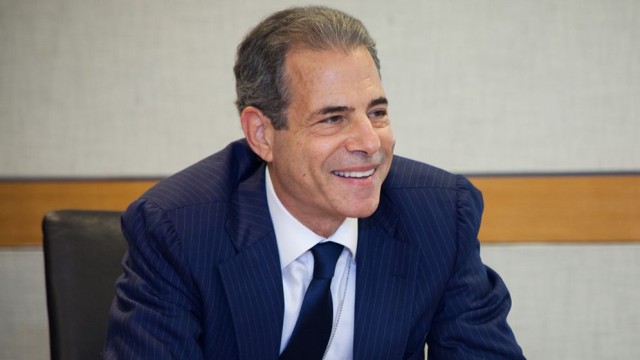
WASHINGTON, Mar 31 (V7N) — Richard Stengel, a former senior official in the U.S. State Department and former managing editor of TIME magazine, has launched a blistering critique of President Donald Trump’s current foreign and domestic trajectories. In a social media post that has gained significant traction, Stengel alleged that the President is repeating the strategic failures that have plagued U.S. policy over the last five decades.
Stengel, who served as Under Secretary of State for Public Diplomacy and Public Affairs during the Obama administration, characterized the President’s decision-making process as being driven by "unprecedented ignorance and corruption." He argued that by ignoring established diplomatic protocols and historical precedents, the administration is inadvertently reviving past mistakes rather than forging a new path.
"Real Estate Diplomacy"
A frequent critic of the President's unconventional style, Stengel further asserted that Trump lacks "loyalty to the truth." He expressed concern over the President's tendency to conduct high-stakes international negotiations—including the current military campaign involving Iran—largely in isolation or through a very small circle of loyalists.
According to Stengel, the President treats complex geopolitical and diplomatic crises as if they were "real estate deals," focusing on transactional outcomes rather than long-term regional stability or ideological alliances. This "transactional diplomacy," Stengel warns, risks alienating traditional allies and undermining the foundational principles of American foreign policy.
The 50-Year Cycle of Mistakes
Stengel’s critique touches on several key areas where he believes the administration is faltering:
-
Intelligence Oversight: Bypassing traditional intelligence briefings in favor of personal instincts.
-
Institutional Erosion: The perceived "hollowing out" of the State Department's career diplomatic corps.
-
Foreign Interventions: Engaging in military escalations without a clear exit strategy, a hallmark of previous decades of U.S. involvement in the Middle East.
The comments come at a particularly sensitive time for the White House, as Treasury Secretary Scott Bessent and President Trump himself have signaled a potential shift in the month-long Iran conflict. While the administration maintains that its "maximum pressure" tactics are working, analysts like Stengel argue that the lack of a cohesive, institutionalized strategy may lead to a repeat of the "forever wars" and diplomatic isolation of the past.
END/SMA/AJ














Comment: