


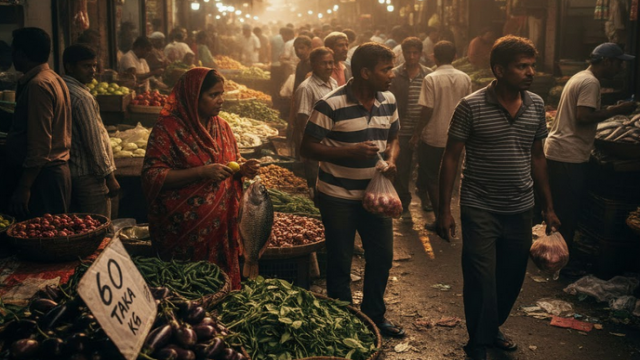
Jhalakathi, Feb 19 (V7N) — Since the beginning of the holy month of Ramadan, raw markets across Rajshahi have witnessed sharp price hikes in essential commodities, putting pressure on middle- and lower-income families.
From fish to vegetables, almost every item needed for iftar and sehri has become more expensive, with buyers expressing frustration over what they describe as abnormal price increases.
While fish prices were relatively stable before Ramadan, traders say demand has surged since the start of the fasting month, pushing prices up by Tk 20 to Tk 40 per kilogram.
Silver carp: Increased from Tk 120 to Tk 140 per kg
Mrigel (Mirka): Rose from Tk 160 to Tk 180 per kg
Tilapia: Jumped significantly from Tk 140 to Tk 180 per kg
Consumers say the sudden spike has made it difficult to include fish regularly in daily meals.
Vegetables commonly used in iftar preparations have also seen notable increases.
Brinjal: Tk 60 to Tk 80 per kg
Lemon: Tk 20 to Tk 60 per kg
Onion: Tk 45 to Tk 50 per kg
Potato: Tk 15 to Tk 20 per kg
Beans: Increased by Tk 10, now selling at Tk 40 per kg
The lemon market, in particular, has drawn criticism, with buyers alleging that traders are taking advantage of heightened Ramadan demand.
Nurul Islam, a resident of Sapura area, said a group of unscrupulous traders raise prices every Ramadan by forming syndicates.
“Whenever Ramadan comes, a section of traders increase prices in a coordinated way. Due to lack of proper market monitoring, middlemen are taking advantage,” he said.
On the other hand, retailers claim they are forced to charge higher prices because wholesale rates have also increased.
Market stakeholders believe that without strict administrative surveillance and proper supply chain management, the suffering of ordinary people may intensify during the remaining days of Ramadan.
Consumers are urging authorities to strengthen monitoring drives to ensure fair pricing and prevent artificial crises in the market.
END/AIJ/V7N























Comment: