

Dhaka, April 23 (V7N): The government has taken steps to introduce the long-anticipated online payment gateway PayPal in Bangladesh, aiming to expand the digital economy and create significant employment opportunities through the growth of the ICT sector.
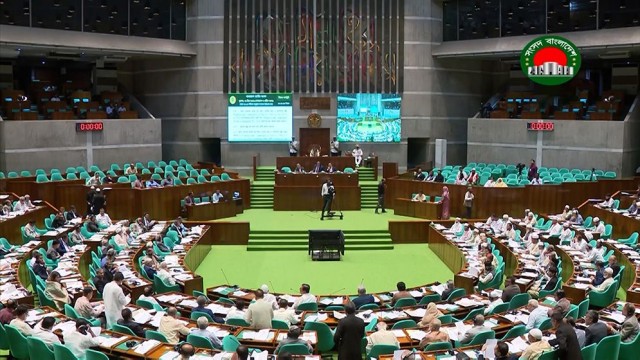
Prime Minister Tarique Rahman informed Parliament on Wednesday (April 22) that a comprehensive plan has been adopted to issue identification cards to 200,000 freelancers over the next five years, alongside large-scale training programs for thousands of young people.
He made the remarks in response to a written question from MP Md. Abdul Aziz of Natore-4 constituency during the parliamentary session.
The Prime Minister said various initiatives have been undertaken under the Ministry of Posts, Telecommunications and Information Technology to expand information technology services and generate employment opportunities. As part of these efforts, the Department of Information and Communication Technology plans to train 1,000 freelancers over the next five years, while continuing the distribution of freelancer ID cards, which has already reached 7,500 recipients.
The Bangladesh Hi-Tech Park Authority will train 2,400 individuals in advanced technologies such as artificial intelligence (AI), machine learning (ML), and virtual reality in 2026.
Currently, 83 government services are being delivered online, with plans to add 10 more services within the next year to further accelerate investment and employment opportunities.
A committee has also been formed to ensure the effective management of Hi-Tech and software parks and ICT centers, as well as to facilitate the introduction of PayPal operations in Bangladesh.
Under a broader plan, the Bangladesh Computer Council will conduct training for around 1,000 undergraduates and graduates in 20 batches over the next five years under the Information Technology Engineers Examination (ITEE) program.
Additionally, 5,020 job seekers and students will receive short- and long-term training in areas including AI, mobile app development, Python programming, data analytics, cybersecurity, as well as one-year diploma and postgraduate diploma programs.
Special initiatives include basic computer training for around 700 persons with disabilities to promote self-reliance, and skills development training for 700 women entrepreneurs under the Women in ICT Frontier Initiative (WIFI) to create employment opportunities.
Under the ITEE program, training for 300 students from 15 universities is currently ongoing for the April 2026 session, while training for 40 persons with disabilities and 20 women entrepreneurs has already been completed.
END/SMA/AJ/
















Comment: