DHAKA, June 12 ( V7N )— Common people have expressed sigh of relief as the next year budget has proposed major cut tax on essential ommodities.
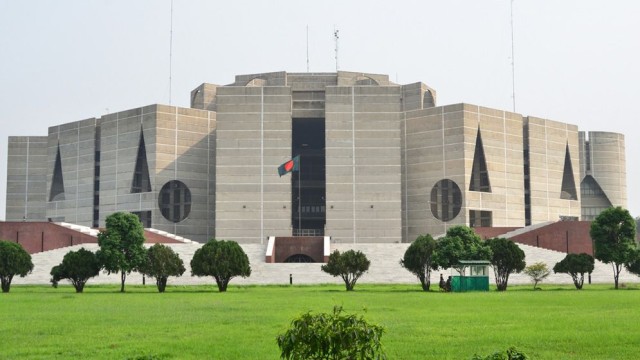
The government has proposed cutting source tax on 60 essential commodities, including baby food, rice, and pulses in the budget for fiscal 2026-27 placed in the Jatiya Sangsad yesterday.
The budget proposed withdrawal of all taxes and VAT on import of dialysis filters for kidney patients.
As a result, the prices of essential commodities and medical expenses will come down. Such initiatives are great relief for the people of low and middle income group.
Finance Minister Amir Khosru Mahmud Chowdhury yesterday unveiled a record Taka 9.38 lakh crore national budget for 2026-27 fiscal outlining the BNP government’s comprehensive roadmap to build a humane economy.
The budget has announced reduction of source tax on 60 essential products, tax concessions on kidney dialysis filter, heart stent, and eye lenses.
Also, an allocation of Taka 1,44,338 crore has been proposed for the social protection sector. It not only expands the scope of the existing allowance programme, but also proposed to add several new programmes including family-based assistance, cash incentives for farmers, honorariums for workers of religious institutions, ensuring social security for workers, and special allowances for victims of the July uprising.
A number of economic analysts said in the budget special importance was given to make Bangladesh a welfare-oriented state.
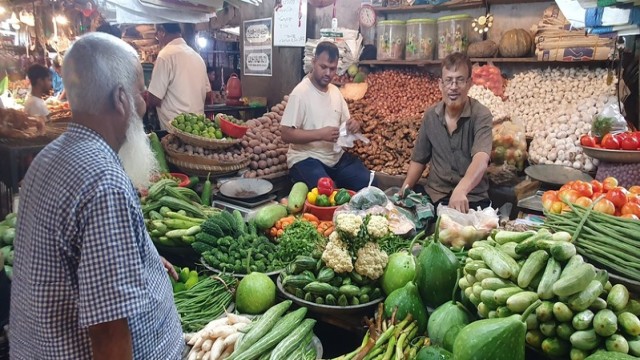
To control skyrocketing prices of daily commodities the government has proposed major tax cut on import and supply. Source tax has been reduced on import of rice, pulse, wheat, potato, onion, garlic, ginger, edible oil, sugar, and salt.
Earlier, the source tax on these products was 2 to 5 percent. Now it is proposed to reduce to just 0.5 percent. As a result, the prices of the products in the market are expected to drop quickly.
Afsana Begum, a domestic worker from Azimpur area in the capital, said, “We do not understand the budget. We want the prices of goods to go down. We want to take meals daily and live in peace. We are happy if the government do this.”
Kaya Akhter, a mother of two children, said she heard that the prices of baby food will be reduced, which is a great news for mothers like her.
“It was becoming difficult for us to provide nutritious food to children. Thanks to the government for thinking about it,” she said.
Cost of dialysis will be reduced by about Taka 800. Besides, tax exemption has been announced to reduce the price of heart stent by around Taka 20,000 and the price of eye lenses up to Taka 5,000.
The finance minister in the budget speech said the government wants to build a discrimination free, humanitarian, and welfare-based state through social security programmes.
With this aim, support has been increased for women's economic empowerment, senior citizens, disabled people, freedom fighters, families affected by the July uprising, and various vulnerable groups.
For the fiscal 2026-27, he proposed to allocate Taka 1,44,338 crore to the social security sector.
When asked about the government's special attention to the social security sector, Dhaka University's Business Administration Institute Professor Md Mohiuddin said the government led by Prime Minister Tarique Rahman has been giving special importance to make Bangladesh a welfare-oriented state.
“A reflection of this is also visible in the next year budget. Allocation for social welfare sector will directly benefit the common people. We welcome such a decision of the government,” he said.
Centre for Policy Dialogue (CPD) has described the proposed national budget for fiscal year (FY) 2026-27 as a significant step towards economic recovery, highlighting its emphasis on human development, social protection, and private-sector-led growth.
Presenting CPD's budget analysis, Executive Director Dr. Fahmida Khatun said the budget's guiding philosophy, "Journey Towards a Democratic, Humane and Inclusive Economy," reflects national priorities aimed at generating employment and improving people's welfare.
"The underlying philosophy of the proposed FY27 budget appears to be one of economic recovery through human development, private-sector-led growth, and social protection. Alongside physical infrastructure, this budget also emphasises jobs, entrepreneurship, education, healthcare, and welfare," she said.
She said that this orientation broadly aligns with the BNP's election manifesto, which stressed employment generation, private investment, business-friendly policies, deregulation, and improvements in the social sector.
Fahmida Khatun made the remarks today while speaking at a media briefing session titled 'CPD's Analysis of the National Budget FY2026-27' at a hotel in the city.
She welcomed the introduction of a five-year roadmap for Personal Income Tax (PIT), saying it would provide taxpayers with greater predictability regarding future tax obligations.
Fahmida Khatun also praised the proposed incentive-and-penalty mechanism for tax return submissions, including a five percent incentive for early filing, which she believes will strengthen compliance and reduce the need for repeated extensions of filing deadlines.
She highlighted the reduction of corporate tax for private universities, medical colleges, and IT-based educational institutions from 15 percent to 10 percent, noting that it had previously recommended such a move to support the education sector.
She termed it inspiring that health and education remain among the top five sectors in the Annual Development Programme (ADP).
According to her, the health sector allocation has increased by around 50 percent to Tk 62,852 crore, while education received Tk 1,22,495 crore, marking a 28 percent rise from the previous fiscal year.
She also welcomed the introduction of the Family Card and Farmer's Card programmes under the government's social protection framework.
The Family Card Programme will support around 41 lakh beneficiaries, including female-headed and landless households, making it the largest women-focused social protection initiative in the proposed budget, she added.
She said that the Farmer's Card Programme is expected to benefit about 42.5 lakh marginal farmers through direct cash assistance and subsidised agricultural inputs, contributing to food security and rural development.
Dr. Khatun further praised a number of green and technology-oriented fiscal measures included in the budget.
These include a zero percent tax rate for the solar power sector until 2035, reduced annual income tax on electric vehicles (EVs), and the withdrawal of import duties on EV charging equipment.
She also noted the extension of VAT exemptions on locally manufactured computers and ICT products until 2030 and the proposal to remove SIM card taxes, which could help expand digital access.
She said the budget offers additional support to domestic industries through VAT exemptions on agricultural fertilisers and raw materials used in medicine production.
Fahmida Khatun also welcomed VAT exemptions on imported heart rings and intraocular lenses, saying the measures would help lower healthcare costs for patients.
In her concluding remarks, Dr. Khatun said the larger budget presents an important opportunity for the government to accelerate economic recovery.
She added that the strong emphasis on entrepreneurship, education, and social welfare provides a solid foundation for building a more humane and inclusive economy, provided that implementation is effective and efficient.
CPD Distinguished Fellow Professor Mustafizur Rahman, among others, spoke on the occasion.
END/AJ/RH