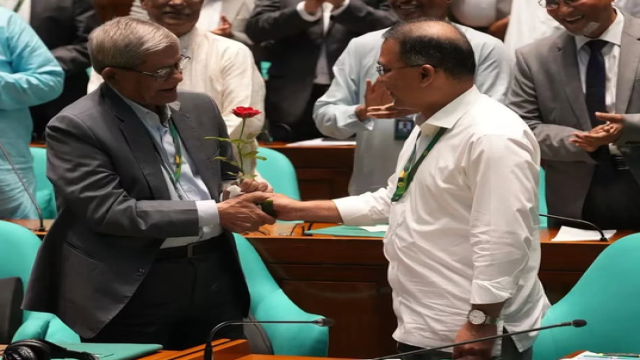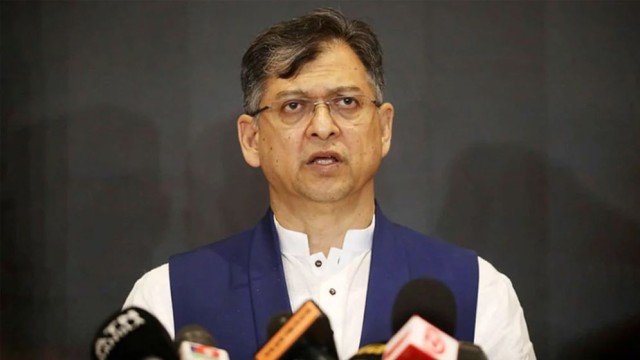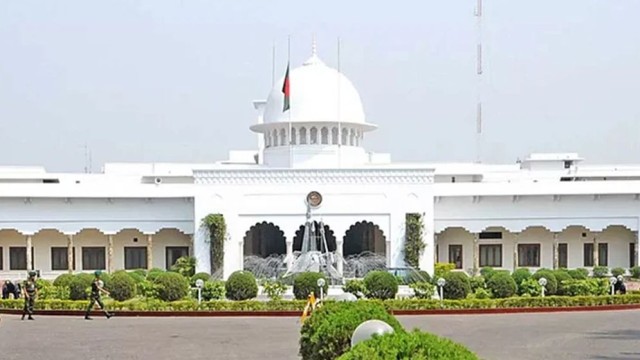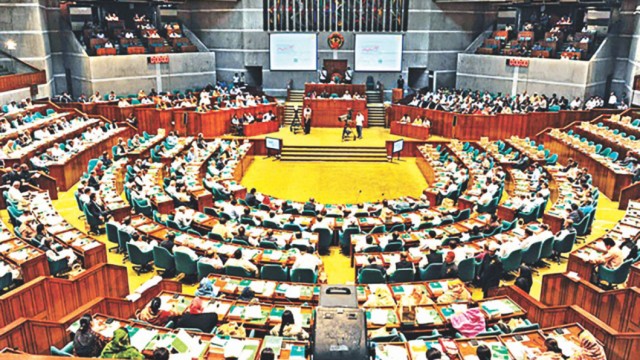
Dhaka, 29 (V7N) - The Jatiya Sangsad officially passed the Finance Bill 2026, introducing a series of major revisions that include raising the personal income tax-free threshold and removing a controversial investment disclosure rule. Finance Minister Amir Khasru Mahmud Chowdhury presented the bill on the parliament floor, where it was swiftly approved via a voice vote. The legislative session was held under the guidance of Speaker Hafiz Uddin Ahmad, Bir Bikram.
Following a direct request from the Prime Minister during national budget debates, the Finance Minister adjusted several key fiscal policies, locking in a multi-year increase to individual tax-free ceilings. The revised structure raises the untaxed limit to Taka 400,000 for the 2026-27 and 2027-28 fiscal years, bumping it up further to Taka 450,000 for the subsequent two years, and finally reaching Taka 500,000 by FY2030-31. This timeline offers a more generous cushion to individual taxpayers compared to the lower rates originally laid out in the initial budget proposal.
In a direct response to public anxiety and widespread confusion, the government completely scrapped the proposed mandate regarding investment disclosures. The minister explained that while the policy was originally drafted to protect citizens from legal knotiness caused by the gap between official mouza values and actual market rates in land deals, the state ultimately decided to withdraw it out of respect for public feedback. Similarly, the ministry dropped plans that would have made presenting a Taxpayer Identification Number (TIN) mandatory for setting up bank accounts or processing property mutations.
The newly passed bill also introduces strategic tax rollbacks and exemptions across various domestic sectors, including cutting the income tax rate for private universities in half to 5%. In a bid to support marginalized communities, the government expanded tax exemptions for indigenous citizens living in the plains and the three hill districts, completely removing income tax requirements on their salaries, agricultural profits, and commercial businesses. Furthermore, the shrimp industry received a major boost through the complete removal of all customs, regulatory, and supplementary duties—plus VAT—on imported essentials like feed, vitamins, and specialized machinery.
To drive domestic industrialization, the final bill lowers or completely removes import barriers on key raw materials used by local manufacturers. Import duties on industrial PVC and PET resins were cut down to 5%, while regulatory tariffs were abolished for essential manufacturing inputs like cold-rolled sheets for fire doors, coated chromium oxide for flat steel, and refined copper wire for cables. Additionally, the government abolished the 15% VAT and advance tax on imported fire bricks, slashed cashew nut import tariffs to 5%, and extended long-term duty concessions for local LED lamp and prefabricated building manufacturers until mid-2030.
The state also introduced forward-thinking changes to digital and retail commerce by dropping the VAT on advertisements placed across social media, search engines, and streaming platforms from 15% down to 5%, a move designed to curb informal offshore payments. In the retail sector, jewelry VAT was fixed at specific flat rates of Taka 2,500 for precious gems and Taka 100 for silver, while fish suppliers secured full VAT exemptions. Finally, to jumpstart a local automobile manufacturing sector, the bill reduces the VAT on locally assembled microbuses and double-cabin pickups to 5% and relaxes strict corporate compliance rules.
end/aj/rh