New York, Jul 08 (V7N)- Bangladesh and Pakistan held a high-level bilateral meeting on the sidelines of events at the United Nations Headquarters in New York on Tuesday, focusing on strengthening security cooperation, combating drug trafficking, police capacity building, and addressing the Rohingya crisis.
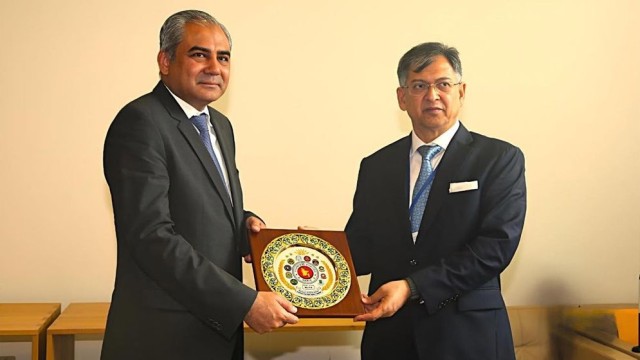
The Bangladesh delegation was led by Home Minister Salahuddin Ahmed, while Pakistan was represented by Interior and Narcotics Control Minister Syed Mohsin Naqvi.
During the meeting, the two sides discussed a wide range of issues of mutual interest, including bilateral security cooperation, regional stability, prevention of narcotics trafficking, modern urban security systems, police training, and humanitarian challenges related to the Rohingya crisis.
Home Minister Salahuddin Ahmed recalled the Pakistani minister's visit to Bangladesh in May this year and expressed satisfaction with the progress in bilateral relations.
He said the Memorandum of Understanding (MoU) signed during that visit on preventing the illegal trafficking and misuse of narcotic drugs and psychotropic substances would strengthen border security and contribute to protecting the societies of both countries.
The minister also reaffirmed Bangladesh's commitment to expanding cooperation with Pakistan based on mutual respect, understanding, and partnership, while acknowledging the shared historical ties between the two nations.
Highlighting growing connectivity, Salahuddin Ahmed noted that the resumption of Biman Bangladesh Airlines' direct flights between Dhaka and Karachi in January, after a 14-year suspension, had created new opportunities for trade, tourism, and people-to-people exchanges.
The Bangladesh home minister also raised humanitarian concerns regarding people of Bangladeshi origin residing in Pakistan. He said many families have been unable to obtain Pakistan's Computerized National Identity Card (CNIC) due to the absence of required family documentation, leaving them without access to essential services such as education and healthcare.
He urged the Pakistani government to address the issue from a humanitarian perspective and work toward a swift and lasting solution.
On urban security, Salahuddin Ahmed praised Pakistan's "Safe City" initiative, which has been implemented in more than 40 major cities, describing it as a valuable model for Bangladesh. He noted that Bangladesh's then Senior Secretary of the Ministry of Home Affairs—now the Cabinet Secretary—visited Safe City projects in Islamabad, Lahore, Multan, and Karachi in September 2025 to study the system.
The minister expressed interest in technical and strategic cooperation from Pakistan to help modernize urban security in Bangladesh and requested assistance in providing advanced training for Bangladesh Police officers to enhance professionalism and operational efficiency.
Addressing the Rohingya crisis, Salahuddin Ahmed said Bangladesh and Pakistan had previously worked together to resolve issues concerning undocumented Rohingyas residing in Saudi Arabia through coordinated efforts. He emphasized that continued consultation and practical cooperation between the two countries would be essential in addressing future regional and global humanitarian challenges.
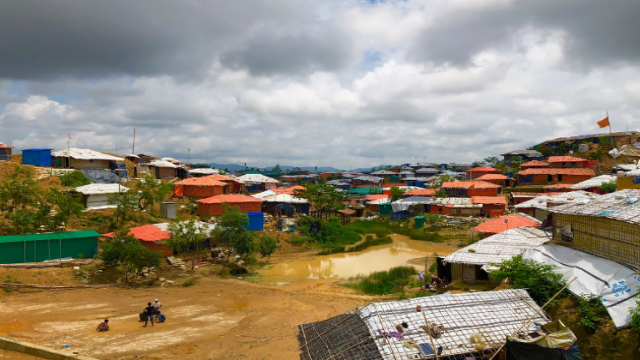
The minister also called on Pakistan to continue supporting Bangladesh in international forums to facilitate the safe, voluntary, dignified, and sustainable repatriation of forcibly displaced Rohingyas to Myanmar.
END/SMA/AJ