Dhaka, Aug 18 (V7N)- Gas pressure in Bangladesh’s industrial sector has improved slightly, allowing some factories to resume production, but the situation remains far from normal. Frequent power outages, inadequate gas supply and rising production costs continue to disrupt industrial operations, while some exporters are reporting canceled orders and penalties for delayed shipments.
Industrialists say foreign buyers are also closely monitoring Bangladesh’s energy situation. They are urging the government to finalize a backup fuel and power plan for industries and introduce incentives or soft loans to help factories install alternative-fuel boilers and generators.
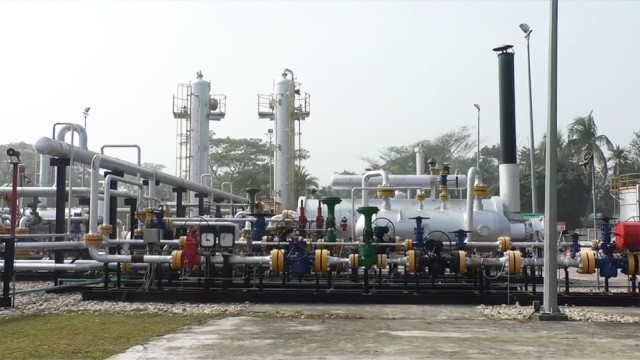
The industrial crisis intensified on July 21 after the floating LNG terminal operated by Accelerate Energy in Maheshkhali was damaged. The disruption sharply reduced gas supply and forced many factories to suspend production.
Gas supply has increased somewhat since Saturday morning, but industrial areas continue to face severe shortages. Factory visits show that load shedding is occurring repeatedly, forcing workers to stop production ahead of schedule. Many factories are using diesel and furnace oil-powered generators to maintain operations, significantly increasing production costs.
However, factories that depend directly on gas-powered machinery have few alternatives when gas pressure falls. Industrialists also face difficulties procuring alternative fuels, while the additional costs are putting further pressure on businesses.
Gazipur district and its metropolitan area have around 3,500 factories. On average, about 15 percent of them have reportedly suspended production because of the gas crisis. Meanwhile, several businesses have reported cancellation of foreign orders, while some exporters are facing financial penalties for failing to meet shipment deadlines.
The situation in Savar has improved slightly in terms of gas supply, but frequent electricity outages continue to hamper production. Dyeing, washing and finishing units in the garment sector have been particularly affected. Similar disruptions have been reported in the knitwear industry in Narayanganj.
The crisis is also severe in Narsingdi, where around 80 percent of textile, dyeing and printing factories were reportedly forced to close because of shortages of gas and electricity. Although gas pressure has recently improved somewhat, many factories are arranging alternative fuel sources to keep their operations running.
Food processing, pharmaceutical and ceramic manufacturers are also facing similar challenges.
Business owners say some customers have already canceled orders because factories could not ship products on time. They said the garment industry operates through a tightly connected production chain, meaning even a one-day delay or an hour of load shedding can create disruptions that are difficult to recover from.
Some factory owners said they are receiving gas for only around six hours a day, mostly during the night, with perhaps another hour of supply in the afternoon. They have to prioritize production whenever gas becomes available.
One manufacturer said that although the daily production target is around 20,000 units, the factory is currently producing only 3,000 to 4,000 units.
The power and energy crisis has emerged as one of the biggest challenges for the government during its first six months in office. Policymakers have acknowledged that the crisis cannot be resolved immediately. Building a new LNG terminal could take at least three years.
Bangladesh Knitwear Manufacturers and Exporters Association (BKMEA) President Fazle Shamim Ehsan said survival has now become a bigger concern than achieving export targets.
He said the government may have limited room to act immediately, but there is no guarantee that damaged infrastructure will not face similar problems in the future. Therefore, he stressed the need for an effective backup plan for industrial fuel and electricity.
Shoaib Hasan, general secretary of the Agro Processors Association, suggested providing soft loans at around 2.5 percent interest to help businesses purchase alternative-fuel boilers and generators.
He said such financing could help industries strengthen their energy backup without necessarily requiring additional government funding.
Meanwhile, Bangladesh’s domestic gas reserves are declining rapidly. Estimates suggest that production from currently operating gas fields could fall to zero by 2031, making long-term energy planning increasingly urgent for the country’s industrial sector.
END/SMA/AJ