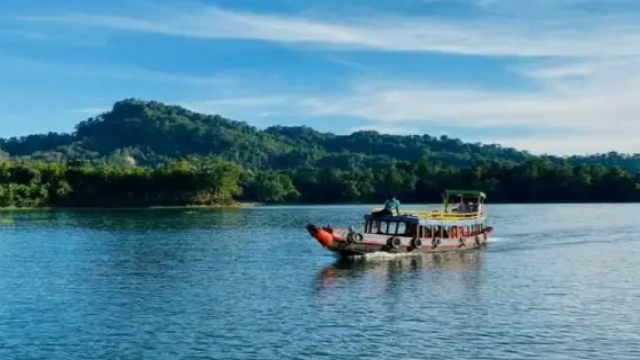
RANGAMATI, June 12, (V7N)– Due to intense heat and prolonged drought, the water level of Kaptai Lake — one of the country's most important reservoirs and the largest artificial lake in Southeast Asia — has dropped alarmingly. This has had a huge impact on power generation, maritime communications, goods transportation, and the daily lives of ordinary people. The normal water level of Kaptai Lake is supposed to be 109 MSL (mean sea level), but currently it has come down to only 76 MSL.
Due to this severe water crisis, three out of the five units of the Kaptai Hydropower Station, which has a generation capacity of 242 MW, have been shut down. Currently, only two units are operational, generating about 60 MW of electricity. This has created enormous pressure on the national power system, as the reduced output from the hydropower station must be compensated from other sources.
The decreased water level has also negatively affected the navigation system of Rangamati. Navigation between Baghaichhari, Longadu, Barkal, and Juraichhari upazilas and the district headquarters has been almost disrupted. Due to reduced water depth, large launches and passenger boats cannot dock at many piers, forcing passengers to travel in multiple small boats — a process that is both time-consuming and costly.
The risk of boat traffic has increased due to the emergence of underwater rocks in various areas of the lake. The impact has also begun to be felt in local markets, as obstacles in the transportation of daily necessities have driven up prices. Local traders and residents reported that the costs of several products have already increased due to higher transportation expenses.
Locals complain that the water-holding capacity of Kaptai Lake is gradually decreasing due to silt accumulation over a long period, causing the same kind of crisis every year during the dry season. Authorities and local residents are now waiting for heavy rains to resolve the water crisis. They hope that with sufficient rainfall, the lake's water level will rise, allowing power generation and navigation systems to gradually return to normal.
END/AMR/RH/