
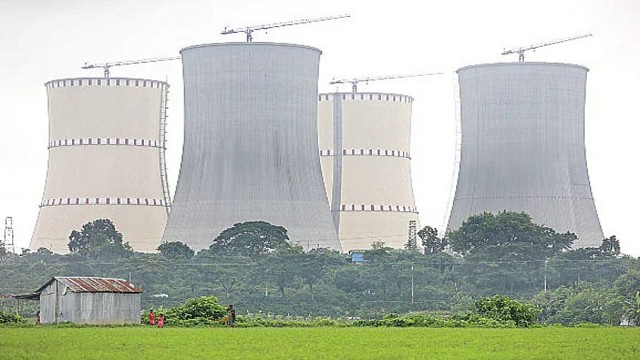
Dhaka, April 28 (V7N) — Prime Minister’s Information and Broadcasting Adviser Dr. Zahed Ur Rahman announced on Tuesday that Bangladesh will add 300 megawatts of electricity to the national grid from the first unit of the Rooppur Nuclear Power Plant in August this year. He said the project will meet 10 percent of the country’s total electricity demand, benefiting nearly two crore people.
Speaking at a press briefing at the Secretariat, Dr. Zahed emphasized the significance of the Rooppur project for Bangladesh’s energy security. “This project will meet 10 percent of Bangladesh’s total electricity demand and about two crore people will be benefited from it,” he said.
The Rooppur Nuclear Power Plant, the country’s first such facility, is expected to play a transformative role in diversifying energy sources and reducing reliance on imported fossil fuels. The addition of 300 MW from the first unit marks a milestone in Bangladesh’s long-term energy strategy.
Addressing concerns about fuel shortages, Dr. Zahed dismissed claims of a crisis. He stated that Bangladesh currently has 170,000 metric tonnes of diesel in stock, with another 180,000 metric tonnes scheduled to arrive by April 30.
“There are no long queues at oil pumps. So the crisis will be overcome soon,” he assured. While acknowledging that fuel price hikes have led to increased vehicle fares, he noted that government bus and minibus fares in Dhaka remain unchanged.
Dr. Zahed highlighted that the Executive Committee of the National Economic Council (ECNEC) approved 14 new projects worth Tk 13,445 crore last month. These include five new and five revised projects, with funds allocated for power generation, road communication, and local administration development.
“We are working continuously for the country’s development and the welfare of its people through new projects,” he said, underscoring the government’s commitment to infrastructure and service delivery despite global economic pressures.
On security issues, Dr. Zahed reported that border killings have decreased by 75 percent, attributing the improvement to diplomatic efforts with neighboring countries. “The goal is to reduce the number of killings on the border to zero level,” he said, adding that cooperation with India is being strengthened to curb terrorist activities along the frontier.
He also noted that in the past two months, authorities recovered a large quantity of drugs and arms, arresting 35 people as part of a strict campaign against terrorism and smuggling.
Turning to public health, Dr. Zahed announced that 9,423,799 children have been vaccinated against measles. He stressed that child vaccination remains a top priority: “Vaccination of children is our main goal, because it is possible to reduce the tragic death rate of the children.”
The campaign reflects Bangladesh’s broader efforts to strengthen immunization programs and reduce preventable child mortality.
Dr. Zahed also addressed the role of the media, warning against the dissemination of misinformation. “The government will not tolerate the dissemination of wrong information and misinformation in the media in any way,” he said. He added that while rational criticism of government policies is welcome, spreading falsehoods undermines public trust and stability.
The adviser’s briefing touched on multiple areas of national importance: energy security, infrastructure development, border safety, public health, and media accountability. The announcement of nuclear power integration into the grid is particularly significant, as Bangladesh seeks to diversify its energy mix amid global fuel volatility.
The assurance of adequate diesel supplies aims to calm public concerns, especially as transport disruptions have recently affected agricultural markets. Meanwhile, ECNEC’s approval of major projects signals continued investment in long-term growth.
On security, the reduction in border killings and intensified anti-terror campaigns highlight the government’s focus on stability. The measles vaccination drive underscores the priority placed on child health, while the emphasis on media responsibility reflects the government’s sensitivity to information flows in a digital age.
Bangladesh is navigating a complex landscape of energy challenges, economic development, and security concerns. The upcoming addition of 300 MW from the Rooppur Nuclear Power Plant represents a landmark achievement, while assurances on fuel supplies aim to stabilize transport and agriculture.
END/AJ/RH

















Comment: